
Short answer
If you'll run the machine many hours for years and want to own it, a loan or a finance lease fits; if you need it for a period and don't want to keep it, an operating lease; if it's for a one-off job, rental. Between two offers the lowest installment doesn't win — the lowest total cost does: effective rate, fees, insurance, residual value and who pays for maintenance. With ConstruMarket you request it with your quote and the partner bank sets the terms based on your profile, subject to approval.
The five ways to pay for a machine
Before asking for a rate, decide the structure. Each one splits ownership, risk and cash flow differently. With a loan the machine is yours and the bank usually takes it as collateral; with a lease the bank buys the equipment and leases it to you, and at the end you exercise the purchase option or not.
- Loan: you own it from the start; you pay a down payment and installments.
- Finance lease: you lease it for most of its useful life and can buy it at the end for the agreed residual value.
- Operating lease: you lease it for a shorter period; at the end you return it, renew or, depending on the contract, buy it.
- Rental: by the day, week or month, with no long commitment (RentaCentro, a group company).
- Installments on a participating card: for light equipment and furniture, not heavy machinery.
| Criterion | Loan | Finance lease | Operating lease |
|---|---|---|---|
| Owner | You, from day one | The bank, until purchase | The lessor |
| At the end | Equipment paid off | Purchase option | Return or renew |
| Maintenance | You | You, usually | Per contract |
| Best for | Heavy use for years | Even payments, ownership | Use for a period |
Loan or lease: the real difference
The difference isn't the installment, it's who owns the machine while you pay for it. With a loan it's registered in your name, you can sell it or trade it in whenever you want (paying off the balance) and you carry its resale value. With a lease the legal owner is the lender until you exercise the purchase option; you operate it, insure it and, under a finance lease, usually maintain it.
The down payment, the collateral required and the term are set by each lender based on your profile and the equipment. An asset with good resale and parts support in the country — a backhoe loader or a brand-name excavator with a workshop nearby — is usually easier to finance than equipment with no secondary market.
Taxes and balance sheet: check with your accountant
You'll often hear that leasing is “100% deductible and off-balance-sheet.” That isn't a rule: it depends on the accounting standard your company applies and your country's tax law. Under full IFRS (IFRS 16), most leases go on the lessee's balance sheet as a right-of-use asset and a liability; only short-term or low-value leases stay off, as an exception. IFRS for SMEs and local standards may treat it differently, and whether rent, interest or depreciation is deductible is set by each country's law.
Before choosing for tax reasons, ask your accountant to compare both structures with your numbers.
How to compare two financing offers
Get each offer in writing and put them in the same table. The monthly installment is the last thing to look at: a low installment with a long term, fees and a high residual value can cost more than a higher, shorter one. Check these points in every proposal:
- Effective annual rate, not just the nominal one: the effective rate reflects compounding; also ask for the total cost with fees and insurance.
- Fees: origination, administration, appraisal or structuring.
- Equipment insurance (and credit insurance, if any): whether it's included in the installment or paid separately.
- Down payment or first rent, and whether they accept your used equipment toward it.
- Term: a longer term lowers the installment but raises total interest.
- Prepayment or early-termination penalty.
- Purchase option and residual value: what you pay at the end to keep the machine.
- Who pays for maintenance, repairs and road taxes.
- Currency: if you're financed in dollars and invoice in quetzales or córdobas, you carry exchange-rate risk.
Which option fits? Decide by usage
The right structure comes from how many hours and for how long you'll use the machine. If you'll use it little, no way of financing the purchase beats renting it; if you'll use it every day for years, rental ends up costing more than the installment.
The site doesn't publish a payment simulator with rates, because the bank sets the terms based on your profile and they vary by country. What you can calculate today is whether renting or buying makes sense, in the rent-vs-buy calculator, and what each operating hour costs, in the cost-per-hour one (both at /calculadoras).
How much and for how long will you use it?
- A one-off job → Rental
- Heavy use for years, to own it → Loan or finance lease
- A period, without keeping it → Operating lease
- Light equipment or furniture → Card installments
What to prepare before you apply
Each bank asks for its own list, but in general it reviews the company's financial and legal information: recent financial statements, tax returns, incorporation documents and the legal representative's, and credit references. If you're an individual, they'll ask for proof of income.
Add two things that help: the formal quote for the equipment and the contracts or jobs it will work on. A bank finances a machine that already has work lined up with more confidence.
How to request financing with ConstruMarket
Loan or lease financing applies to heavy machinery, backhoe loaders and Bobcat equipment; inspected used equipment can also be financed in the group's countries, subject to approval. Request it together with the equipment: in the quote form choose “Financing” as the payment method, or fill out the credit application at /financiamiento. A credit advisor contacts you during business hours and gives you the terms in writing so you can compare them.
If you have a used machine, the trade-in plan (/trade-in) lets you put it toward the new unit; ask whether the bank accepts it as part of the down payment. For light equipment and furniture the path is different: installments on a participating credit card.
- Quote the equipment: Choose “Financing”
- Send the application: At /financiamiento
- Bank review: Based on your profile
- Terms in writing: Compare them
- Signing and delivery: The machine goes to work
Where to apply: countries and branches
Grupo ConstruMarket is an authorized Komatsu dealer in El Salvador, Guatemala (CMARKET), Nicaragua and Panama, and an authorized Doosan Bobcat dealer in El Salvador and Panama. You can request financing at any branch or online: in El Salvador, Zaragoza, Antiguo Cuscatlán and San Miguel; in Guatemala, Mixco, Río Hondo and Xela; in Nicaragua, Managua; and in Panama, Panama City.
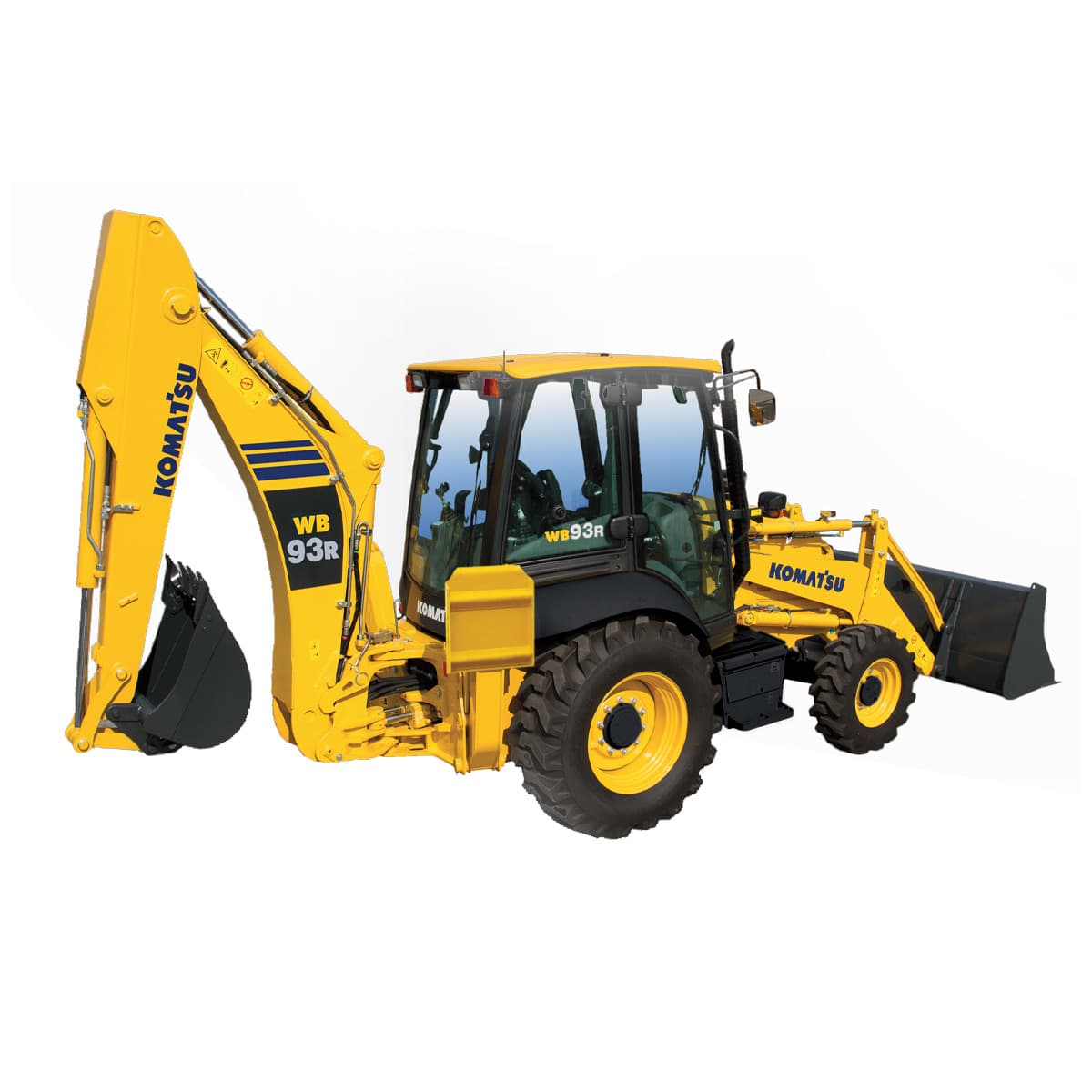
If you only need the equipment for one job, RentaCentro, the group's rental company, operates in all four countries; its fleet includes, among others, the Komatsu PC200 excavator and the WB93R backhoe loader. Availability varies by country.
Summary: what to choose
| If… | Then… |
|---|---|
| You'll use it for one job or a few weeks | Rental (RentaCentro) |
| Heavy use for years and you want to own it | Loan or finance lease |
| You need it for a period and don't want to keep it | Operating lease |
| It's light equipment or furniture | Installments on a participating credit card |
| You have two offers | Compare total cost and effective rate, not the installment |
| You're promised “100% deductible” | Check with your accountant for your country |
Get a quote without leaving
Want to work it out with an advisor?
Topic: Machinery financing
Which country is your project in?
Common mistakes
Choosing by the lowest installment
A low installment often hides a longer term, fees or a high residual value. Compare the total cost.
Comparing nominal rates
Two equal nominal rates can have different effective costs. Ask for the effective rate and the cost including insurance and fees.
Assuming the tax benefit
Deductibility and balance-sheet treatment depend on your accounting standard and your country's law. Validate it before signing.
Financing a machine that will work little
If utilization is low, the installment runs even while the machine sits idle. Check first whether renting makes sense.
Not reading the exit terms
Prepayment penalties, purchase option and return condition matter at the end. Get them in writing.
Frequently asked questions
I need to buy machinery: which credit option suits me?
It depends on usage. If the machine will work many hours for years and you want to own it, a loan or a finance lease; if you need it for a period, an operating lease; if it's a one-off job, rental.
What's the difference between a finance lease and an operating lease?
In a finance lease you lease the equipment for most of its useful life and can buy it at the end for the agreed residual value; maintenance is usually yours. In an operating lease the term is shorter, the lessor keeps the residual-value risk and at the end you return or renew; what it includes depends on the contract.
Is leasing 100% deductible and off-balance-sheet?
Not always. Under IFRS 16 most leases go on the lessee's balance sheet, and deductibility is set by each country's tax law. Check with your accountant using your numbers.
Is there a machinery leasing simulator?
We don't publish a simulator with rates, because the bank sets the terms based on your profile and country. You do have the rent-vs-buy and cost-per-hour calculators at /calculadoras; the exact installment comes in writing when you request a quote with financing.
How much down payment do I need to finance a backhoe loader or an excavator?
The down payment, term and rate are set by the partner bank based on the country, the equipment and your credit review. There's no single figure: request financing with your quote and get the terms in writing.
Where can I finance heavy machinery in Guatemala, El Salvador, Nicaragua or Panama?
At Grupo ConstruMarket you can request a loan or lease for Komatsu machinery in all four countries (in Guatemala, as CMARKET) and for Bobcat equipment in El Salvador and Panama, subject to approval. You can apply online at /financiamiento or at any branch.
Ready for the next step?
Apply for financing