Short answer
Choose the excavator by the most demanding job you will repeat, not the rarest one: that job sets the operating weight, and the depth on your drawings confirms the class. Tracks if the ground is soft or the site is fixed; wheels if the machine spends more time driving on the street than digging. And before the brand, check who has parts and a workshop in your country.
1. Start from the job you repeat most
Buying for the exception leaves you with an expensive, slow machine the rest of the year; the exception is what you rent for. The everyday job defines the class. For reference, the catalog runs from 1.2 to 118 tonnes (figures from Bobcat and Komatsu datasheets):
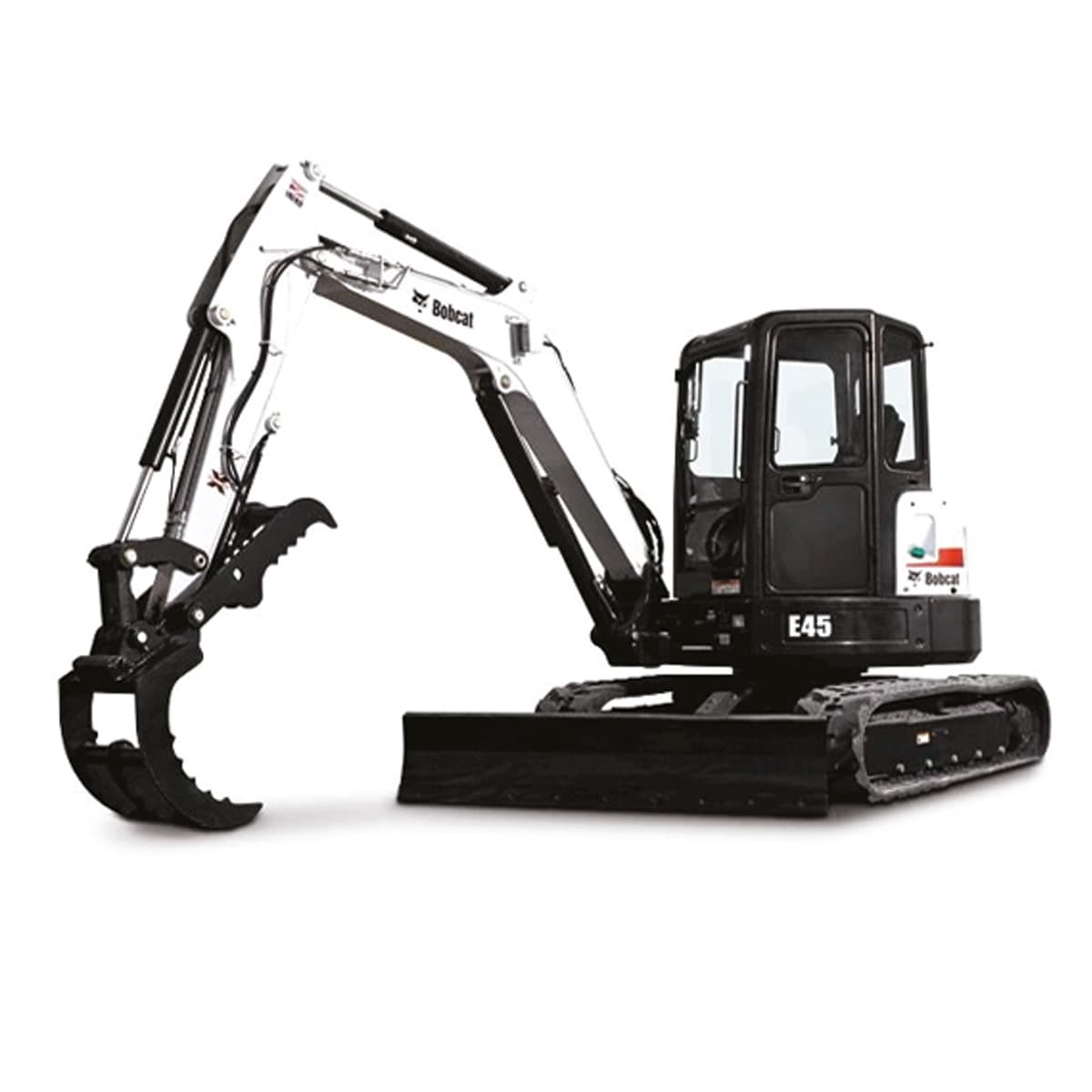
- Micro and mini (1–6 t): trenches, indoor work, landscaping and urban jobs. The Bobcat E10 weighs 1,176 kg and at 710 mm wide fits through a standard door; the E26 (2,625 kg) still travels on a trailer behind a pickup.
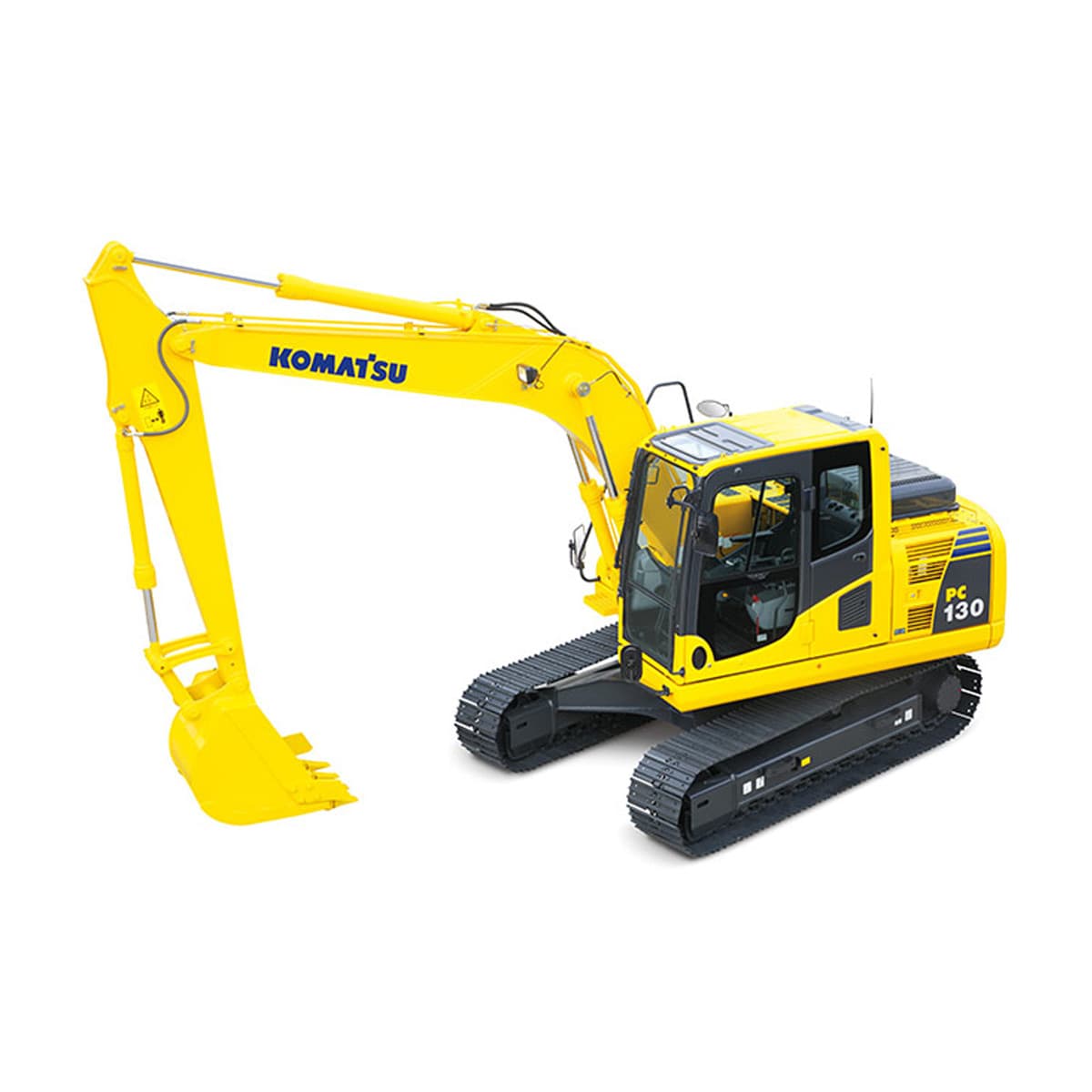
- Large compact (6–12 t): the Bobcat E80 (8,260 kg, 4,600 mm digging depth) tops the compact line; the Komatsu PC130-8 (11.7 t, 0.5 m³ bucket) fits urban streets and farm roads.
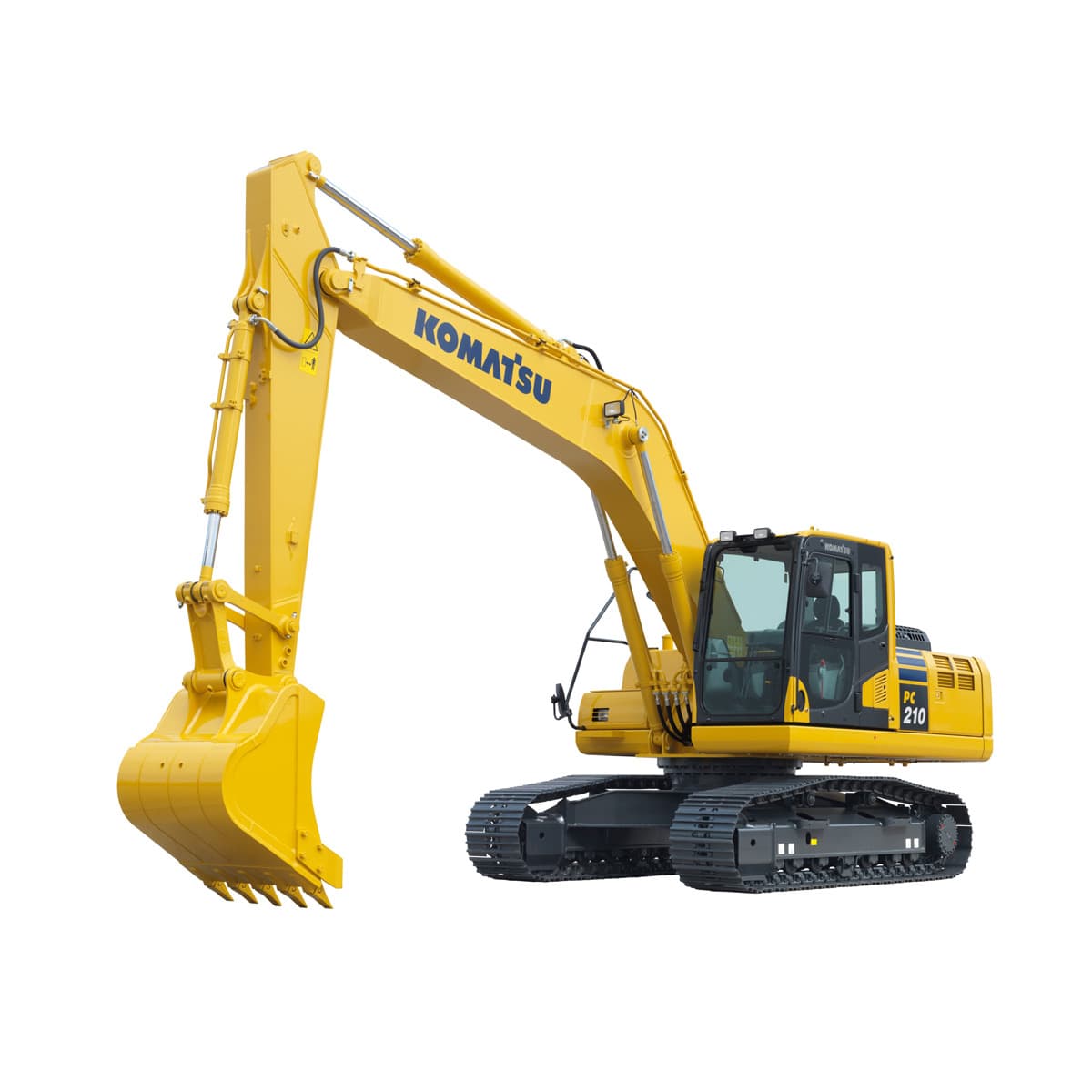
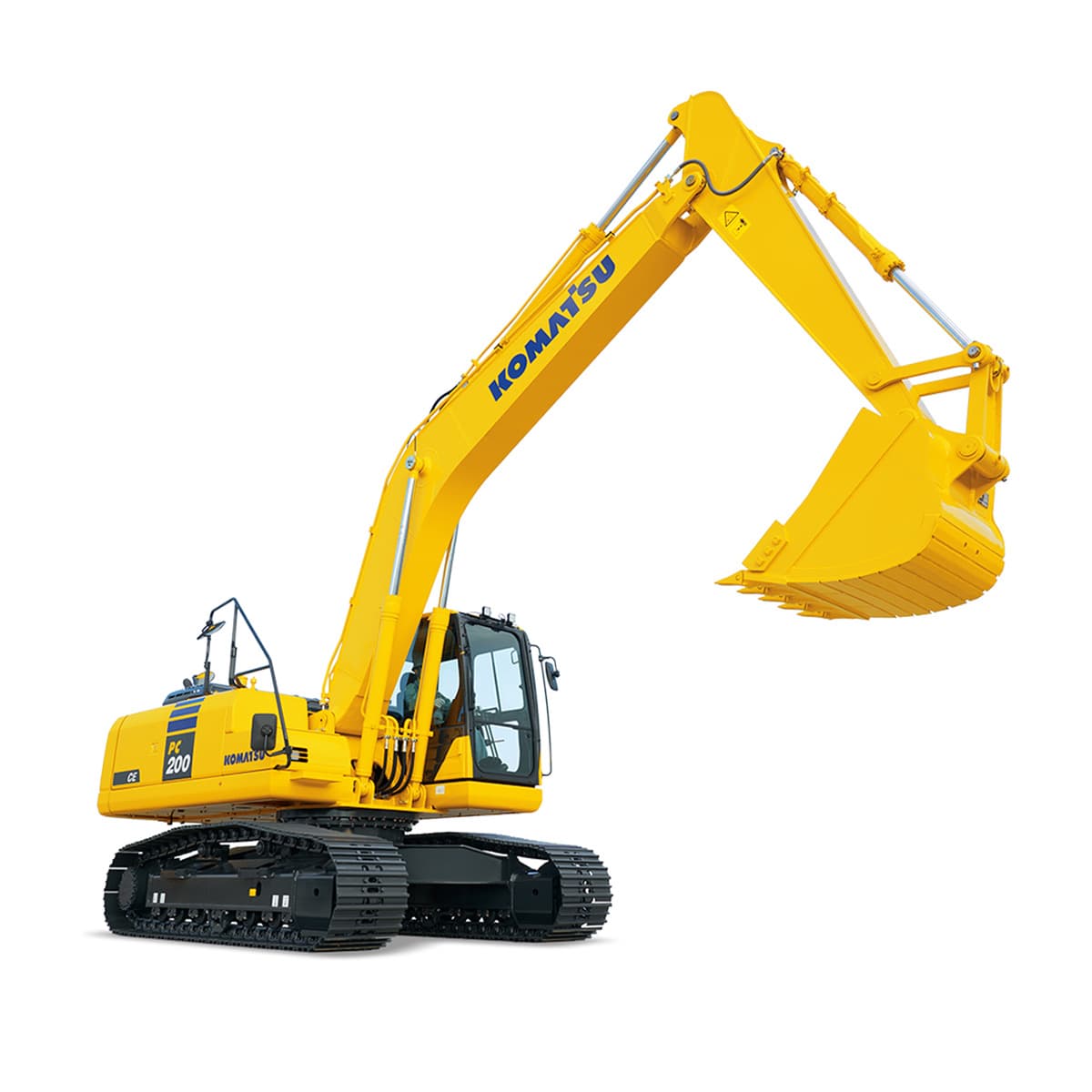
- 20 t class: earthmoving, truck loading, foundations and road work. The PC200-10M0 weighs 20.3 t and carries a 1.0 m³ bucket.
- 30–50 t class: continuous production and quarrying. PC300-8M2 (31.6 t, 1.96 m³), the rock-reinforced PC360-8M2 and the PC500LC-10M0 (49.4 t, 3.2 m³).
- Mining (58–118 t): PC600-8, PC800-8 and PC1250-11R, chosen as part of a loading and hauling fleet.
- Bobcat E26 (mini): 2.6 t
- Bobcat E80 (compact): 8.3 t
- Komatsu PC130-8: 11.7 t
- Komatsu PC200-10M0: 20.3 t
- Komatsu PC500LC-10M0: 49.4 t
- Source: Bobcat and Komatsu datasheets
2. Depth and reach: compare them with your drawings
With the rough class set, go to the figure that decides: maximum digging depth against the deepest trench or foundation on your drawing. That number belongs to a specific arm configuration — the Bobcat E55z, for example, goes from 3,434 to 3,834 mm with a long arm —; if your design sits close to the limit, go up a step or ask for a long arm.
A long arm gains reach but loses breakout force: for rock or demolition, prioritize force. When the datasheet lists forces measured under ISO 6015 — the PC300-8M2 states 171 kN at the arm and 228 kN at the bucket, per Komatsu — compare brands on that same standard.
- Bobcat E26: 3,000 mm
- Bobcat E80: 4,600 mm
- Komatsu PC130-8: 5,520 mm
- Komatsu PC200-10M0: 6,620 mm
- Komatsu PC360-8M2: 7,380 mm
- Source: Bobcat and Komatsu datasheets
3. Tracked or wheeled excavator: which one suits you
Tracks: they spread the weight, do not sink in soft ground, climb slopes with more traction and are more stable when lifting to the side. They are the choice for earthmoving, uneven ground and fixed sites; changing fronts means hauling them on a lowboy. Wheels: they drive themselves on the street, do not damage asphalt and set up fast, but need outriggers or a blade to dig firmly and do worse in mud.
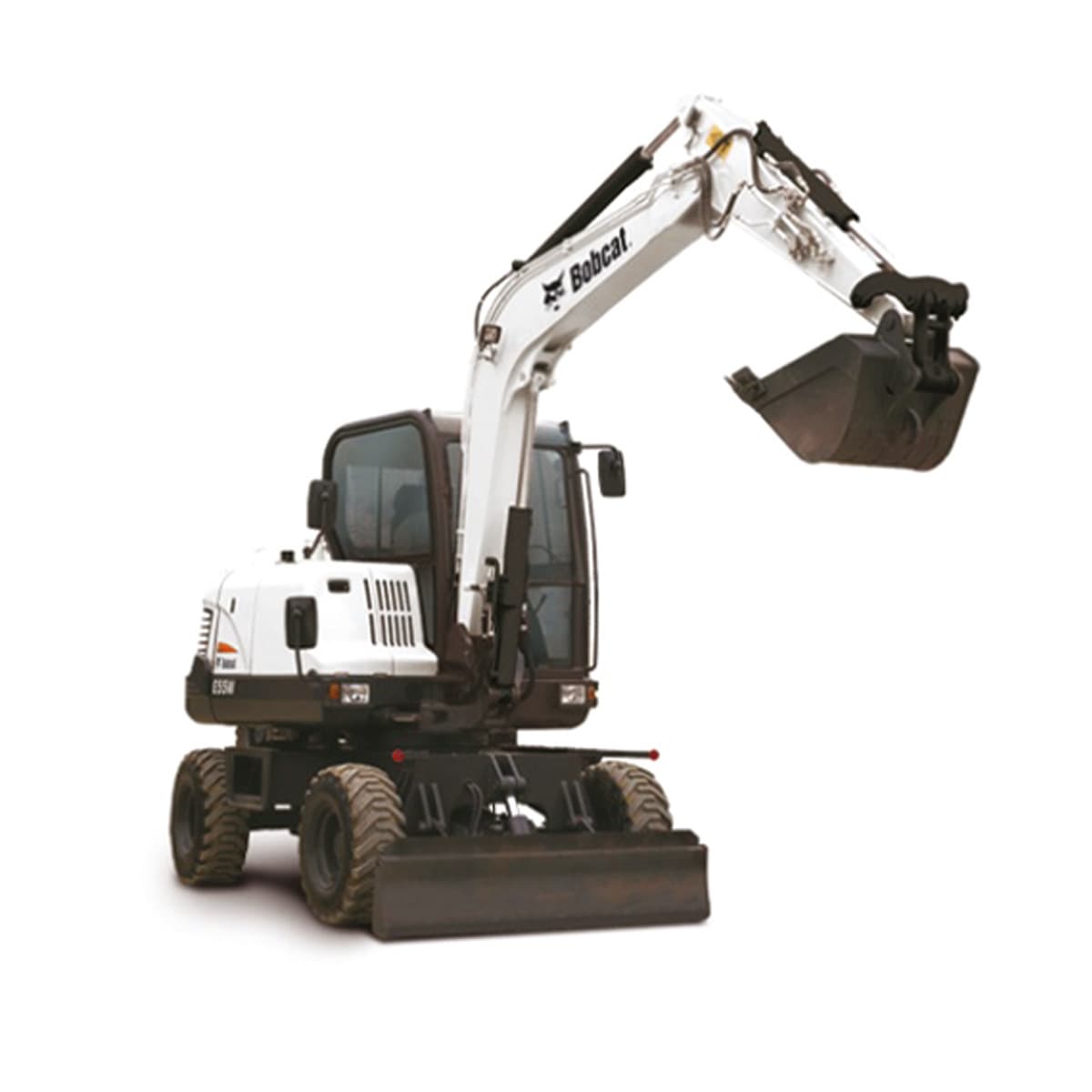
Rule of thumb: if the machine spends more time traveling on the street than digging, wheels; if the ground is soft or the site is fixed, tracks. In the catalog, every Komatsu excavator is tracked; the wheeled option is the Bobcat E55W mini excavator (5,550 kg, 3,495 mm digging depth and 30 km/h travel speed, per Bobcat), in El Salvador and Panama.
Where will the machine spend most of its time?
- Soft ground, mud or slopes → Tracks
- A fixed site for months → Tracks
- Driving on the street between fronts → Wheels
- On pavement you cannot damage → Wheels or rubber tracks
4. Working space and transport
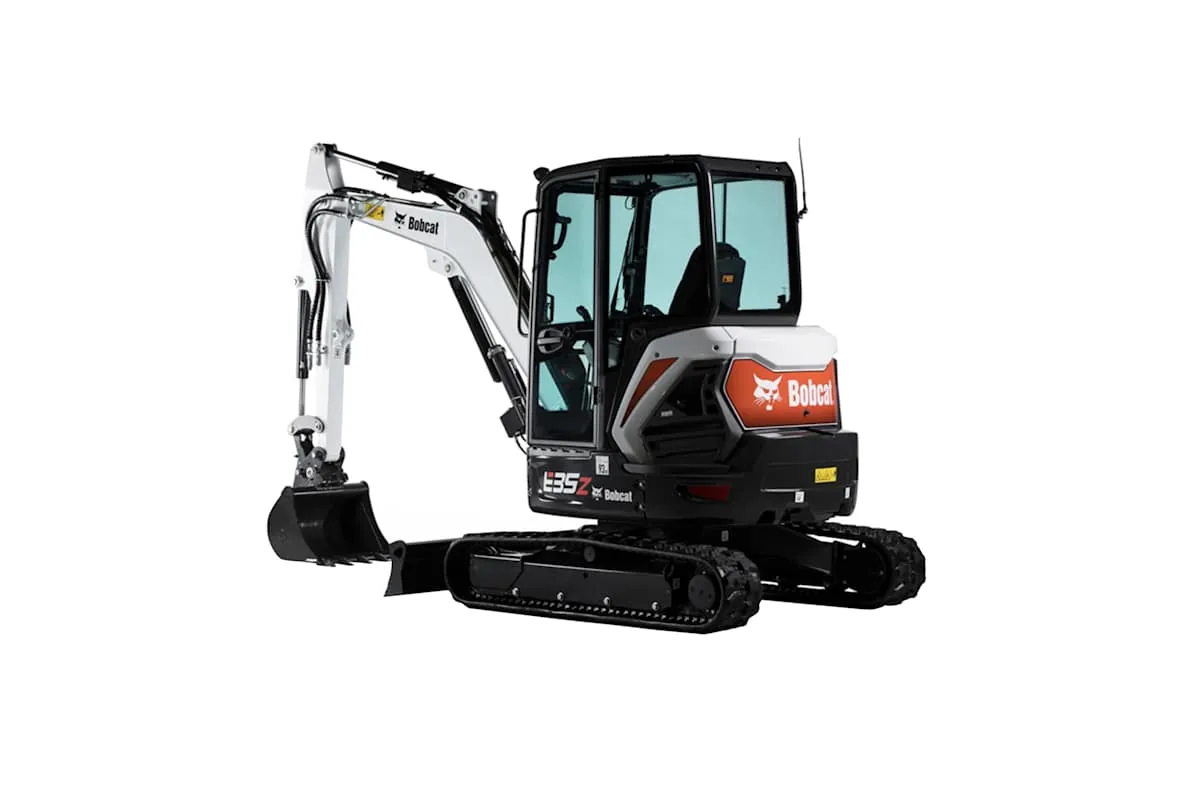
On urban sites, against a wall or next to traffic, tail swing matters as much as size. Zero-swing mini excavators — the Bobcat E20 and the z series (E35z, E50z, E55z) — rotate without the counterweight leaving the track width: you dig next to the wall without hitting it. The E20 also has a retractable undercarriage: it narrows to get in and widens to work stable.
Also count how you will move the machine. A 2–3 t unit travels on a trailer; from the 12 t class up you need a lowboy, and that freight is paid on every change of front.
5. Power and cycle: same class, different machines
Within a class, the difference is in the cycle. The PC200-10M0 and PC210-10M0 carry the same 1.0 m³ bucket, but the PC210 has 165 HP against 138: where the cycle is short and repetitive — hopper, quarry, pads — it fills faster; on sites with a variable pace, the PC200 performs the same and burns less.
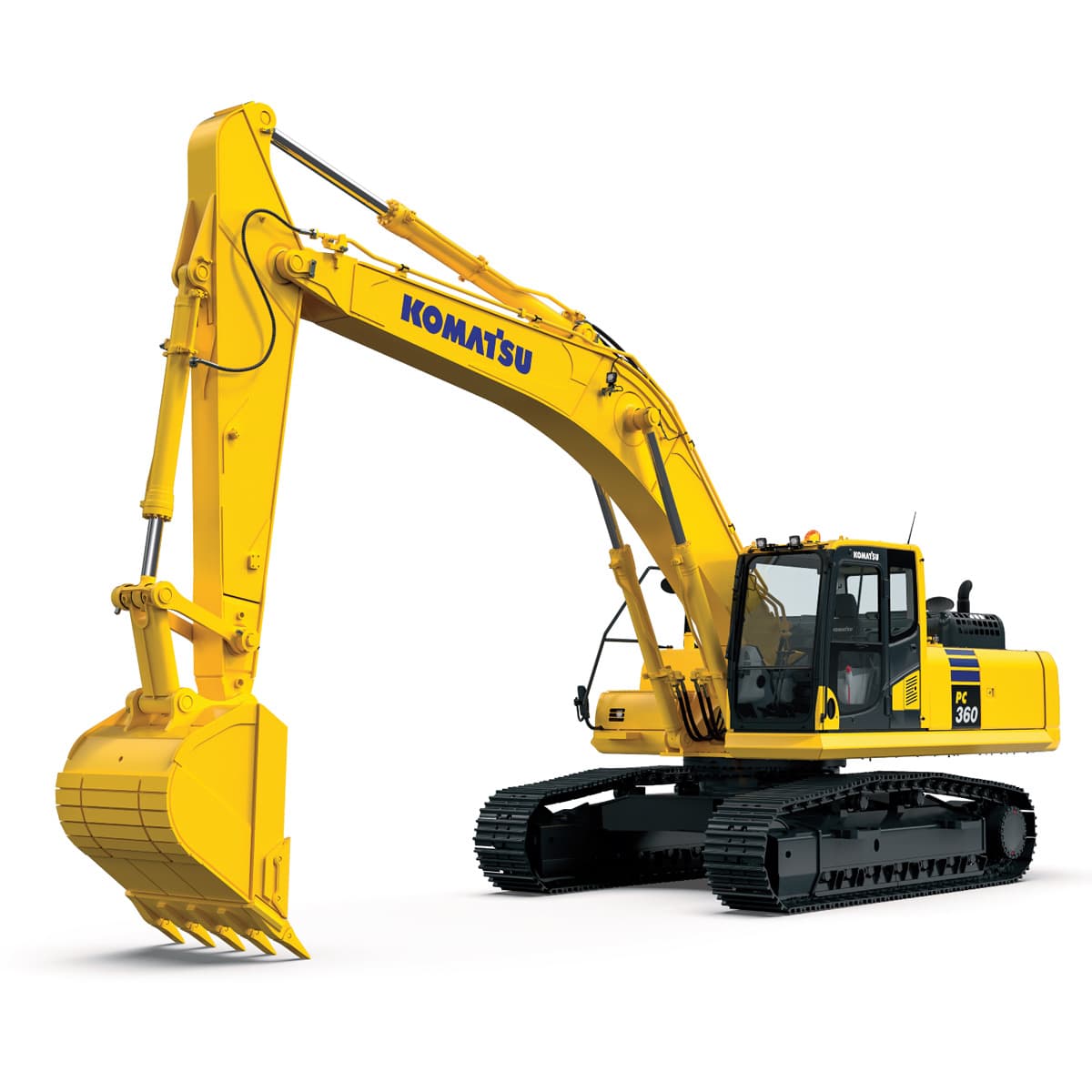
The same happens higher up. The PC300-8M2 and PC360-8M2 are both 30 t class, but the PC360 carries rock-reinforced work equipment. If you move soil, the PC300 does the job for less; in rock, the structure suffers more than the engine, and that is where the reinforcement pays.
6. Attachments and auxiliary hydraulics
With a quick coupler, the same excavator breaks with a hammer, demolishes with a shear and trims with a grading bucket. Check auxiliary flow: the Bobcat E50z delivers 75.7 L/min, which per its datasheet lets it run a hammer all shift. Komatsu offers more than 50 hydraulic hammer models, each specified by the weight range of the carrier excavator.
Order the hydraulic line from the factory: retrofitting costs more. And choose the bucket by the material, not by volume; we cover it in the bucket guide.
7. The operator and monitoring change output
The same machine performs differently depending on who runs it: a trained operator burns less fuel, looks after the undercarriage and works safely. The group's APMT Academy runs a basic excavator course.
With Komatsu, KOMTRAX comes included at no cost to the customer, per Komatsu: location, real hours, fuel use, idling and maintenance alerts from a computer or phone. With that data you know whether the machine is sized right or spends half the shift idling.
8. Where to buy or rent, and who backs you
A stopped excavator does not cost the part: it costs the workday. Before the brand, check who has parts and a workshop in your country.
Grupo ConstruMarket is an authorized Komatsu dealer in El Salvador (Zaragoza, Antiguo Cuscatlán, San Miguel), Guatemala as CMARKET (Mixco, Río Hondo, Xela), Nicaragua (Managua) and Panama (Panama City), with its own workshop and service in the shop or on site. Komatsu Warranty Pro extends coverage up to 60 months or 12,000 hours, per Komatsu. Bobcat mini excavators are sold in El Salvador and Panama.
If the job is short, RentaCentro, a group company, rents excavators: its fleet includes the Komatsu PC200 and the Bobcat E50z (confirm availability in your country). There are also inspected used machines, sold as is, and financing through credit or leasing subject to approval.
Summary: what to choose
| If… | Then… |
|---|---|
| Trenches indoors or in corridors | Micro: Bobcat E10 |
| Urban work tight against walls | Zero-tail mini: E20 or z series |
| Several trenches a day on different streets | Wheels: Bobcat E55W |
| Utility trenching on narrow streets | Komatsu PC130-8 |
| Earthmoving and truck loading | 20 t class: PC200-10M0 or PC210-10M0 |
| Rock, quarry or continuous loading | PC360-8M2 or larger |
| Mining or a haul fleet | Fleet study before buying |
Get a quote without leaving
Want to work it out with an advisor?
Topic: Excavator
Which country is your project in?
Common mistakes
Buying for the exceptional job
An oversized machine burns fuel and capital all year. The rare job is what you rent for.
Choosing by tonnes alone
If the datasheet depth is just enough for your drawing, the machine always works at its limit.
Wheels in mud, steel on asphalt
The wrong undercarriage is paid for in getting stuck or damaged pavement. Decide by where the machine spends most time.
Forgetting freight between fronts
From 12 t up, every change of front needs a lowboy. If you move often, add it to the hourly cost.
Not ordering auxiliary hydraulics from the factory
Retrofitting costs more and limits which hammer or shear you can fit.
Frequently asked questions
Wheeled or tracked excavator: which is better?
Tracks if the ground is soft, there are slopes or the site is fixed: more traction and stability. Wheels if the machine moves a lot on the street between fronts: it drives itself and does not damage asphalt, but needs outriggers to dig firmly. In the catalog, the wheeled option is the Bobcat E55W mini excavator (El Salvador and Panama); the Komatsu machines are tracked.
What size excavator do I need?
The one for the job you repeat most: mini (1–6 t) for trenches and tight spaces; 11–12 t like the PC130-8 for trenching on narrow streets; 20 t like the PC200-10M0 for earthmoving and truck loading; 30 t and up for rock and continuous production. Confirm it with maximum depth against your drawing.
How much does an excavator cost?
It depends on the class, the configuration (arm, bucket, auxiliary hydraulics, cab), whether it is new or used, extended warranty and how you pay. That is why it is quoted against your job: give the material, depth, country and whether you buy, rent or finance, and an advisor contacts you during business hours.
Where to buy an excavator in Guatemala or El Salvador?
In Guatemala, at CMARKET (Mixco, Río Hondo and Xela), an authorized Komatsu dealer. In El Salvador, at ConstruMarket Zaragoza, Antiguo Cuscatlán and San Miguel, with Komatsu and Bobcat mini excavators. Komatsu is also in Managua and Panama City.
Mini excavator or backhoe loader?
The mini excavator swings 360° and gets in where nothing else fits: it is the trench machine for tight spaces. The backhoe loader combines a loader in front and an arm behind and drives itself on the street: it fits when the same unit loads, digs and moves between sites.
New or used excavator?
An inspected used one can work well if utilization is moderate; it is sold as is and repairs are quoted separately. For intensive, continuous use, a new one with warranty and KOMTRAX usually gives a better cost per hour.
Ready for the next step?
Get an excavator quote