
Short answer
Heavy machinery is transported on a lowboy or a flatbed, depending on its weight and the height once loaded; compact equipment travels on a trailer or in a pickup, and some wheeled machines can drive under their own power over short distances if the traffic authority allows it. What decides the method is the weight, the transport dimensions on the datasheet and the route to the site. Before moving it, the machine is prepared, tied down at the points the manufacturer specifies and the permits your country requires are obtained.
First: how much it weighs and how big it is once loaded
Everything starts with the datasheet. Operating weight tells you how much the truck carries; transport dimensions (length, width and height with the boom or blade stowed) tell you whether it fits the route. Add the platform height to the machine height: that total is what passes, or doesn't, under a cable or a bridge.
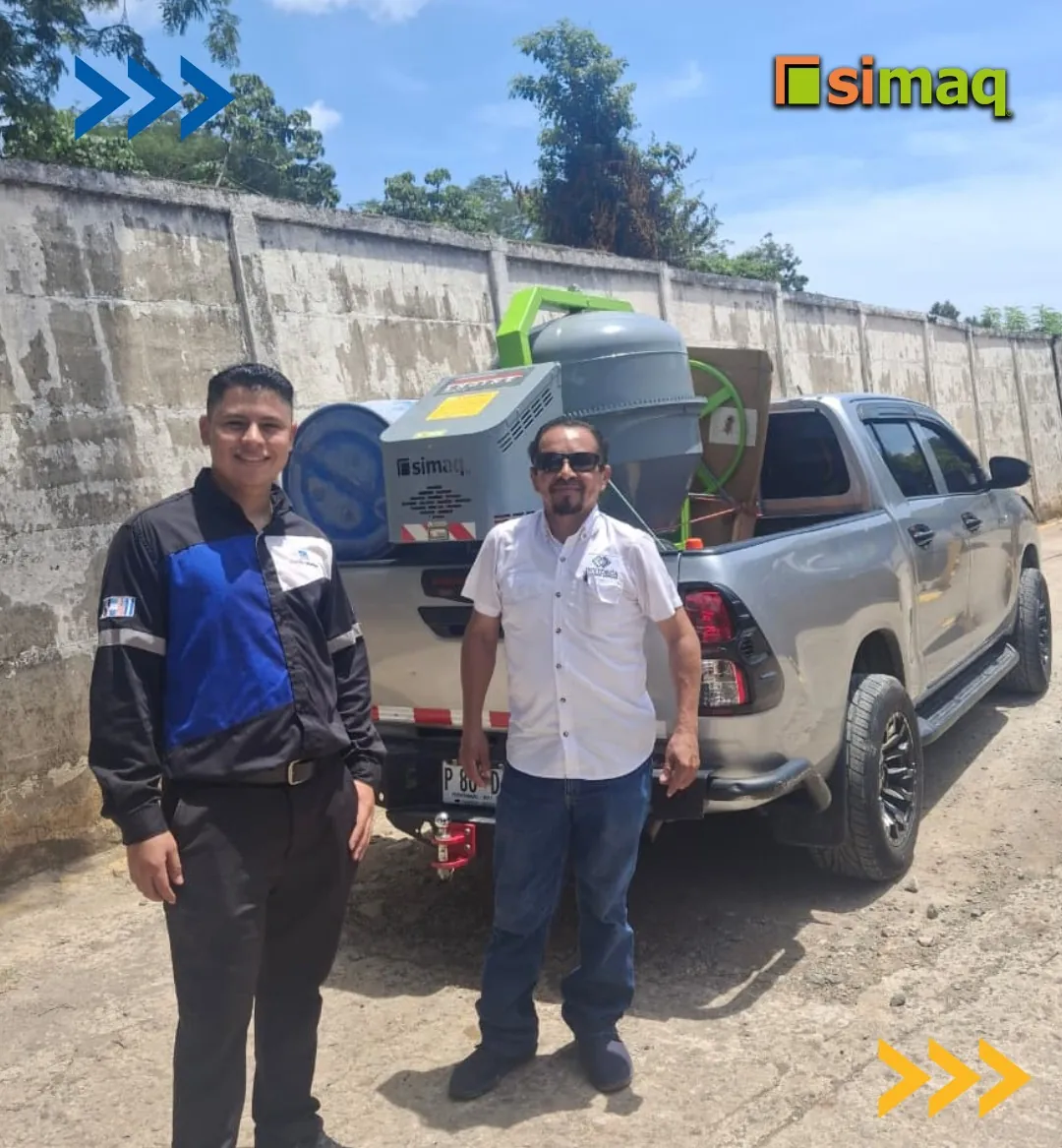
In the group's catalog, according to the manufacturers' datasheets, weights range from 2,625 kg for a Bobcat E26 mini excavator to 118,300 kg for a Komatsu PC1250-11R mining excavator. Note: weight changes with different attachments (another bucket, a ripper, a hammer). Ask the advisor for each model's transport dimensions in the exact configuration you'll move.
- Bobcat E26 · mini excavator: 2.6 t
- WB93R-5E0 · backhoe: 7.5 t
- PC200-10M0 · excavator: 20.3 t
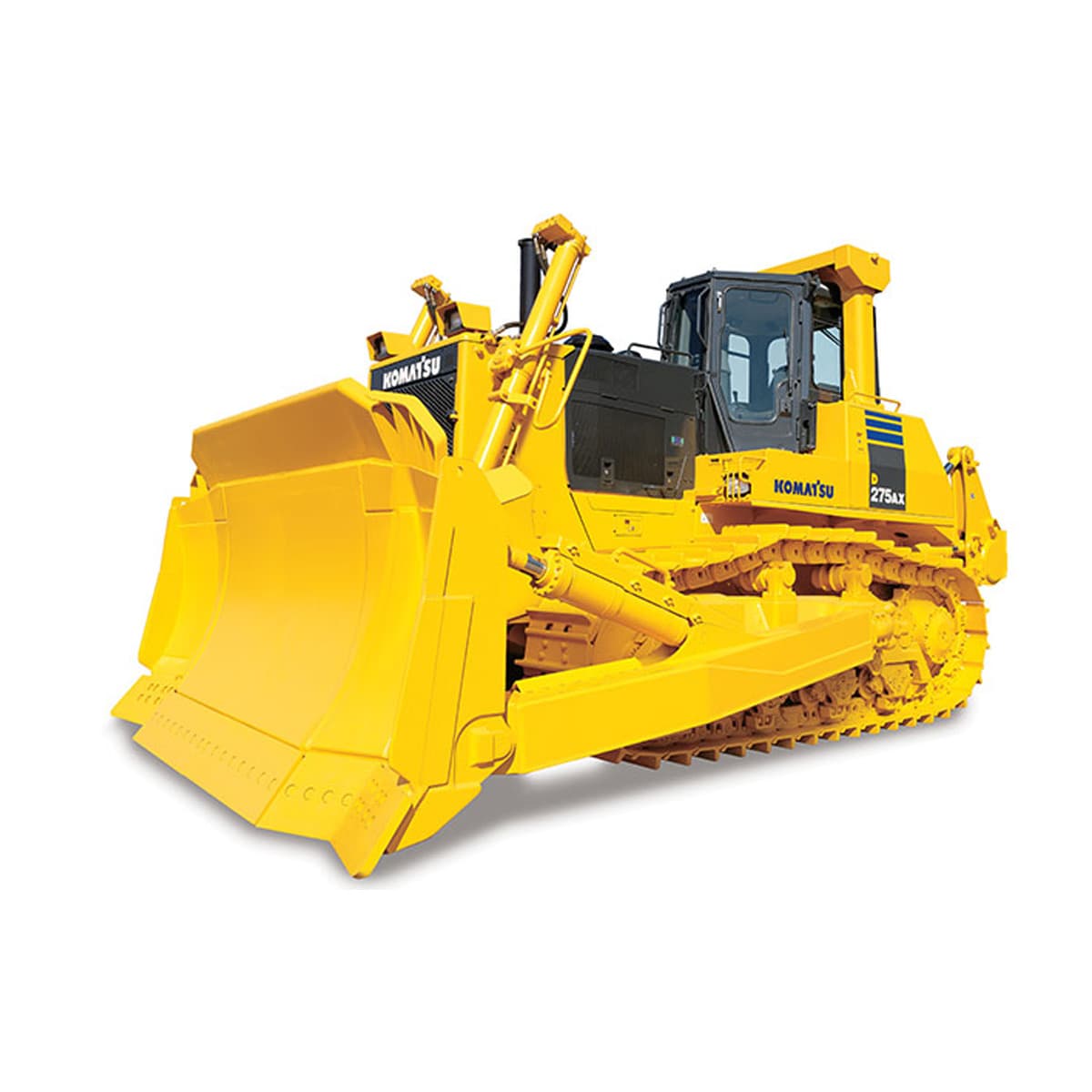
- D155AX-6 · dozer: 39.5 t
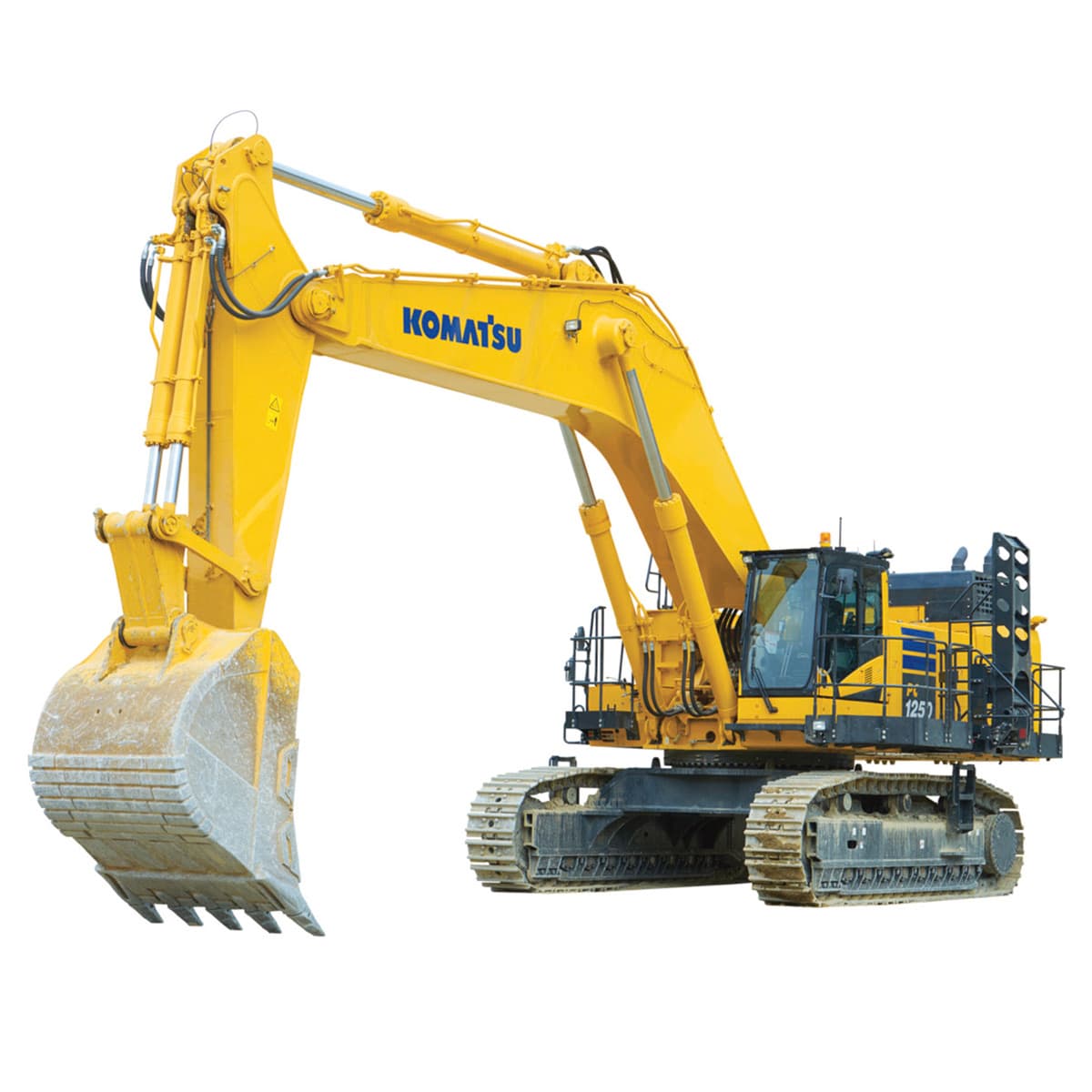
- PC800-8 · excavator: 78.3 t
- PC1250-11R · mining: 118.3 t
- Source: Bobcat and Komatsu datasheets in the catalog.
Four ways to move it
The method comes from the weight, whether the machine runs on tracks or tires, and the distance.
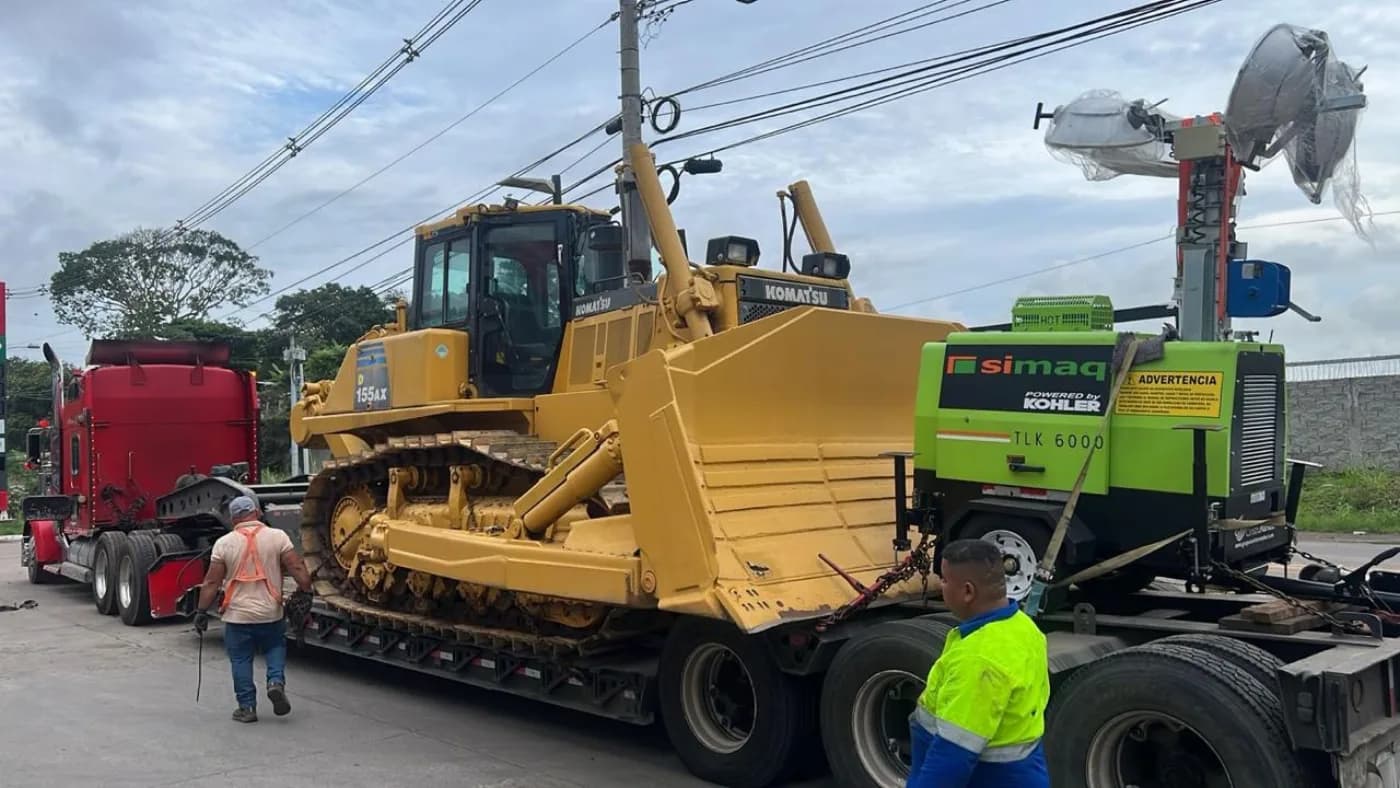
- Lowboy: a dropped deck that keeps the load as low as possible; loaded by rear ramps or, with a detachable gooseneck, from the front. It's the normal way to move excavators, dozers and large loaders.
- Flatbed or tilt-bed truck: for compact and mid-size equipment within the allowed height, such as skid steers, backhoes or small rollers.
- Trailer behind a pickup: for compact equipment. According to its catalog datasheet, the Bobcat E26 still travels this way; confirm the pickup and trailer are rated for that weight and have brakes.
- Under its own power: only wheeled machines over short stretches. According to Bobcat, the E55W drives on the street at 30 km/h between urban work fronts; motor graders, loaders and backhoes also drive, with lights, signage and whatever your traffic authority requires.
Which machine are you moving?
- Compact, a few tonnes → Trailer or flatbed
- Tracked, mid-size or large → Lowboy
- Wheeled, short stretch → Own power, with a permit
- Mining or very large → In parts, assembled on site
Why tracks don't travel on the street
An excavator or dozer can travel inside the site, but moving them on paved roads isn't a good idea: steel tracks damage asphalt, the undercarriage wears while traveling and speed is so low the trip turns into engine hours without work. Between sites, they ride a lowboy. Wheeled machines are a different story: over short stretches and with whatever authorization your country requires, driving can be simpler than loading.
Large machines travel in parts
Beyond a certain size, the machine doesn't fit within a highway's limits in one piece. Depending on the model, the bucket, boom, counterweight, blade or ripper are removed, travel on several trucks and are reassembled on site with a crane and technicians. It's normal for production excavators like the PC800-8 (78.3 t) or the PC1250-11R, and for large tractors like the D275AX-5E0 (56 t). The disassembly and assembly sequence is defined by the manufacturer for each model: confirm it with the advisor before planning the move.
Prepare, load and tie down
Most damage in a move happens while loading, unloading or because of a poor tie-down, not on the highway. Each machine's operator's manual has its transport procedure and tie-down points: follow it before any habit. Loading is done by a trained operator, guided by a signaler, with the platform on firm, level ground, the truck's brake applied and the ramps clean and aligned.
- Clean mud and rocks from tracks and frame: they add weight, fall onto the road and hide damage.
- Climb slowly and in a straight line; don't correct steering on the ramp.
- Center the machine to spread weight across the axles as the carrier indicates.
- Lower the bucket, blade or attachments until they rest on the deck.
- Engage the swing lock (excavator) or articulation lock (loader, motor grader).
- Shut down, remove the key, disconnect the battery if there's a master switch, and close doors and hoods.
- Tie down with chains and binders at all four corners, only at the marked points: never on cylinders, hoses or pins.
- Check binder tension after the first few kilometers.
Route, permits and schedules
If the load exceeds the width, height or weight the road allows, the move usually needs a special permit, and sometimes an escort, a set route and restricted hours. Requirements change by country and type of road: check the current rules with your country's traffic authority or with the carrier, who usually handles them.
Check the full route before loading: bridges and their capacity, power lines, overpasses, tight curves and, above all, the last stretch to the site. A lowboy needs a firm road and room to maneuver; in the rainy season, a dirt access may not hold it. The group's special solutions ask exactly that in the quote: whether the site is reached by a firm road for a lowboy, a rough road or only by water.
- Datasheet and route: Weight, height, width, access
- Permits: Per the traffic authority
- Prepare: Clean, lock, shut down
- Load and tie down: Signaler and OEM points
- Travel: Check binders en route
- Unload and receive: Photos, hour meter, accessories
Coordinate transport with the purchase
When you buy or rent a machine, the move is part of the deal and should be in writing. Ask in the quote whether transport to your site is included or quoted separately, who hires the lowboy, who insures the machine during the trip, where it's unloaded and who receives it. For used machinery sold by the group, freight is quoted by destination; for buyers in other countries, it's quoted EXW at the yard, FOB at the port of departure or with freight to their port.
On receipt, inspect the machine before signing: photos, hour meter, accessories, manuals and no damage from the move.
Where to quote machinery and its transport
Grupo ConstruMarket serves El Salvador (Zaragoza, Antiguo Cuscatlán, San Miguel), Guatemala as CMARKET (Mixco, Río Hondo, Xela), Nicaragua (Managua) and Panama (Panama City). In the quote, state the model, site location, what the access is like and when you need it; the advisor confirms that configuration's weight and transport dimensions and how delivery is coordinated. An advisor will contact you during business hours.
Summary: what to choose
| If… | Then… |
|---|---|
| Mid-size or large excavator or dozer | Lowboy |
| Skid steer, backhoe or small roller | Flatbed |
| Compact mini excavator | Trailer rated for its weight |
| Wheeled machine, short stretch | Own power, if the authority allows |
| Mining excavator or tractor | In parts, assembled on site |
| Load exceeds the road's width, height or weight | Special permit: check with your authority |
Get a quote without leaving
Want to work it out with an advisor?
Topic: Machinery and delivery to site
Which country is your project in?
Common mistakes
Not measuring loaded height
Machine plus deck: that total is what hits a cable or a bridge.
Tying down from a cylinder
It damages the seal and the machine comes loose; use the marked points.
Forgetting the swing lock
The upper structure can swing on a curve.
Loading on soft ground
The deck tilts and the machine slides off the ramp.
Assuming insurance covers the machine
Confirm in writing who insures the load during the trip.
Not checking site access
The lowboy arrives and can't get in; check the last stretch.
Frequently asked questions
What is a lowboy?
It's a dropped-deck trailer that keeps the machine as close to the ground as possible so it stays within height limits. It's the normal way to move excavators, dozers and large loaders.
How much does it cost to transport an excavator?
It depends on distance, weight, dimensions, permits, whether an escort is needed and site access. Ask that the machine quote states whether transport is included or quoted separately.
Can you drive a backhoe on the highway?
Wheeled machines can drive short stretches, with lights and signage, if your country's rules allow it. Check with the traffic authority first; for long distances, a flatbed is better.
Do I need a permit to transport heavy machinery?
If the load exceeds the road's allowed width, height or weight, usually yes. Requirements vary by country: check the current rules with your traffic authority or the carrier.
Does a mini excavator fit on a pickup trailer?
The most compact ones do: according to its catalog datasheet, the 2,625 kg Bobcat E26 travels on a trailer behind a pickup. Check that the pickup and trailer are rated for that weight and have brakes.
Ready for the next step?
Quote the machine and its delivery