
Short answer
A bulldozer makes sense when the job is pushing: clearing, opening access, cutting and spreading material over short distances, breaking hard ground with a ripper, or working on slopes and soft ground where a wheeled machine slips. If the material has to be loaded into trucks or taken far, an excavator, loader and trucks fit better; if the final grade needs fine-tuning, a motor grader. Size is chosen by the job: in the Komatsu catalog it runs from 8.5 t for fine grading to 56 t for mining.
What a bulldozer does better than any other machine
The bulldozer (crawler tractor or dozer) is a pushing machine: its force goes to the front blade and its tracks spread the weight over a large area, so it pulls where others sink. It doesn't load trucks or lift material: it cuts it, drags it and leaves it where you need it.
- Clearing: removing vegetation, roots and topsoil before the job.
- Opening access: the first way in on a hillside or bush, where there's no road yet.
- Short cut and push: knocking down a mound and moving material to the fill next to it.
- Spreading fills in lifts, before compaction.
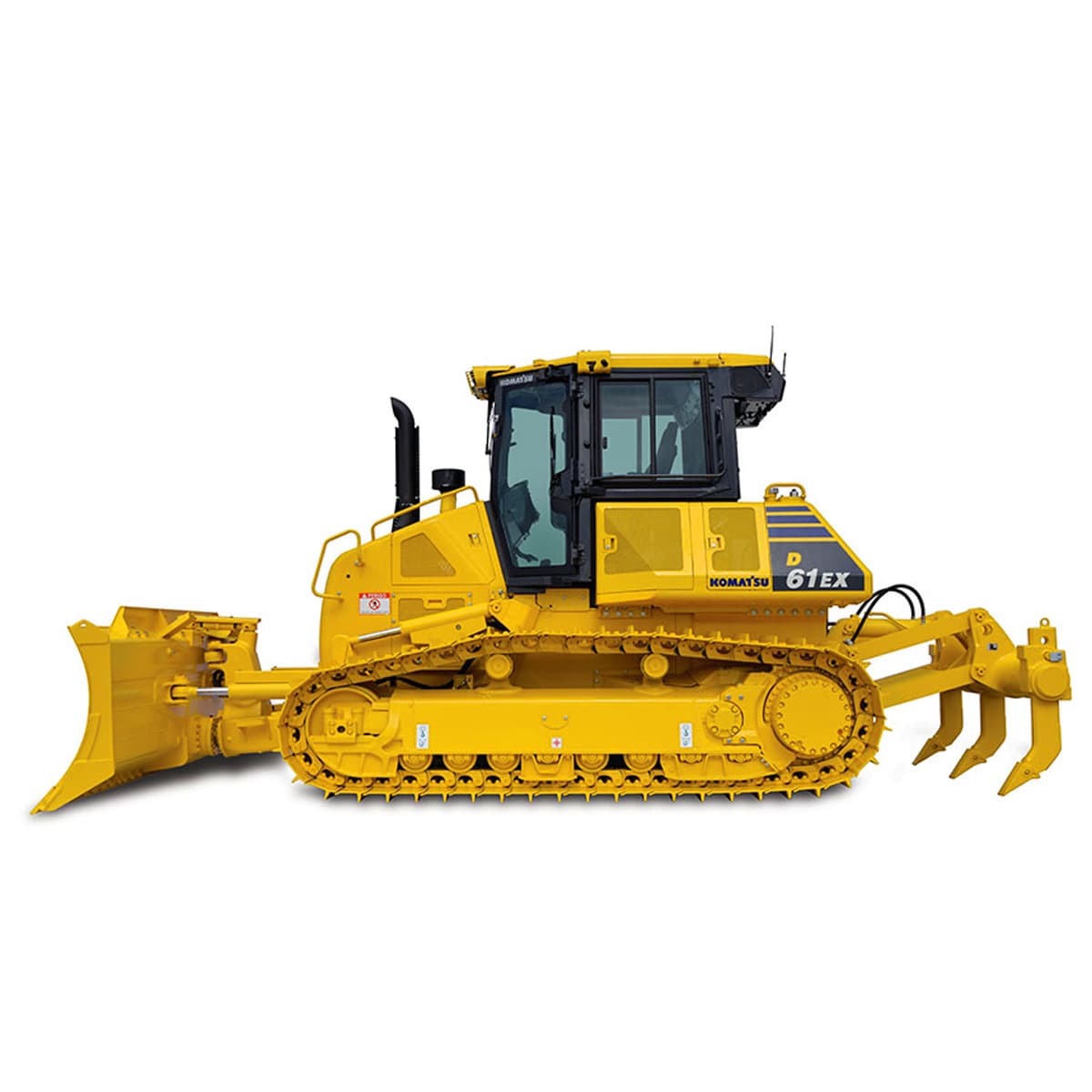
- Ripping: breaking hard ground or soft rock with the rear shank.
- Slopes and soft ground: it keeps pushing where a wheeled machine slips.
Bulldozer, excavator, loader or motor grader
The deciding question is what happens to the material. If it's pushed and stays nearby, bulldozer. If it's dug from the ground and put into a truck, excavator. If it's already loose in a pile and needs loading, wheel loader. If the surface must be left at its final level and grade, motor grader.
On a pad or a large road they work together: the dozer moves the volume and the grader fine-tunes. And the dozer loses as distance grows: every extra meter it pushes, material escapes at the sides and the cycle gets longer. From there on, loading and hauling fits better.
What must be done with the material?
- Push it a short distance → Bulldozer
- Dig it and load a truck → Excavator
- Load it from a pile → Wheel loader
- Leave final level and grade → Motor grader
- Break it before moving it → Dozer with ripper
Ripping: when the blade no longer cuts
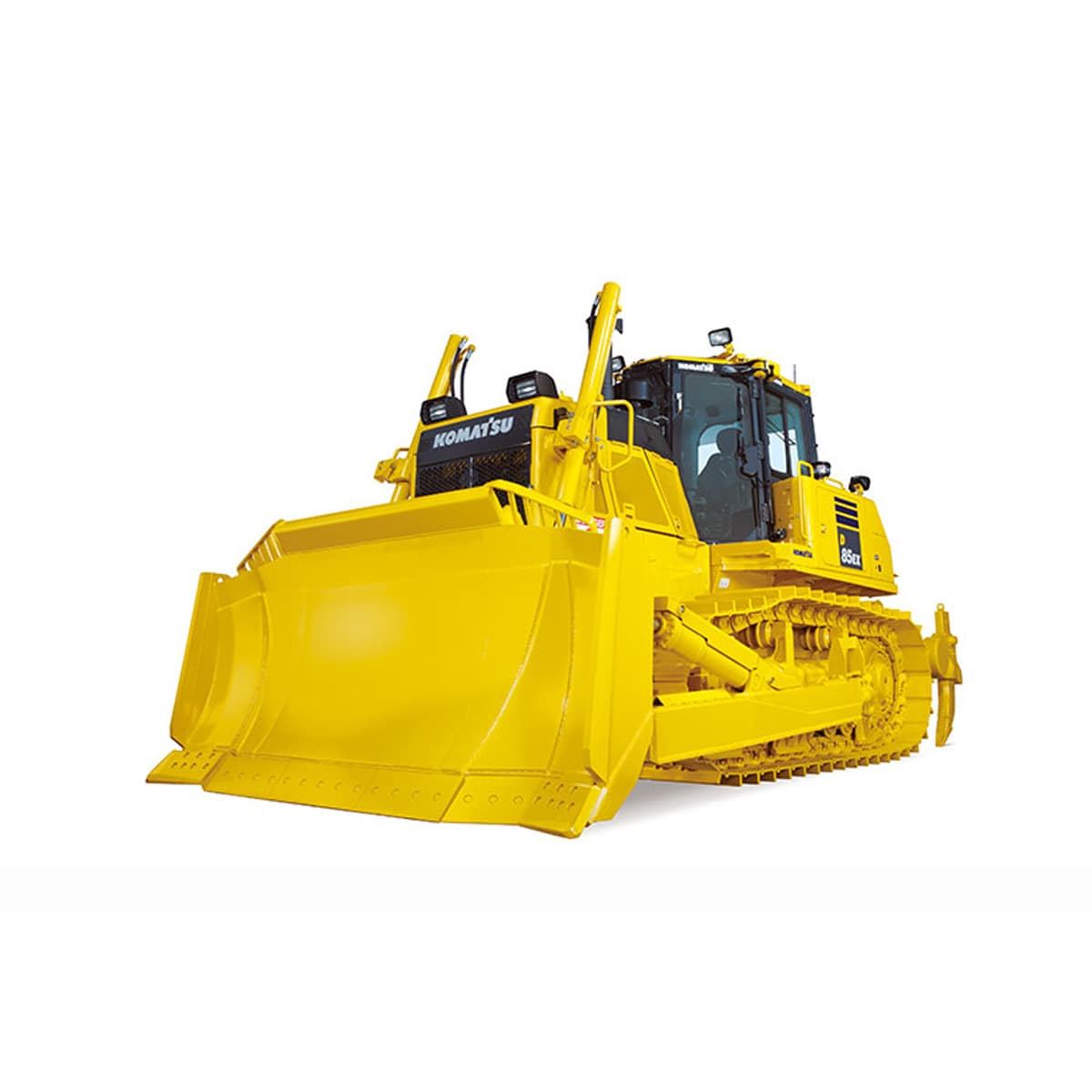
If the blade bounces on the ground or the excavator only scratches with its teeth, the material is too hard to move that way. The ripper—one or more shanks at the back of the tractor—fractures it and then the blade pushes it. According to Komatsu's datasheets, the D85EX-15 is designed for heavy dozing and ripping in quarries, the D155AX-6 carries a giant ripper for rock and the D275AX-5E0 a high-penetration ripper.
Rule of thumb: if hard rock shows up in isolated spots, a hydraulic hammer on the excavator may be enough; if it's a whole face, ripping with a large tractor is usually faster.
Slopes and soft ground
Tracks are the dozer's reason for being on Central American jobsites: in the rainy season, on wet clay or a hillside, a wheeled machine loses traction and the dozer keeps going. Komatsu describes the D61EX-23 (17.5 t, 168 HP) precisely by its power-to-weight ratio to keep pushing without sinking in soft ground.
On slopes, work up and down, not sideways, and respect the limits in the operator's manual. Opening access on a hillside is dozer work, but with a trained operator: it's where experience counts most.
The blade: PAT, Sigmadozer or Semi-U
The blade defines what the tractor is for as much as its weight. In the Komatsu catalog there are three types.
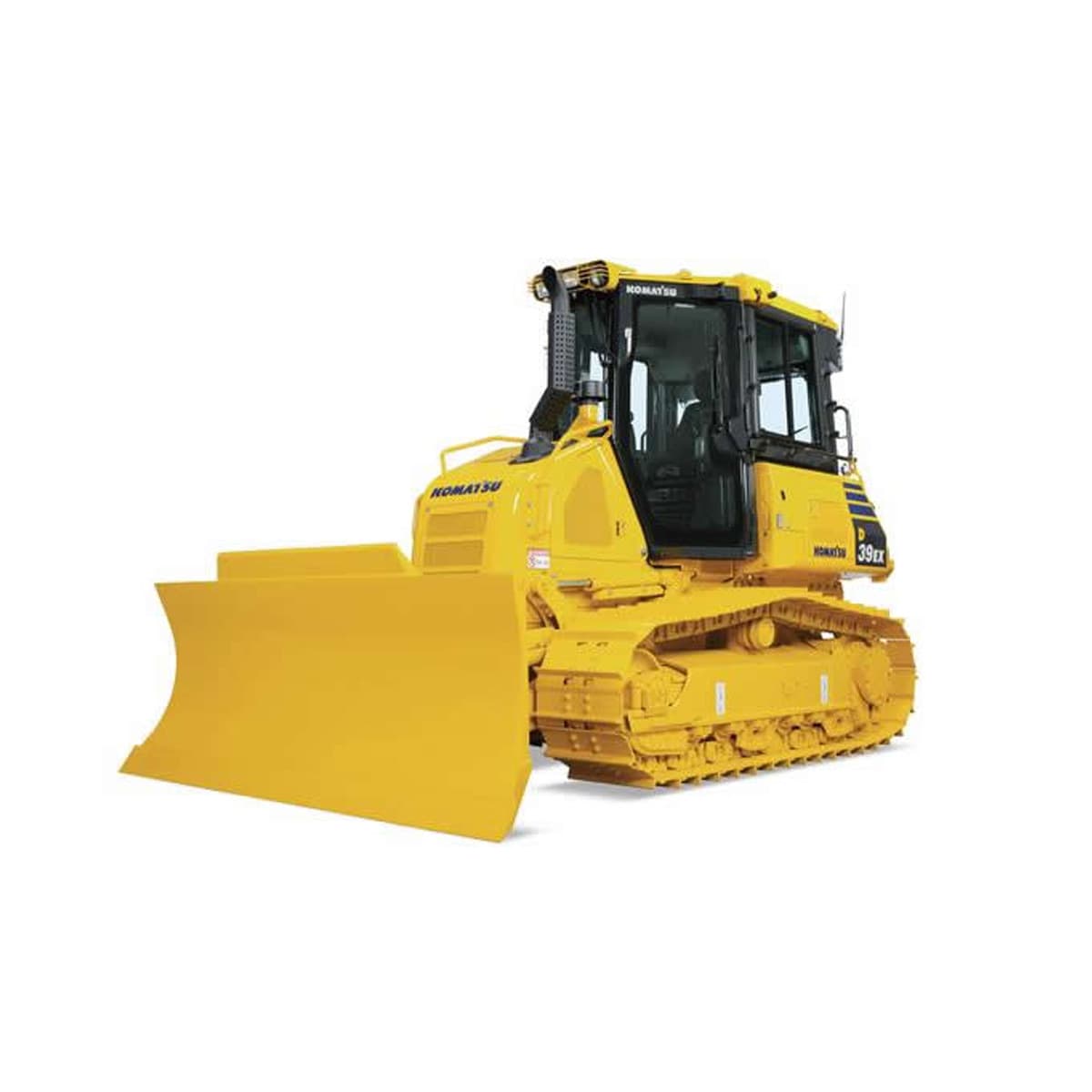
- PAT (Power Angle Tilt), on the D39EX-22, D51EX-22 and D61EX-23: it tilts and angles from the controls to side-cut, make ditches and leave the profile. It's the finishing and civil-works blade.
- Sigmadozer, on the D65EX-16, D85EX-15 and D155AX-6: material rolls toward the center instead of escaping at the sides, so it moves more per pass. It's the production blade.
- Semi-U, on the D275AX-5E0 (13.7 m³): it pushes large volumes a short distance without losing load at the sides. It's the mining blade.
What size of dozer you need
Bigger isn't better: an oversized tractor destroys more than it shapes on a small site, and a small one in a quarry runs out of force. These are the catalog's seven options and the job Komatsu describes them for.
- D39EX-22 (8.5 t, 2.2 m³ blade): fine grading, terraces and site preparation.
- D51EX-22 (13.5 t, 3.5 m³): starts pushing volume without losing precision; good visibility with a crew around.
- D61EX-23 (17.5 t, 4.5 m³): cutting and shaping pads, soft ground.
- D65EX-16 (19.9 t, 5.61 m³ Sigmadozer): the reference mid-size dozer.
- D85EX-15 (27 t, 7.1 m³): heavy dozing and ripping in quarries.
- D155AX-6 (39.5 t, 9.4 m³): production in earth and rock alongside large excavators.
- D275AX-5E0 (56 t, 13.7 m³): mining and extreme dozing.
- D39EX-22: 95 HP
- D51EX-22: 130 HP
- D61EX-23: 168 HP
- D65EX-16: 205 HP
- D85EX-15: 264 HP
- D155AX-6: 354 HP
- D275AX-5E0: 410 HP
- Source: Komatsu datasheets in the catalog.
When a bulldozer doesn't make sense
If material has to go far, trucks have to be loaded or the work is on pavement, the dozer is the wrong machine: steel tracks damage asphalt and wear out when traveling. Logistics matters too: between sites it travels on a lowboy, so for a job of a few hours renting or using a backhoe or skid steer usually works better.
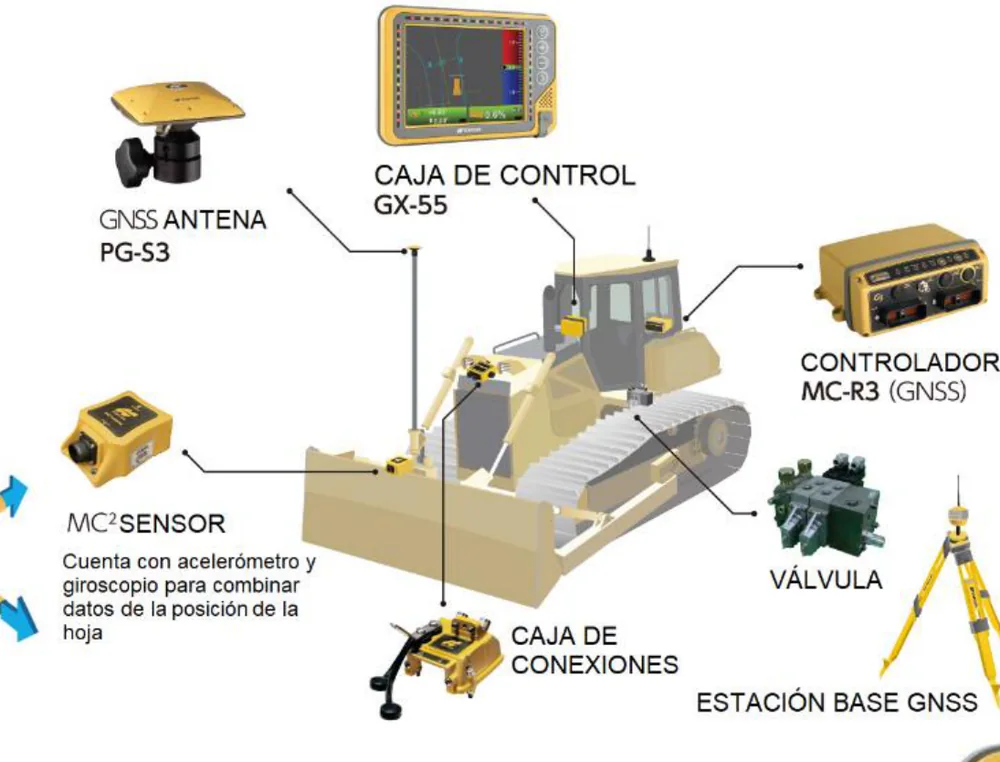
And if grade tolerance is tight, the dozer alone isn't enough; with Komatsu Smart Construction it can work with 3D GPS or 2D laser control. According to Komatsu, automatic control cuts working time by up to 50%; that's the manufacturer's figure, not our own measurement.
Watch it push
This clip from the group's channel shows a Komatsu D155 at work: the catalog's production scale.
Where to buy a bulldozer in Central America
The seven Komatsu crawler dozers in this guide are offered in the group's four countries: El Salvador (Zaragoza, Antiguo Cuscatlán, San Miguel), Guatemala as CMARKET (Mixco, Río Hondo, Xela), Nicaragua (Managua) and Panama (Panama City). All come with KOMTRAX, Komatsu's remote monitoring, with genuine parts, workshop or on-site service and the option of the Komatsu Warranty Pro extended warranty. If you're not sure your job is dozer work, the equipment advisor points you in the right direction; in the quote, state the material, pushing distance and slope.
Summary: what to choose
| If… | Then… |
|---|---|
| You clear land or open access | Bulldozer |
| You push material a short distance | Dozer with PAT or Sigmadozer blade |
| Ground is too hard for the blade | Ripper: D85EX-15 or larger |
| Trucks must be loaded | Excavator or loader, not a dozer |
| You need the exact final grade | Motor grader or 3D control |
| Small, occasional job | Rent, backhoe or skid steer |
Get a quote without leaving
Want to work it out with an advisor?
Topic: Bulldozer
Which country is your project in?
Common mistakes
Pushing too far
Material escapes at the sides and the cycle grows; that's when you load and haul.
Oversized tractor
On a small site it destroys more than it shapes and burns extra fuel.
Wrong blade
A Sigmadozer doesn't cut ditches; a PAT doesn't deliver quarry output.
Traveling on pavement
Tracks damage asphalt and wear; move it on a lowboy.
Working sideways on a slope
Go up and down the slope and respect the manual's limits.
Frequently asked questions
What is a bulldozer used for?
For pushing: clearing, opening roads, cutting and spreading material over short distances, ripping hard ground and working on slopes or soft ground. It doesn't load trucks.
Which is better, a bulldozer or an excavator?
It depends on what happens to the material: if it's pushed and stays nearby, bulldozer; if it's dug and loaded into a truck, excavator. Large jobs use both.
Bulldozer or motor grader for a road?
The dozer opens the road and moves the volume; the motor grader shapes it and sets the crown and final grade. On a new road you use both, in that order.
What size of bulldozer do I need?
For fine grading and terraces, an 8.5 to 13.5 t unit like the D39EX-22 or D51EX-22; for pads and civil works, the D61EX-23 or D65EX-16; for quarries and rock, from the D85EX-15 up.
How much does a bulldozer cost?
It depends on the model, blade, ripper, extended warranty, service contract and how you pay. Request a quote with your job and an advisor will contact you during business hours.
Ready for the next step?
Dozer or another machine? Open the equipment advisor