Short answer
Each earthmoving task has its machine: the dozer pushes and rips, the excavator digs and loads, the wheel loader loads loose material, the truck hauls, the motor grader shapes and levels, and the roller compacts. The backhoe and skid steer cover small and mixed jobs. Choosing well means matching the machine to the task and sizing the fleet around the one that sets the pace.
Earthmoving tasks, in order
Almost every project—a building pad, a road, a subdivision, a pit—follows the same sequence. Thinking about it this way shows which machine works at each moment and which can wait.
- Clearing and cutting: Dozer
- Digging: Excavator
- Loading: Excavator or wheel loader
- Hauling: Rigid or articulated truck
- Shaping and leveling: Motor grader
- Compaction: Soil roller
Pushing and ripping: the dozer
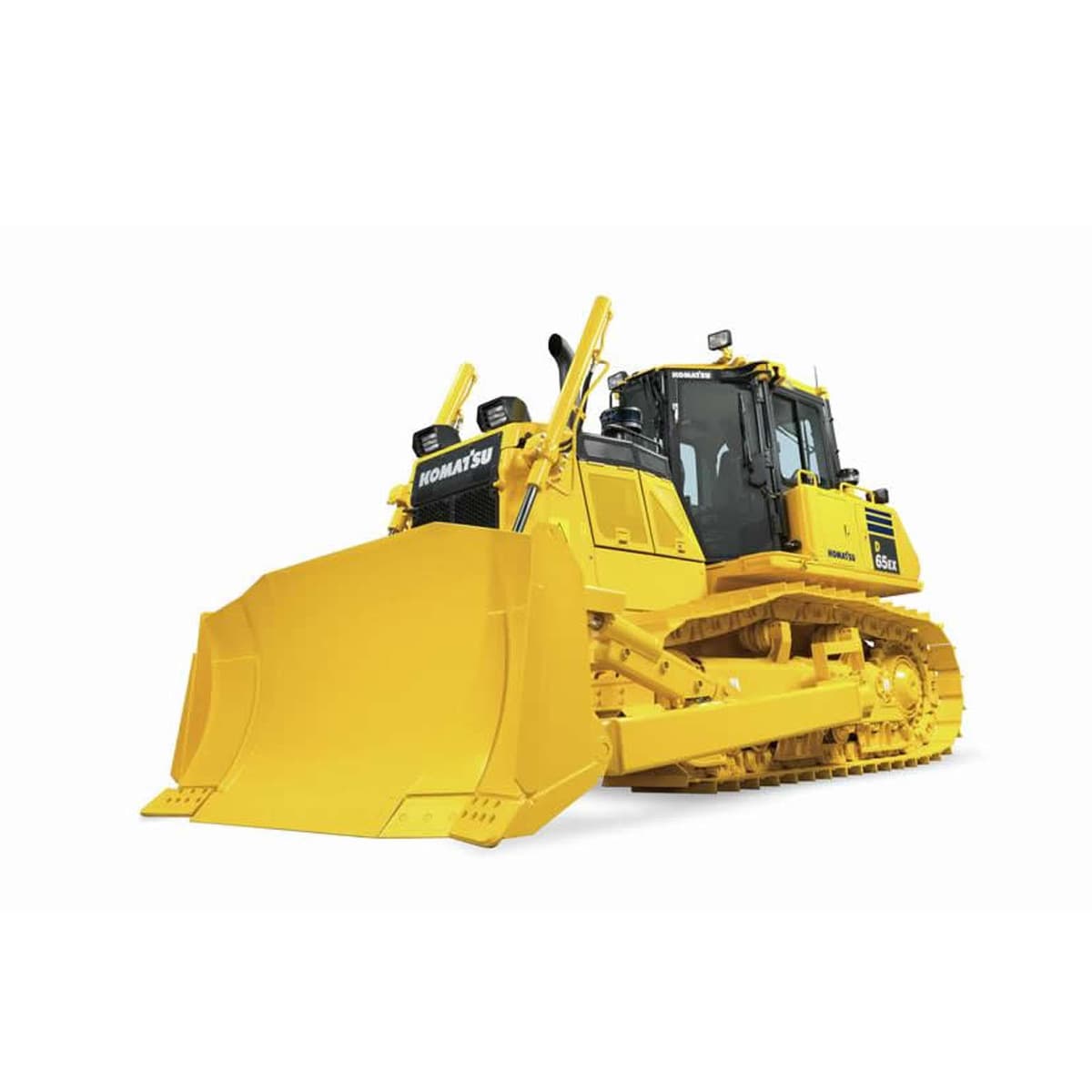
The crawler tractor (dozer) pushes material over short distances, opens access roads, shapes embankments and, with a ripper, breaks hard ground or soft rock. It's chosen by weight and blade type. In the catalog, according to Komatsu's datasheets, the D39EX-22 weighs 8.5 t with a 2.2 m³ PAT blade for fine grading; the D65EX-16, at 19.9 t with a 5.61 m³ Sigmadozer blade, is the reference mid-size dozer; and the D155AX-6 (39.5 t) and D275AX-5E0 (56 t) are for production and mining.
Rule of thumb: if you push farther than a few dozen meters, it stops being a dozer job and becomes a load-and-haul job.
- D39EX-22 · fine grading: 8.5 t
- D65EX-16 · reference mid-size: 19.9 t
- D155AX-6 · production: 39.5 t
- D275AX-5E0 · mining: 56 t
- Source: Komatsu datasheets in the catalog.
Digging and loading: excavator or wheel loader
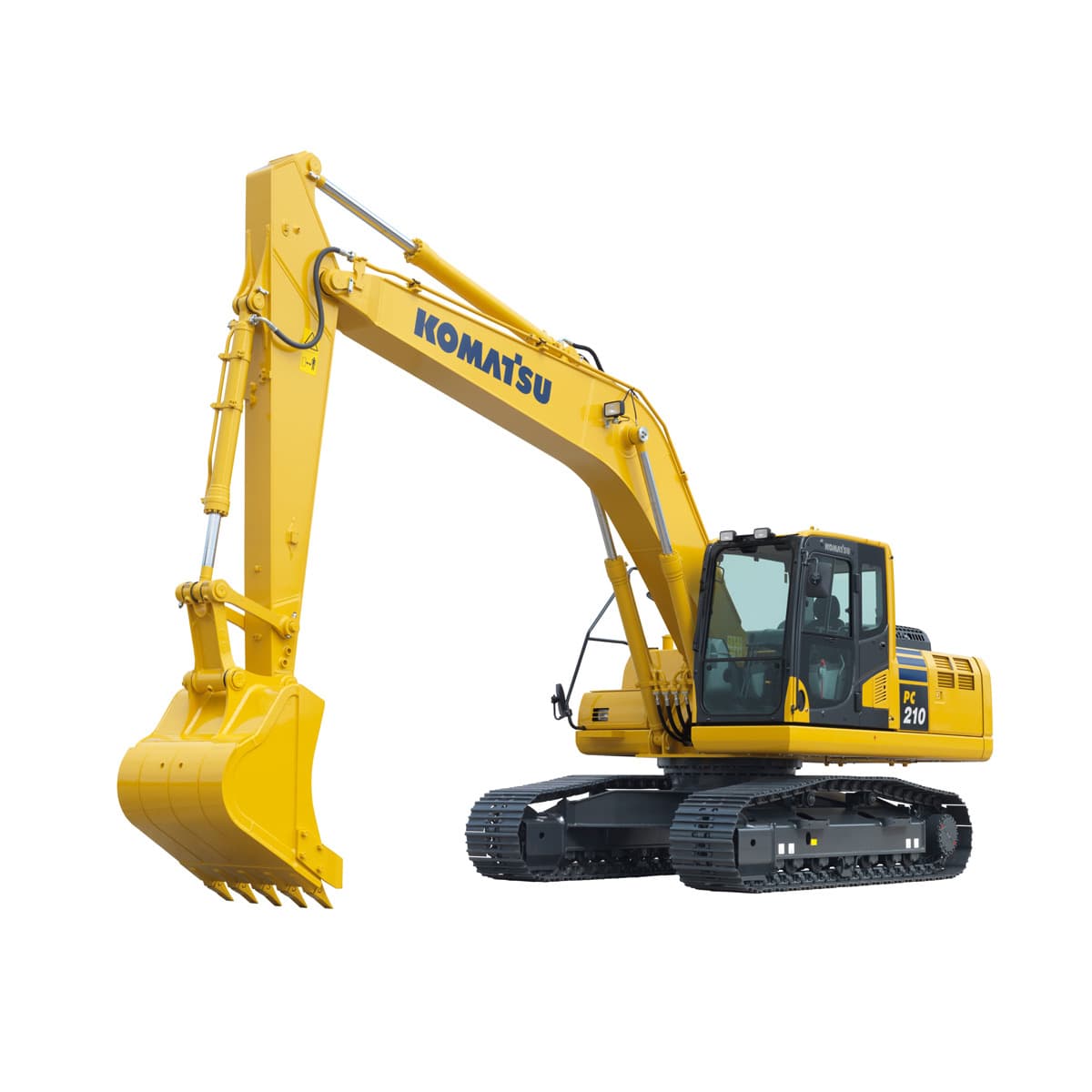
The tracked excavator digs above or below the level it stands on and loads trucks without moving. It's the machine for bench cuts, large trenches and foundations. The catalog runs from the PC130-8 to the PC1250-11R; the excavator guide explains how to choose tonnage.
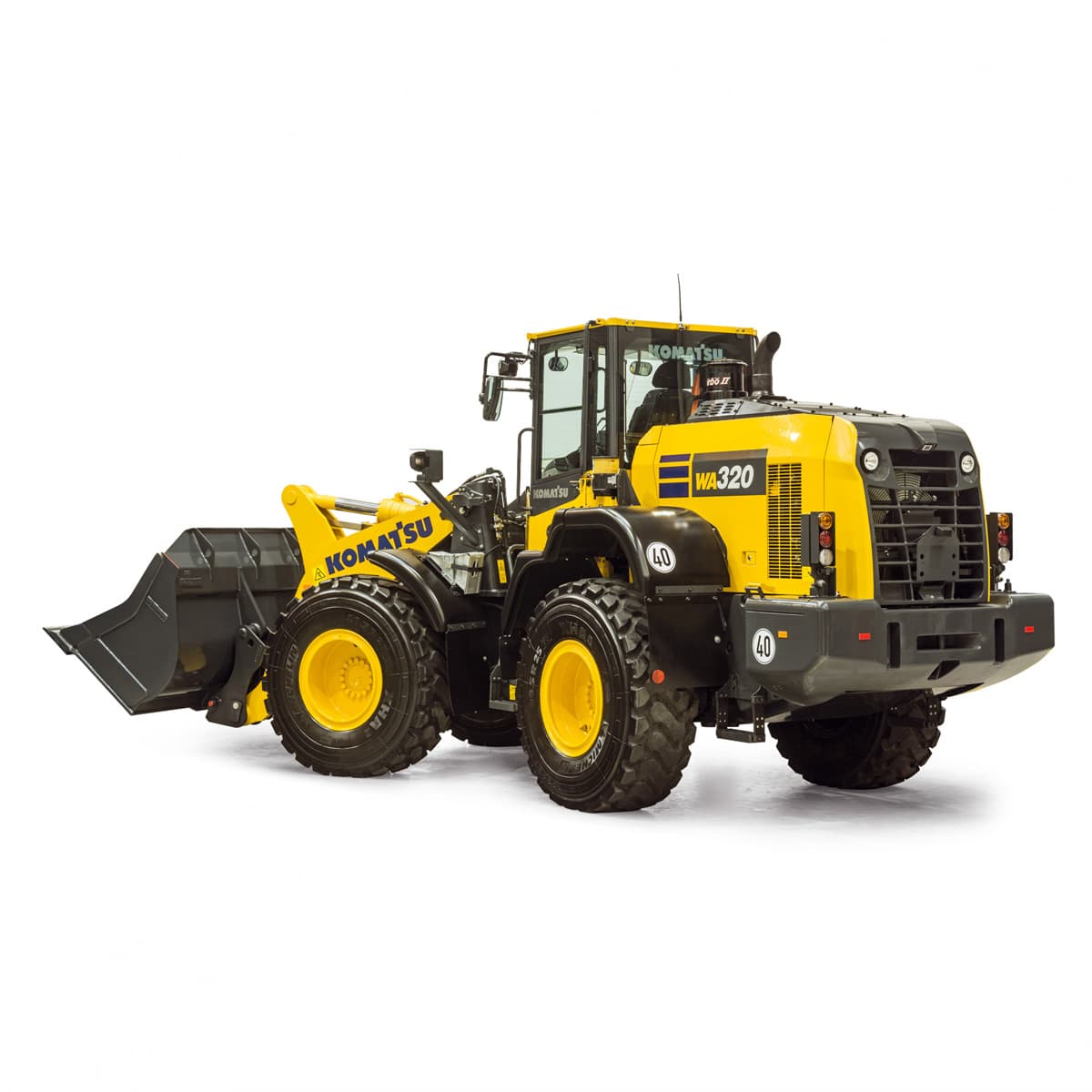
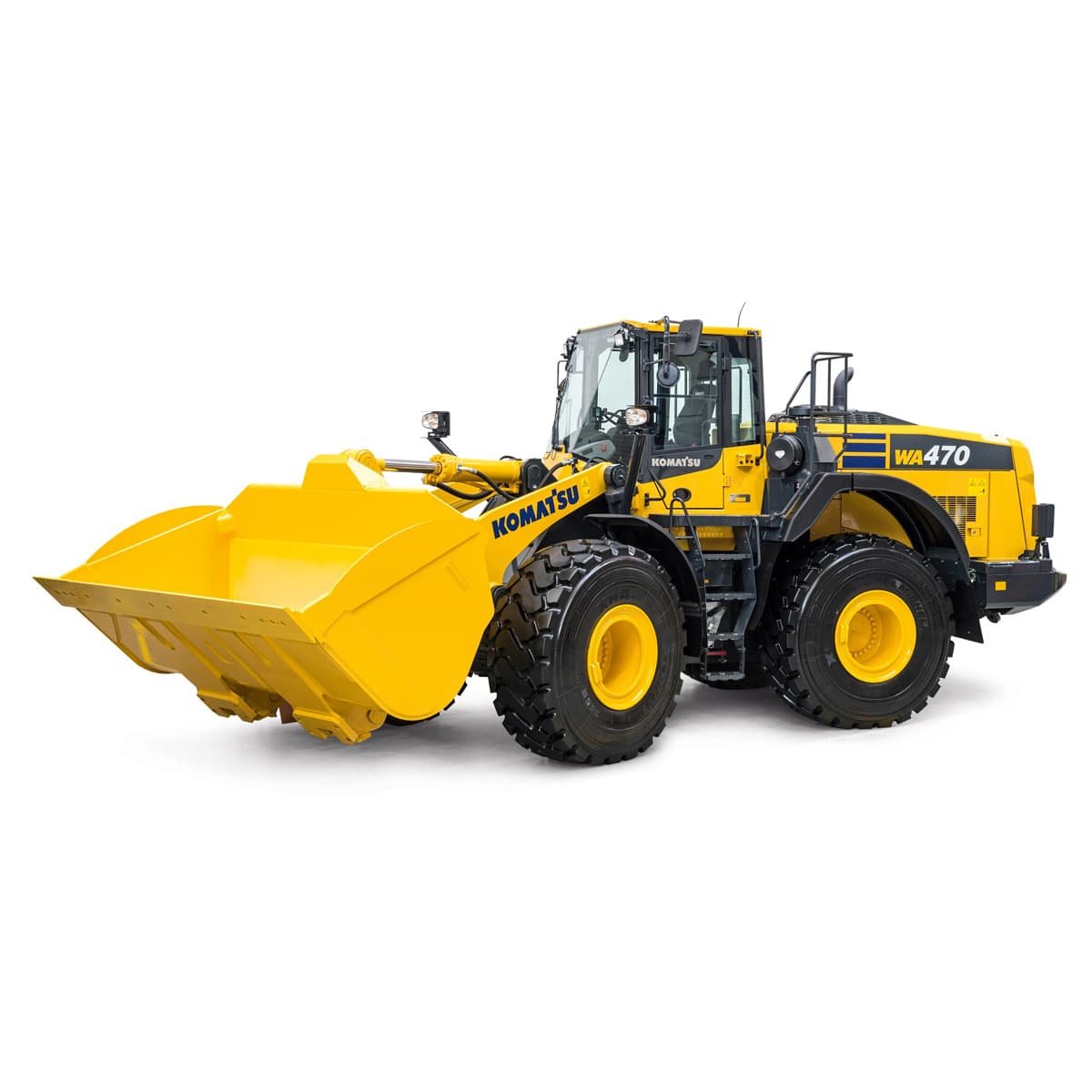
The wheel loader loads loose or stockpiled material and moves quickly between pile and truck. It fits stockpiles, aggregate yards, plants and quarries. It runs from the WA150-5 to the WA500-6, and the WA470-8 carries a 5.0 m³ bucket according to Komatsu.
The rule: if the material is in natural ground or a slope, excavator; if it's already loose in a pile and there's room to maneuver, loader.
Hauling: rigid or articulated truck
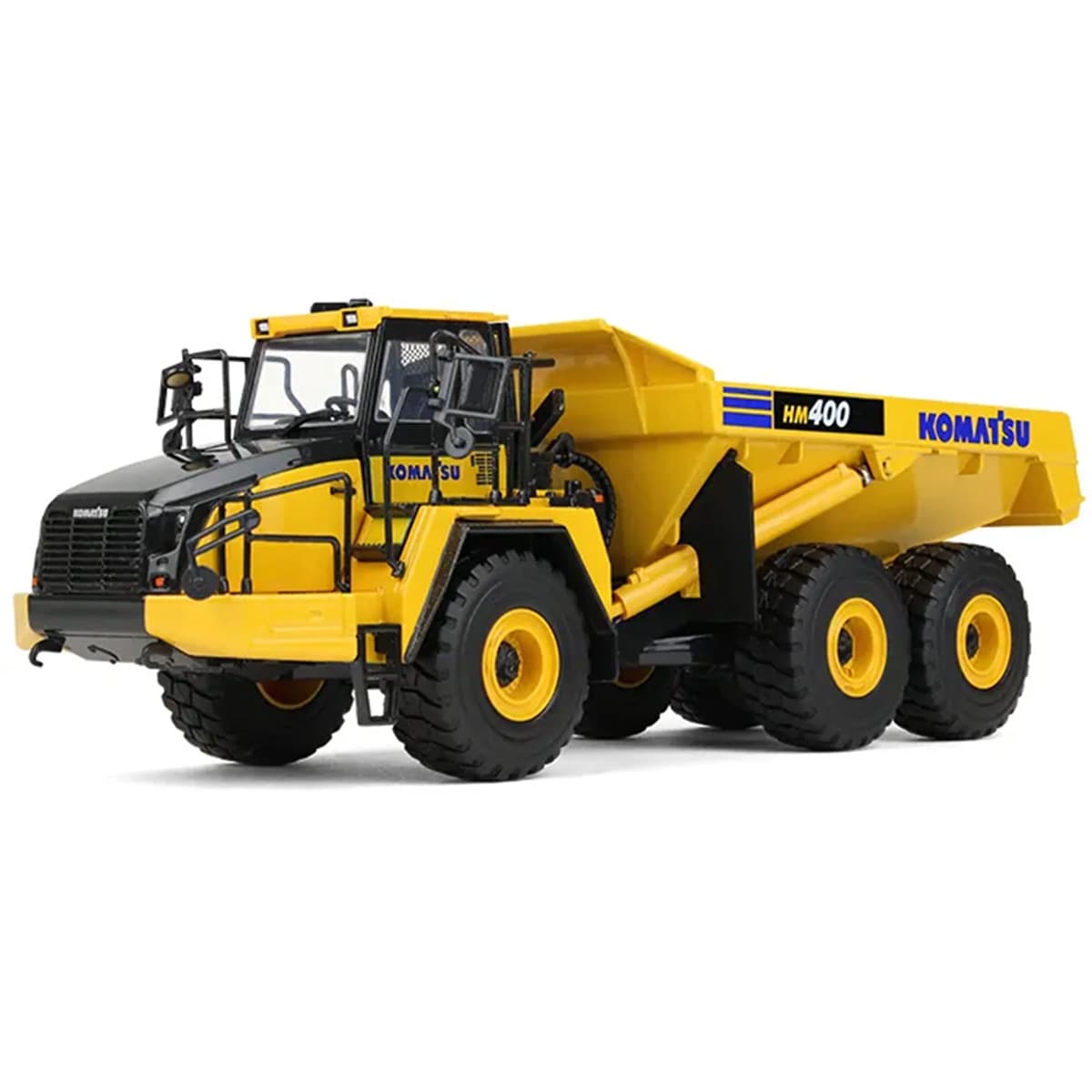
Over long distances material moves by truck. The rigid truck is the standard on maintained haul roads: according to Komatsu, the HD465-7 carries 55 t per cycle. The articulated truck pivots in the middle and drives all wheels, so it stays loaded on soft ground, rain and slopes: the HM400-3M0 carries 40 t.
If your internal roads turn to mud in the rainy season or have steep ramps, the articulated truck keeps production going; if the road is firm and stable, the rigid truck moves more per cycle.
Leveling and compacting
The motor grader shapes the pad or road with its long center blade: it cuts, spreads and sets the final grade. The catalog runs from the GD535-5 to the GD705-5, and its guide explains how to choose. With Komatsu Smart Construction it can work with 3D guidance.
Then each layer is compacted: smooth drum for granular soil, padfoot for cohesive soil. In El Salvador and Guatemala, BOMAG soil rollers; in all four countries, SIMAQ light compaction for trenches and tight spaces.
Small jobs: backhoe and skid steer
Not every job justifies a fleet. In utility networks, subdivisions and municipal maintenance, a backhoe (WB93R-5E0 or WB97R-5E0) trenches, backfills and loads. In tight spaces, the skid steer handles cleanup and loading with attachments: Bobcat in El Salvador and Panama, Komatsu in Guatemala and Nicaragua.
Build the fleet around the bottleneck
A front's production is set by the slowest machine in the cycle. If the excavator fills a truck in a few minutes but the truck takes much longer to go and come back, the excavator waits. The basic math is to divide the truck's cycle time (load, haul, dump, return) by the time the excavator takes to fill it: that gives how many trucks it needs to keep working. Round up if the road is uneven.
With real data—cubic meters, distances, material—the fleet study runs this calculation and estimates what each tonne moved costs.
Where to buy heavy machinery in Guatemala and Central America
In Guatemala, Grupo ConstruMarket operates as CMARKET, Komatsu's authorized distributor, with branches in Mixco, Río Hondo and Xela: excavators, dozers, wheel loaders, motor graders, backhoes and trucks, plus BOMAG and D'Avino. In El Salvador it serves from Zaragoza, Antiguo Cuscatlán and San Miguel; in Nicaragua from Managua; and in Panama from Panama City. Quotes are personalized: tell us the task and volume and an advisor will contact you during business hours. For a one-off project, RentaCentro rents group machinery.
Summary: what to choose
| If… | Then… |
|---|---|
| You push material short distances or open roads | Dozer |
| You dig a bench, slope or large trench | Tracked excavator |
| You load loose material from a pile | Wheel loader |
| You haul on soft or steep roads | Articulated truck |
| You need final grade and level | Motor grader |
| Small, spread-out job | Backhoe or skid steer |
Get a quote without leaving
Want to work it out with an advisor?
Topic: Earthmoving machinery
Which country is your project in?
Common mistakes
Pushing over long distances
The dozer loses material and time; that's when you load and haul.
Too few trucks for the excavator
The excavator waits and cost per cubic meter shoots up.
Loader where an excavator belongs
In natural ground the loader doesn't penetrate as well and wears tires.
Compacting layers that are too thick
Density doesn't reach the bottom; compact in lifts.
Sizing without data
Without real volumes and distances, the fleet is too big or too small.
Frequently asked questions
What machinery is used for earthmoving?
Dozer to push and rip, excavator to dig and load, wheel loader for loose material, trucks to haul, motor grader to level and rollers to compact. On small jobs, backhoe and skid steer.
Excavator or wheel loader to load trucks?
Excavator if the material is in natural ground or a slope; loader if it's already loose in a pile and there's room to maneuver between pile and truck.
How many trucks does an excavator need?
Divide the truck's cycle time (load, haul, dump, return) by the time the excavator takes to fill it, and round up. The fleet study does the math with your data.
Where to buy heavy machinery in Guatemala?
With CMARKET (Grupo ConstruMarket), Komatsu's authorized distributor in Guatemala, at its Mixco, Río Hondo and Xela branches. Request a quote online with your application.
Where to buy wheel loaders in Guatemala?
CMARKET offers the catalog's Komatsu wheel loaders, from the WA150-5 to the WA500-6, with genuine parts and workshop or on-site service.
Dozer or motor grader?
The dozer moves volume and opens the way; the motor grader fine-tunes and sets the final grade. On a road or large pad you use both, in that order.
Ready for the next step?
Open the equipment advisor