Short answer
A road is built in phases and each one needs its equipment: clearing and earthworks with dozer, excavator, loader and trucks; shaping with a motor grader; compaction of each layer with soil rollers; the asphalt surface with a paver and asphalt rollers; and rehabilitation with a cold planer and recycler. Temporary signage goes with every phase. The pace is set by the slowest phase, so equipment is sized as a chain, not machine by machine.
Road phases and their equipment
Whether it's a rural road, an urban street or a highway, the order repeats. The scale of the machines and the thickness of the layers change, not the logic.
- Clearing and earthworks: Dozer, excavator, loader, trucks
- Shaping: Motor grader
- Layer compaction: Soil rollers
- Stabilization or recycling: Recycler and binder spreader
- Paving: Paver and asphalt rollers
- Signage: Message signs, cones, channelizer drums
1. Clearing and earthworks
The dozer opens the corridor, cuts and pushes; the excavator handles slope cuts, ditches and culverts; the loader and trucks move material to the fills. In the Komatsu catalog (all four countries) there are dozers from the D39EX-22 to the D275AX-5E0, excavators from the PC130-8 to the PC1250-11R, loaders from the WA150-5 to the WA500-6 and rigid and articulated trucks. The earthmoving guide explains which machine to use for each task and how to balance trucks and excavator.
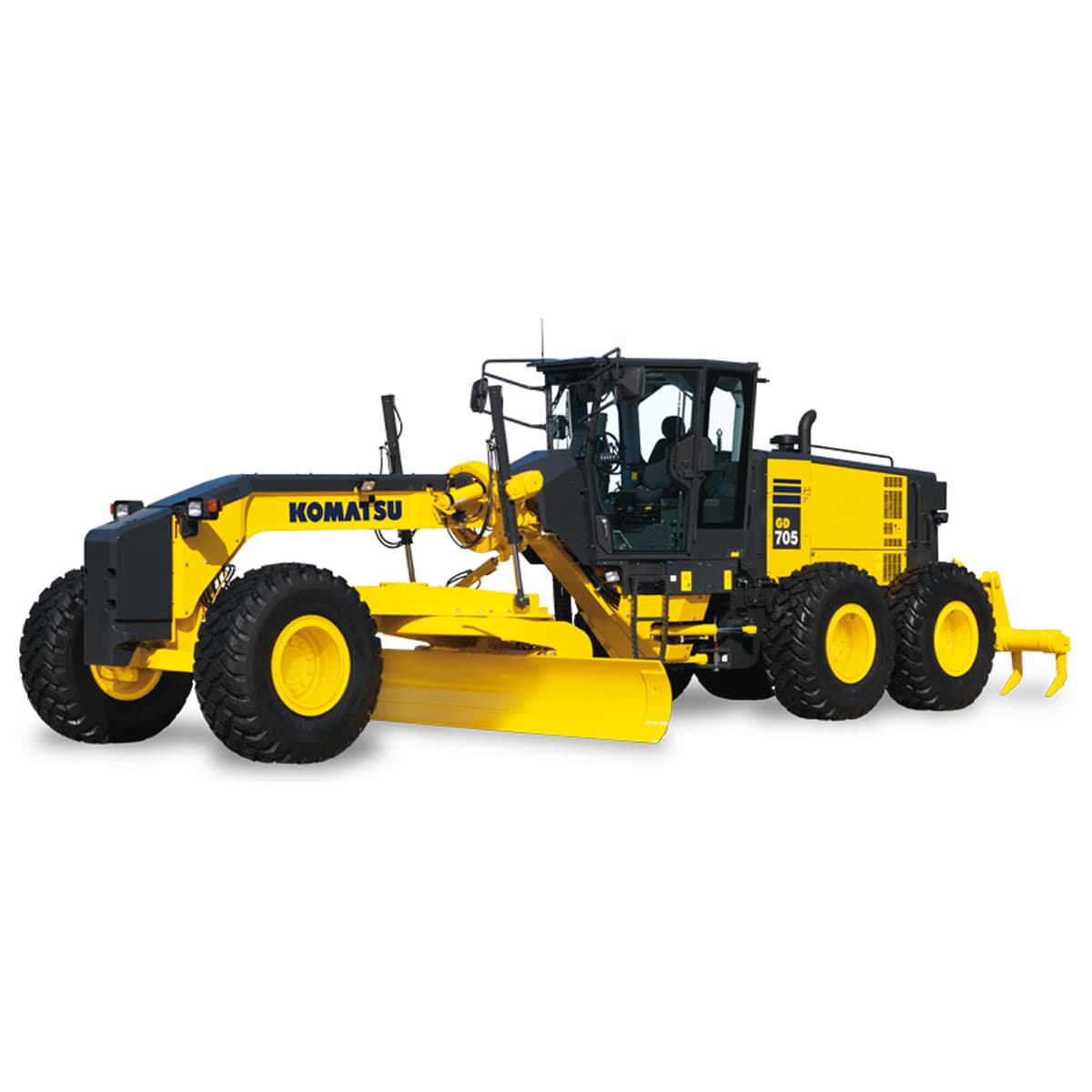
2. Shaping: the motor grader
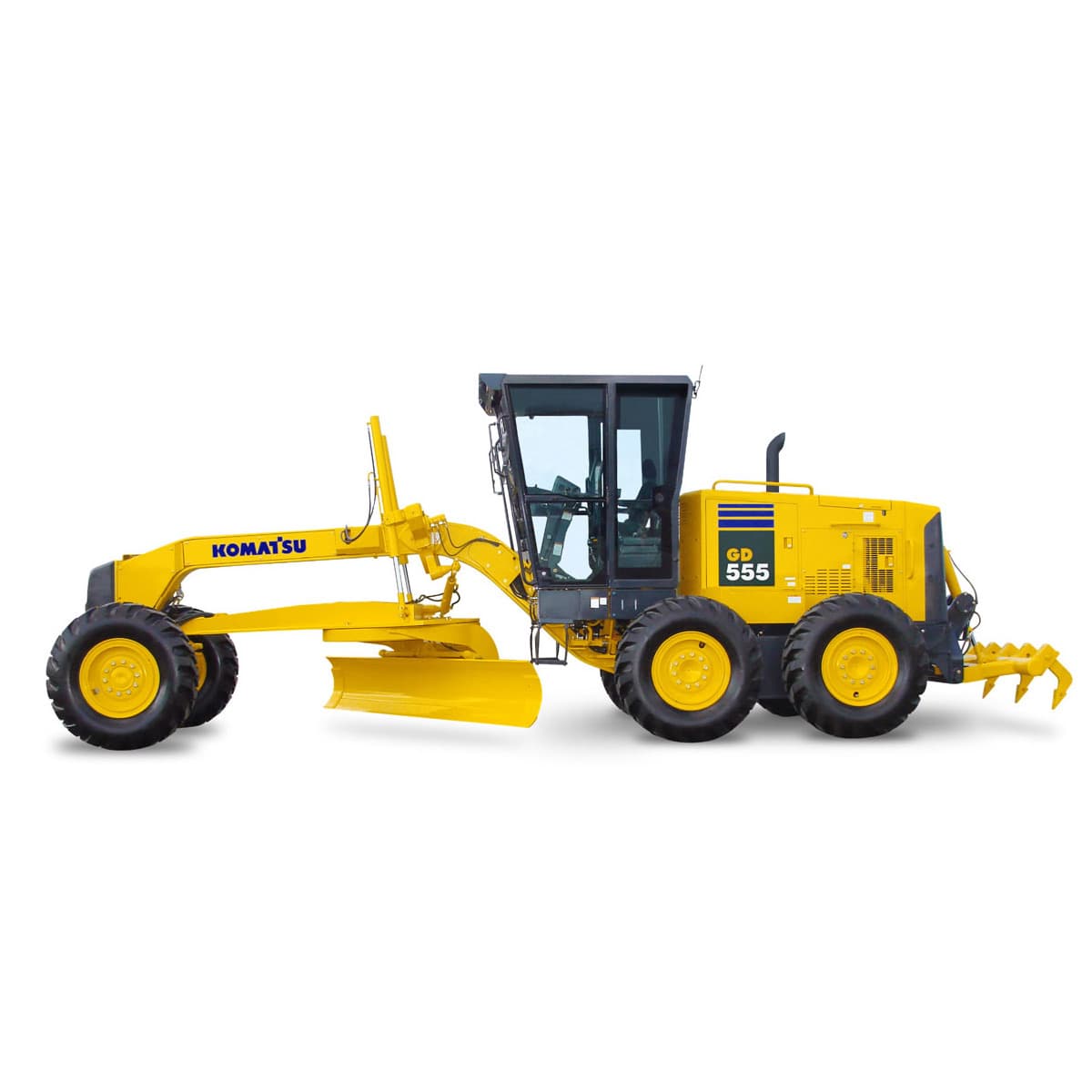
The motor grader spreads and shapes each layer with its center blade, sets the road crown and the ditch slope. It's the machine that most defines the road's geometric quality. In the catalog, from the GD535-5 to the GD705-5; with Komatsu Smart Construction it can work with 3D guidance. Its own guide explains how to choose the size by road width and type of work.
3. Compacting subgrade, subbase and base
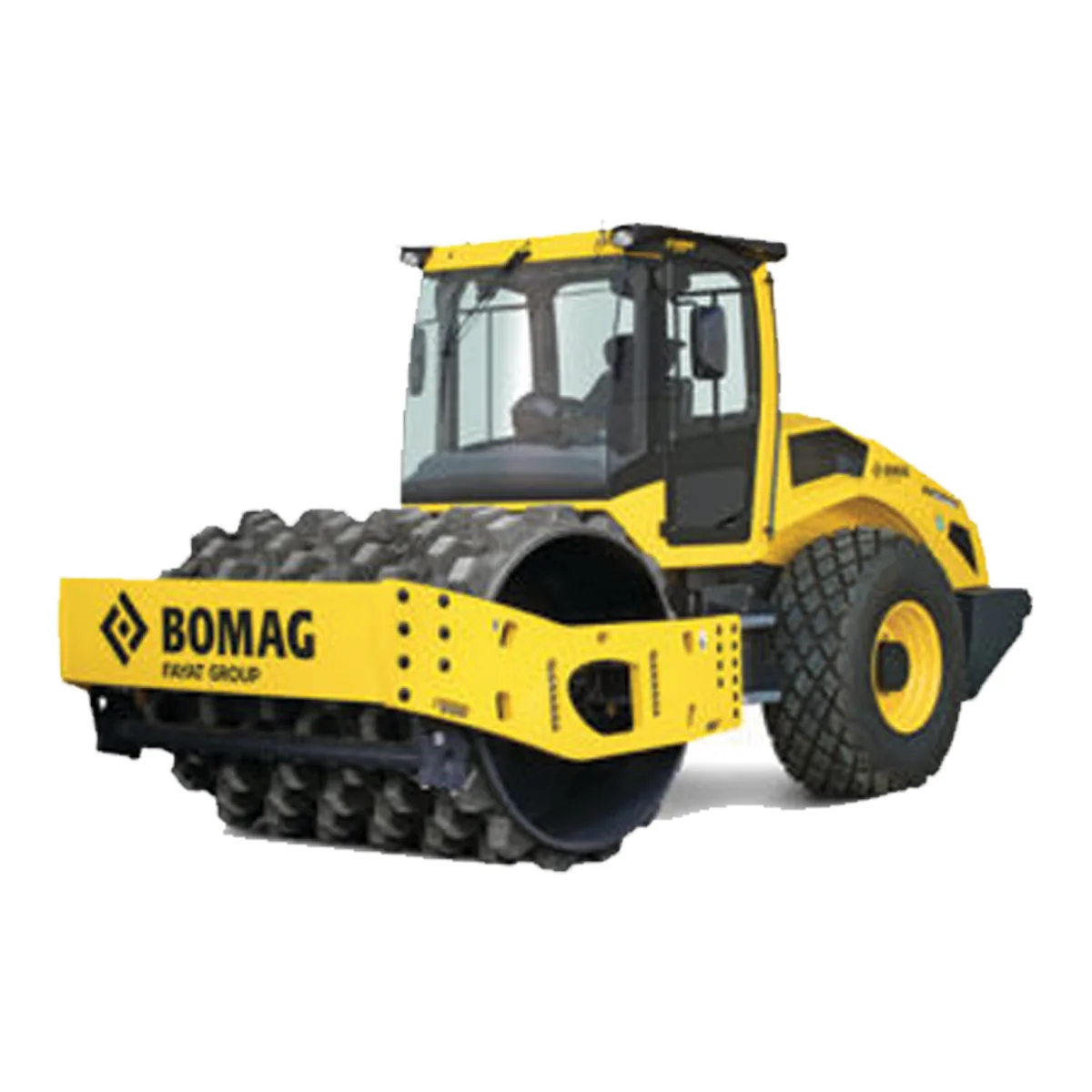
Each layer is compacted before the next one goes down. The soil type decides the drum: smooth vibratory for granular material (sand, gravel, base) and padfoot for cohesive soil (clay, silt), which a smooth drum only smooths on top. According to BOMAG's datasheets, the BW 211 D-5 is a 10.6 t smooth roller with a 2,130 mm drum, and the BW 212 PD-5 carries 150 pads on 12.94 t.
The passes needed depend on the machine, the lift thickness and the material; the passes calculator and the pavement-layers tool help plan them, and density is confirmed with a field test. The compactor guide also covers light equipment for trenches and edges.
- Asphalt surface: Tandem, combination or pneumatic roller
- Base: Granular material: smooth vibratory roller
- Subbase: Granular or stabilized: smooth roller
- Subgrade: Natural soil or fill: padfoot if cohesive
4. In-place stabilization and recycling
When the road's soil is weak or the old pavement is damaged, instead of removing everything and bringing new material you can recycle in place: a spreader lays powdered binder (cement, lime or fly ash) and the recycler mixes it with the existing material. It means less hauling, less new material and fewer days on site, a strong argument in public road work.
According to BOMAG, the BS 10-2 spreader has a 10 m³ hopper and a 2,400 mm working width, and the RS 460 and RS 500 recycler-stabilizers work at 2,440 and 2,250 mm wide.
5. Asphalt paving
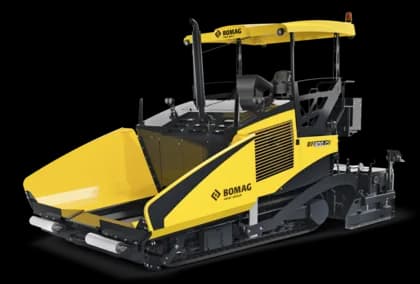
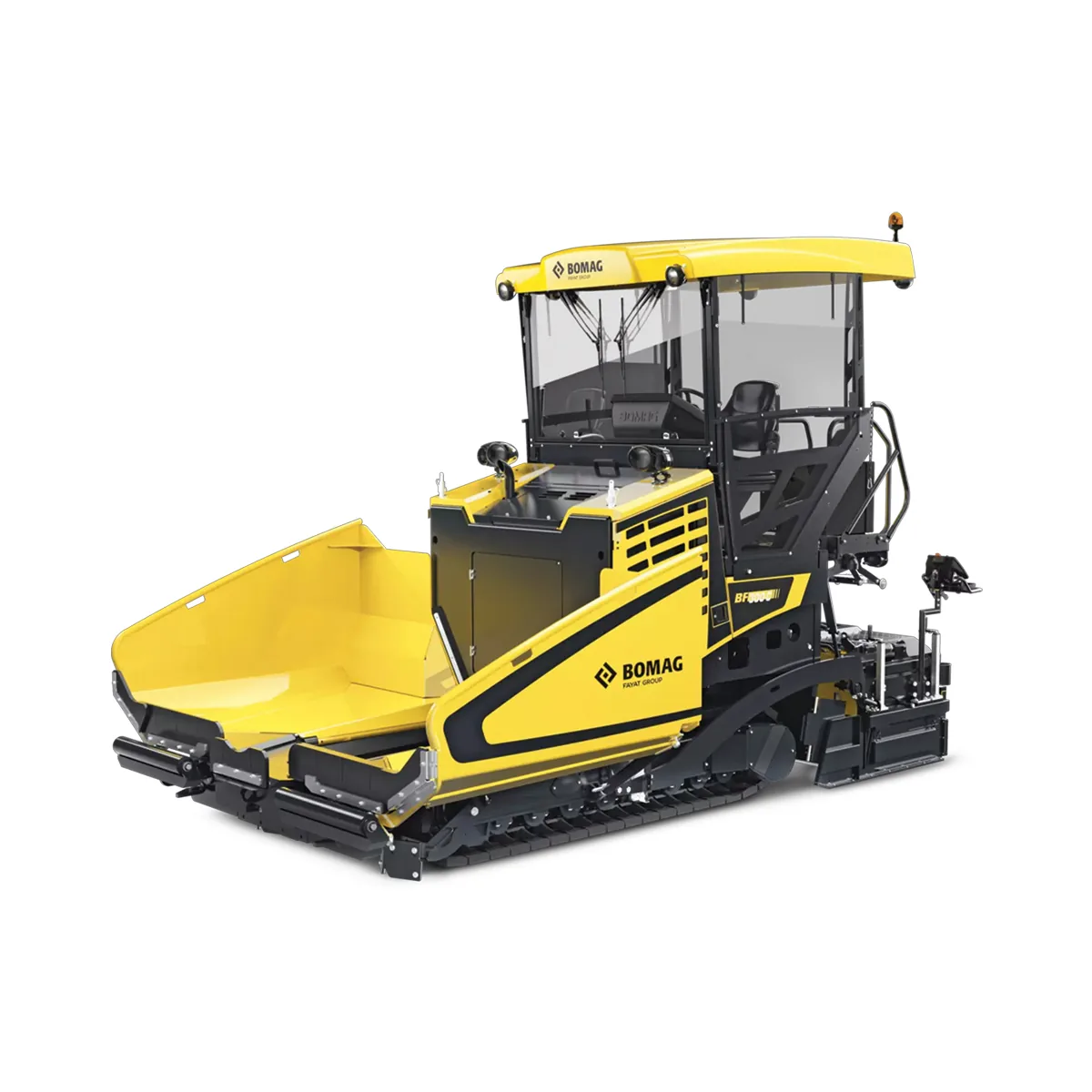
The paver receives the mix from the truck and spreads it with uniform thickness and texture; how much the roller has to correct afterward depends on its screed. For streets and urban access, the BOMAG BF 300 C paves from 1.7 to 3.4 m (max. 5.0 m) with a 4.8 m³ hopper; for highways, the BF 800 C works from 2,500 to 9,000 mm, and the BMF 2500 S feeder keeps supply constant, according to BOMAG.
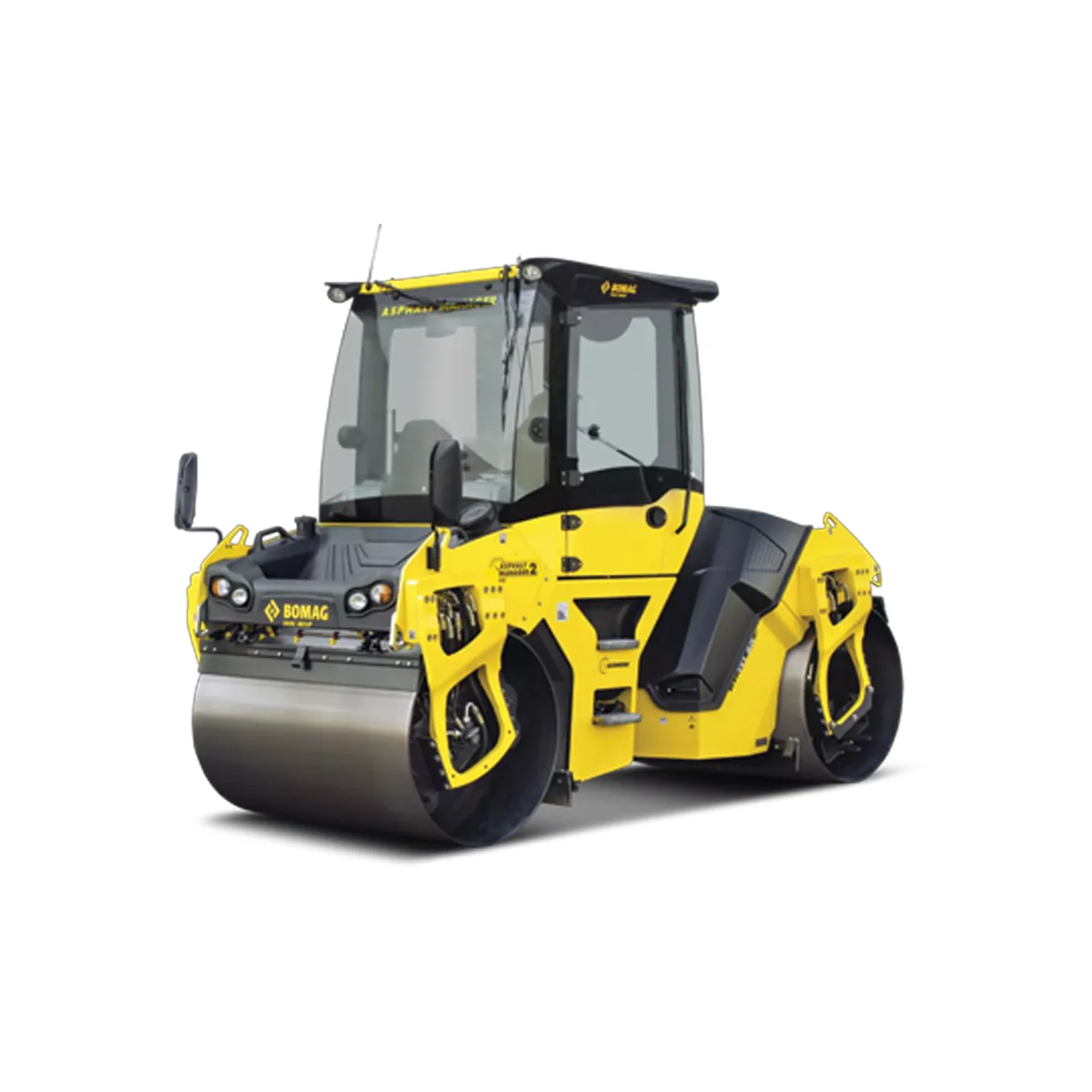
Behind it comes compaction of the surface, within its temperature window: double-drum tandem roller (like the BW 161 AD-4), combination drum-and-tire roller that seals the surface (BW 161 AC-50) or pneumatic roller (BW 24 RH, BW 27 RH, BW 28 RH) to knead and close pores.
- BF 300 C · streets and access roads: 5,000 mm
- BF 800 C · highways: 9,000 mm
- Source: BOMAG datasheets in the catalog.
6. Rehabilitation: milling and patching
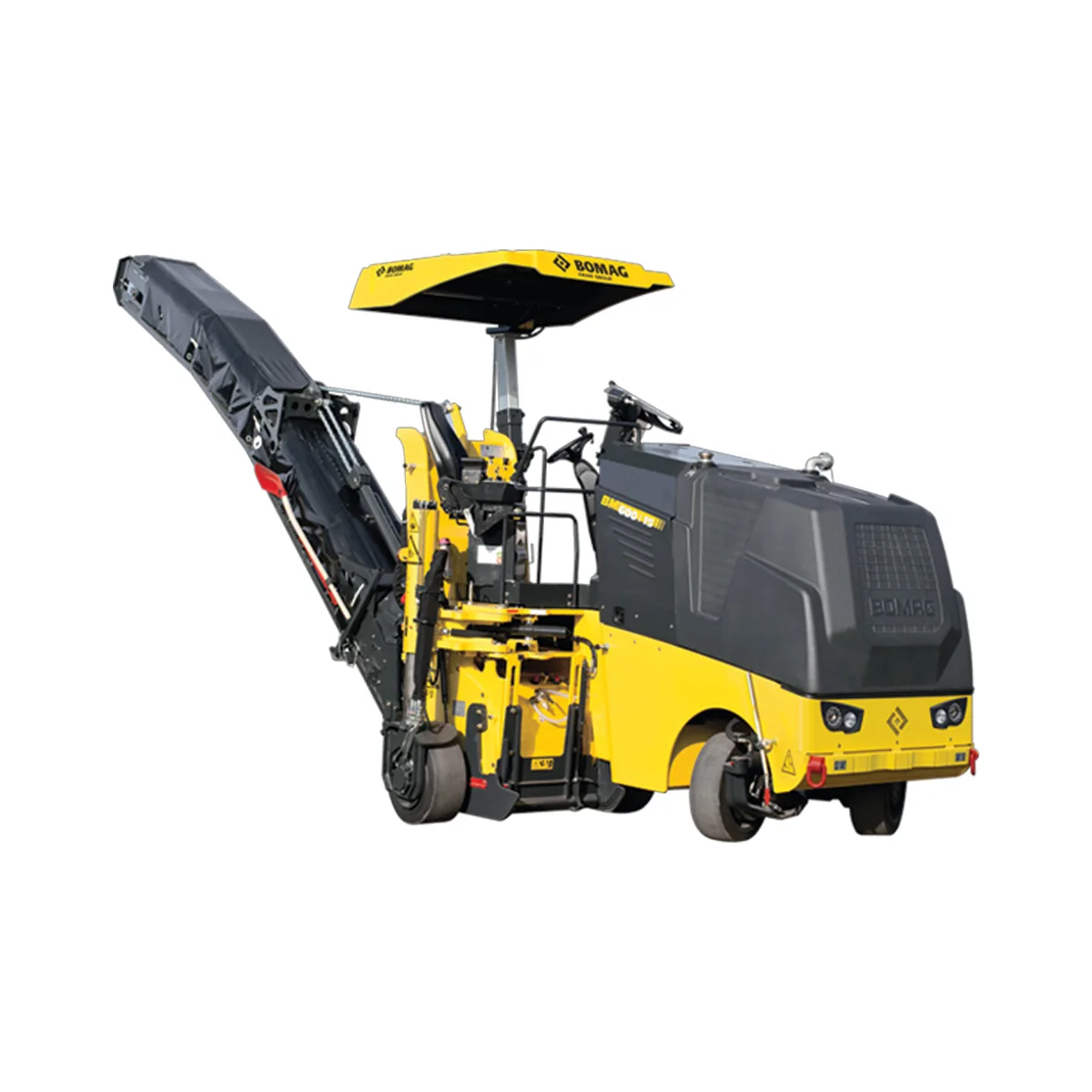
To renew a worn surface without raising the road level, the cold planer removes the damaged layer and leaves a surface ready to pave. Width decides how many lane closures the project needs. According to BOMAG, the BM 500/15-2 mills 500 mm wide and up to 210 mm deep for spot repair, the BM 600/15-2 reaches 600 mm, and at the other end the BM 2200/65 mills 2,200 mm for highways.
Minor patching is handled with an asphalt saw, a vibratory plate and a walk-behind roller from the light line.
7. Work-zone signage and safety
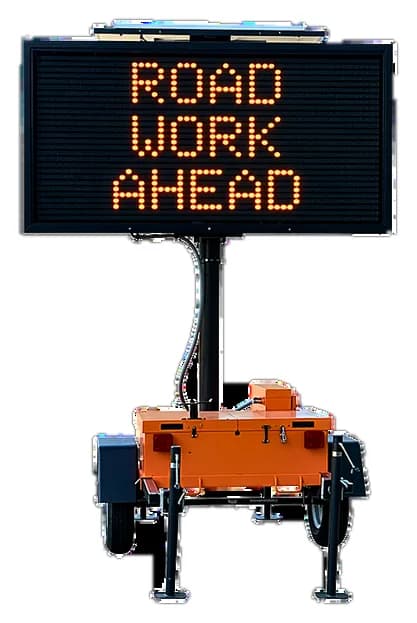
A road job with open traffic needs to channel vehicles from day one. American Signal changeable message signs (in El Salvador) are trailer-mounted LED displays; according to the manufacturer, the CMS-GP432T has a full 28 × 50 matrix, solar power with batteries and 300 to 400 m legibility. The SIMAQ line (four countries) covers cones, channelizer drums, delineator posts, caution tape and reflective vests.
Layer compaction on video
This clip from the group's channel shows SIMAQ smooth-drum rollers at work: the light equipment that compacts edges, sidewalks and patches alongside the big rollers.
Where to get road-building equipment
Grupo ConstruMarket is Komatsu's authorized distributor in El Salvador, Guatemala (CMARKET), Nicaragua and Panama for earthworks and shaping. BOMAG—rollers, pavers, cold planers and recyclers—is offered in El Salvador and Guatemala, and American Signal in El Salvador. SIMAQ signage is in all four countries. For a one-off contract, RentaCentro rents group equipment. Tell us about the job—length, width, layers and schedule—in the quote and an advisor will contact you during business hours.
Summary: what to choose
| If… | Then… |
|---|---|
| You're opening a new road | Dozer, excavator and trucks for earthworks |
| You need exact crown and grade | Motor grader, with 3D guidance if the contract requires it |
| The subgrade is clayey | Padfoot roller |
| The base is granular | Smooth vibratory roller |
| The old pavement is damaged | Cold planer or in-place recycling |
| You pave urban streets | Compact paver and tandem roller |
| You work with open traffic | Message sign, cones and drums |
Get a quote without leaving
Want to work it out with an advisor?
Topic: Road-building equipment
Which country is your project in?
Common mistakes
Compacting with the wrong drum
A smooth roller on clay leaves the lift loose underneath.
Lifts that are too thick
Density doesn't reach the bottom; the road settles later.
Paver waiting for trucks
Every stop leaves a joint; size the mix supply.
Compacting asphalt out of temperature
Outside its window, the surface won't reach density.
Signing too late
Signage is planned with the job, not once traffic arrives.
Frequently asked questions
What machines are used to build a road?
Dozer, excavator, loader and trucks for earthworks; motor grader to shape; soil rollers to compact each layer; paver and asphalt rollers for the surface; cold planer and recycler to rehabilitate; and temporary signage.
What does a motor grader do on a road?
It spreads and shapes each layer, sets the road crown and the ditch slope. It's the machine that most defines the road's final geometry.
Which roller is used for asphalt?
A double-drum tandem roller as the base; combination (drum and tires) or pneumatic to seal and close pores. Always within the mix's temperature window.
What's an asphalt cold planer for?
It removes the damaged surface without raising the road level and leaves it ready to pave. Milling width defines how many lane closures you need.
Rent or buy equipment for a road contract?
For a one-off contract, renting the machines you won't use afterward usually works better; if you do road work all year, buy the fleet's core and rent the peaks. The rent-vs-buy calculator runs the numbers.
Ready for the next step?
Pavement layers and which machine compacts each one