Short answer
3D guidance tells the operator, on an in-cab screen, where the bucket or blade is relative to the project design and how much is left to cut or fill, with no stakes or surveyor alongside; automatic control goes a step further and moves the blade on its own. It pays off when there's a lot of volume to bring to grade, tight tolerances, rework or machines idle waiting for surveying. On a short job, with no 3D design and where errors cost little, it's unlikely to pay.
What it is, concretely
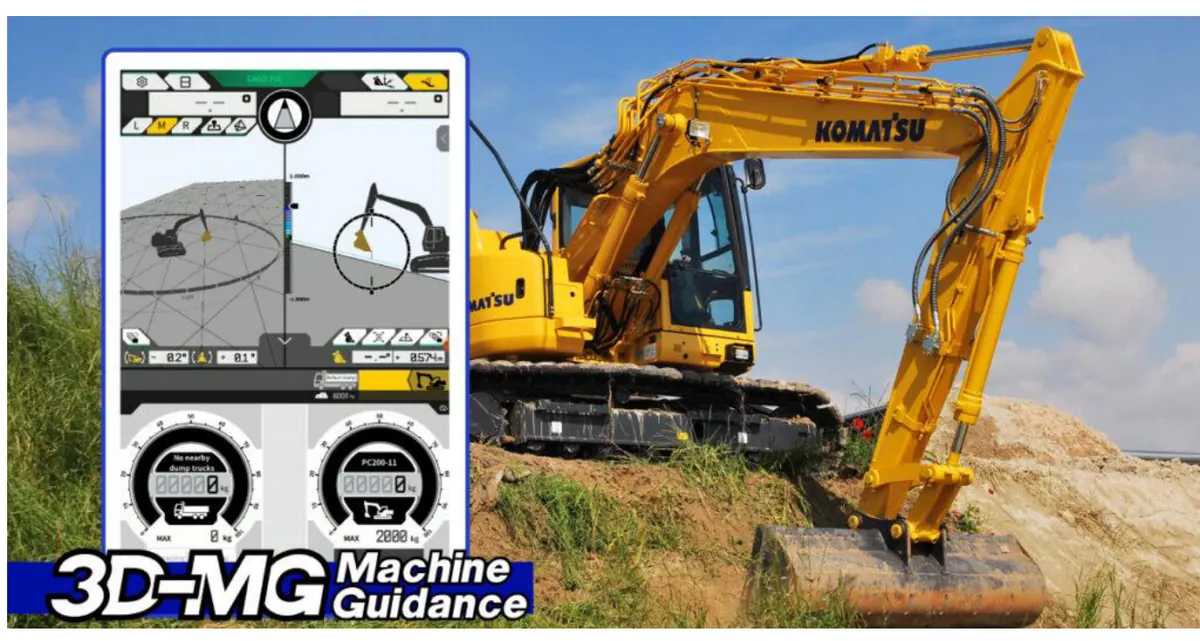
The machine carries sensors that measure the position of the boom, arm, bucket or blade, plus a reference that tells it where it is on the ground. With the project's 3D design loaded, the screen compares the two in real time: «you're still above grade» or «you've reached it here». The operator stops digging against stakes and grade boards and works against the drawing.
It's part of Smart Construction, Komatsu's digital strategy for earthmoving. Don't confuse it with KOMTRAX: KOMTRAX monitors the machine (location, hours, fuel) but doesn't guide it.
1. Guidance or automatic control
There are two levels, according to Komatsu's materials. With guidance (indicative), the operator moves the machine supported by the on-screen reference, the cut/fill indication and an audible alert as grade approaches. With automatic control, the system drives the solenoid valves and regulates the cut on its own: the blade follows the design.
Rule of thumb: guidance where the operator has to make decisions—digging, trenches, slopes with the excavator—; automatic control where what matters is leaving a surface at grade over and over, like subgrade with a dozer or motor grader. On a dozer, automatic mode can be kept for the finishing pass only.
2. How the machine knows where it is
There are three position references, and the site decides which one. 3D GPS uses satellites plus a GNSS base station on site that corrects the position; according to Komatsu it works at around 3 cm, a single base serves several machines and, if you already own one, it's used. LPS uses a robotic total station that tracks a prism on the machine: it goes from 20 mm down to 5 mm and needs no open sky, so it works in tunnels, underground or between buildings. The 2D laser, with a rotating emitter and a receiver on the machine, is enough for simple surfaces like a sloped bank.
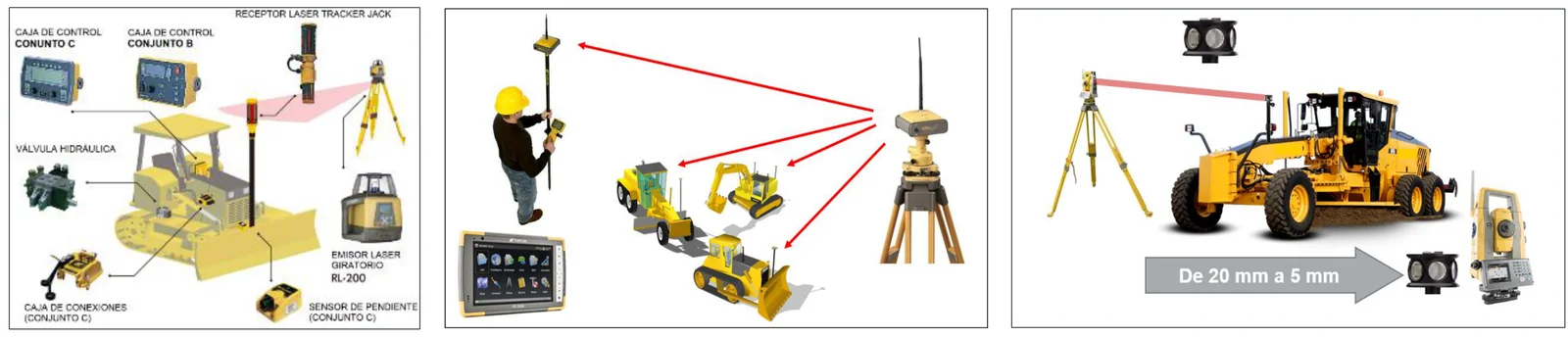
| Criterion | 2D laser | 3D GPS | 3D LPS |
|---|---|---|---|
| Surface | Simple slope | Full 3D design | Full 3D design |
| Reference | Rotating laser emitter | Satellites + base station | Robotic total station |
| Accuracy | 2D plane | ~3 cm | 20 down to 5 mm |
| Use it on | Banks and pads | Open-sky sites | Tunnels, between buildings |
3. What each machine carries
The system changes with the machine's job. These are the ones Komatsu describes for its line:
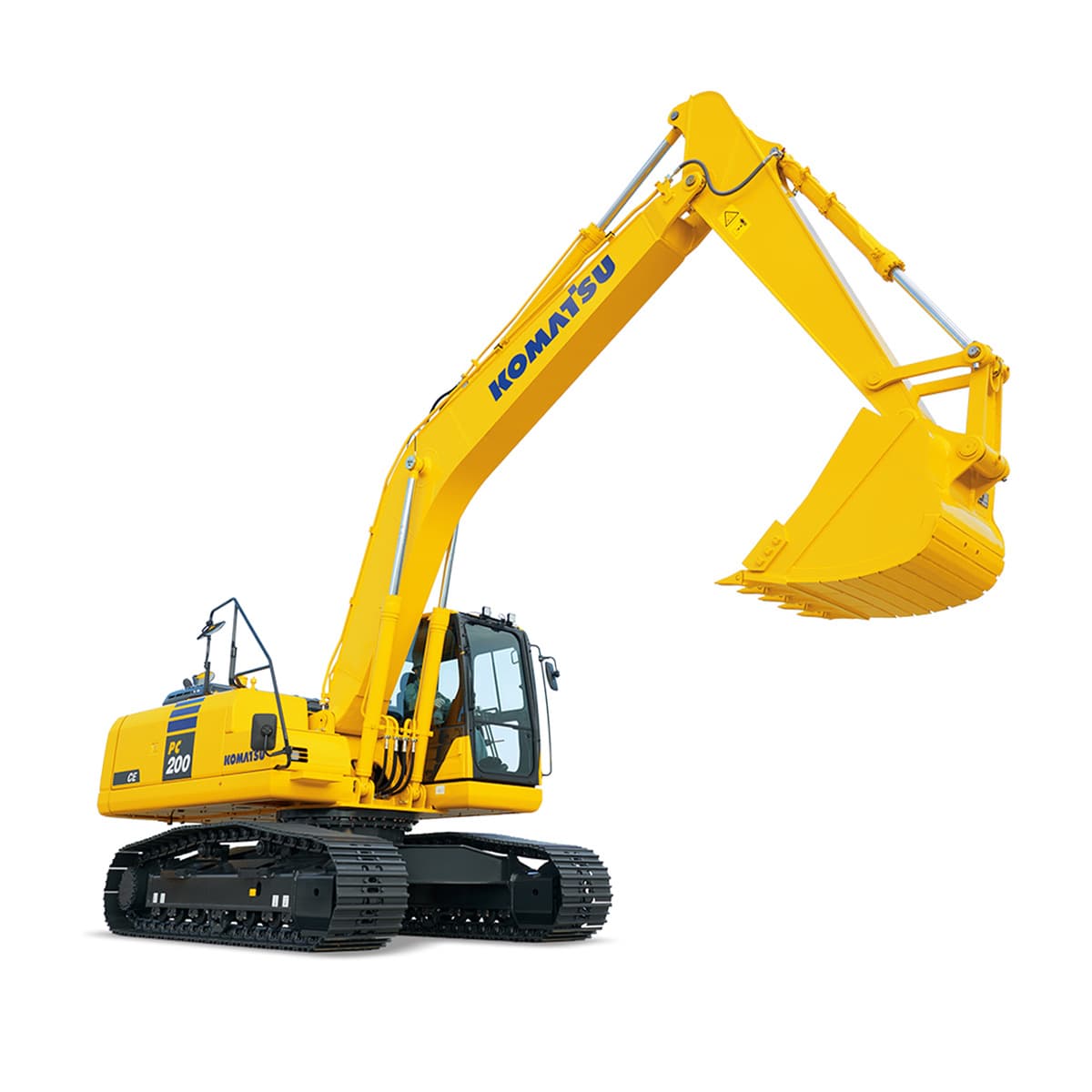
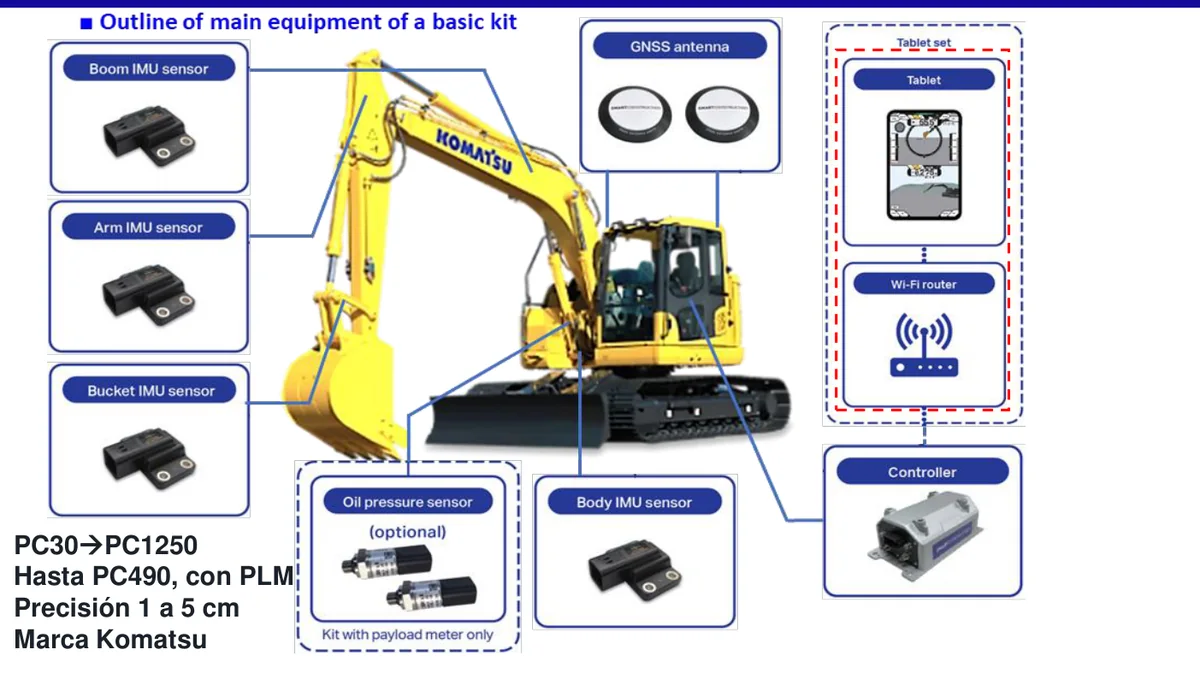
- Excavator: Komatsu's 3DMG, with sensors on boom, arm, bucket and body, a GNSS antenna, controller and tablet. It covers the PC30 to the PC1250, with 1 to 5 cm accuracy, and up to the PC490 it adds a payload meter that weighs each bucket. There's also automatic 3D control, where the excavator carries out the design on its own.
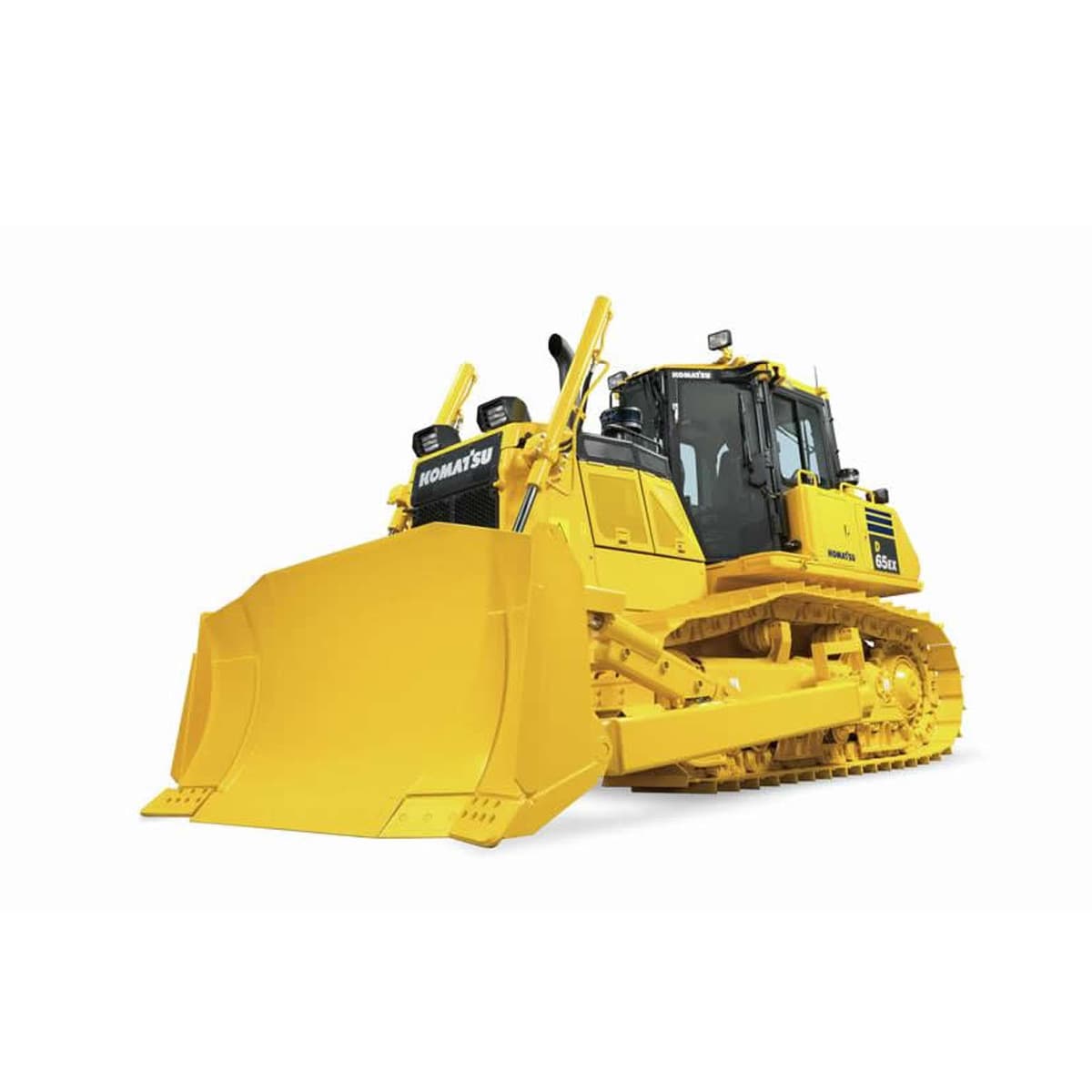
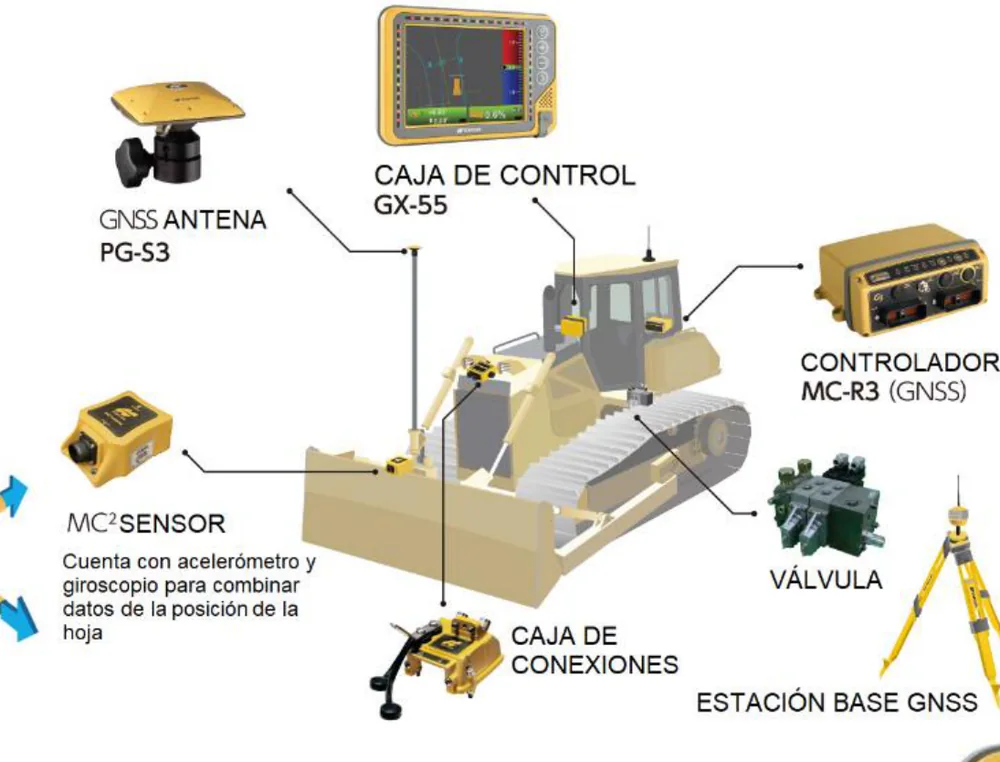
- Dozer: automatic 3D GPS (GNSS antenna, control box, controller, slope sensor and hydraulic valve) with the blade following the design and 100 position updates per second; or a 2D laser for a simple slope.
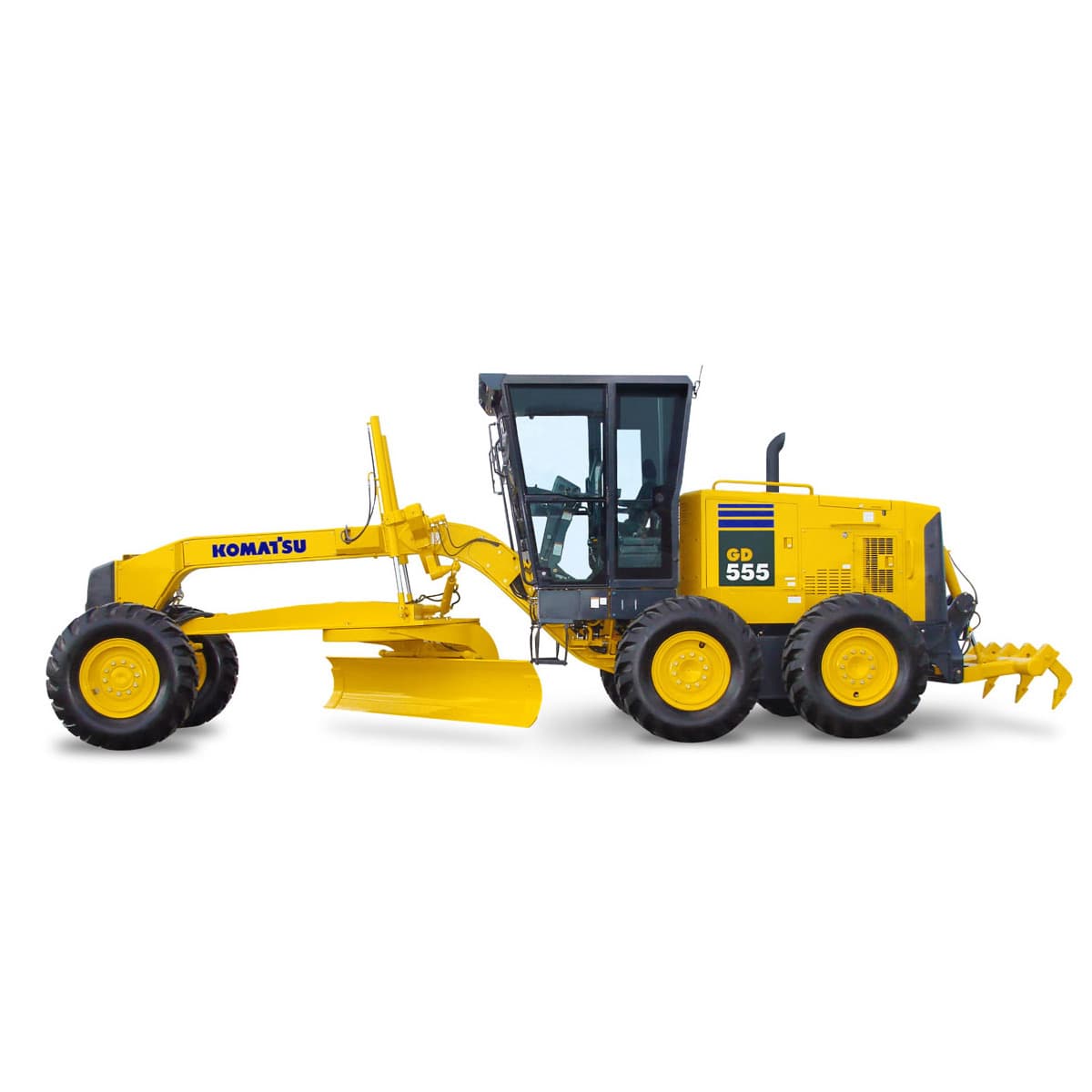
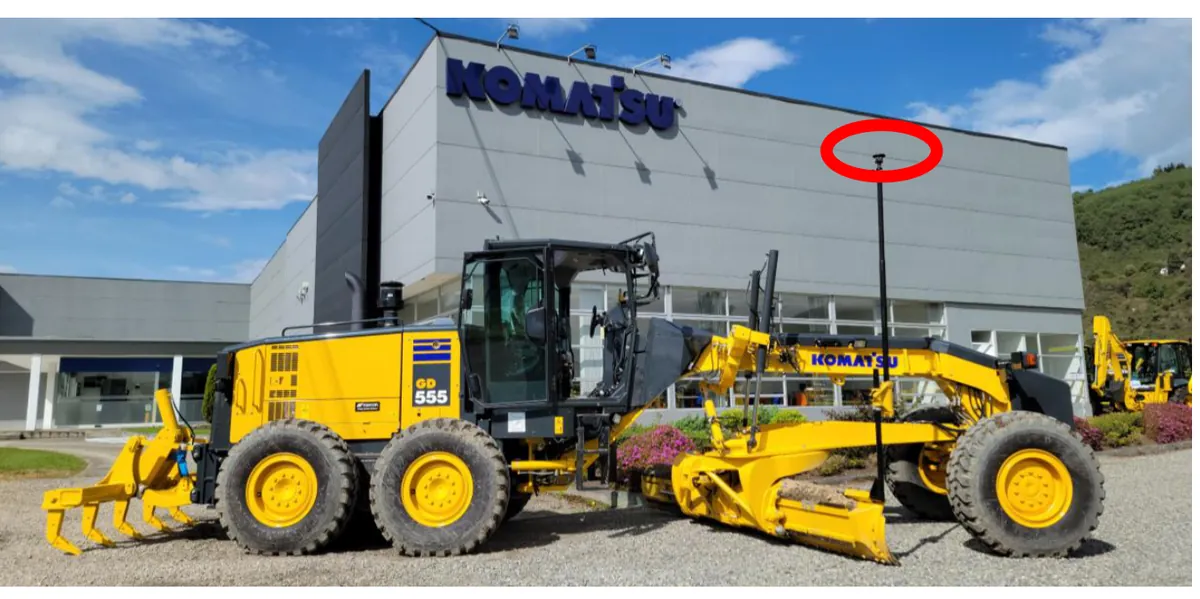
- Motor grader: automatic 3D GPS in the open, or automatic LPS where there are obstructions or the work is in a tunnel.
4. You don't need a new machine: retrofit
According to Komatsu, Smart Construction Retrofit kits are fitted onto conventional machines already in your fleet, with their in-cab screen, and when the project ends they come off and go onto another unit. That changes the math: you don't pay for a new machine to start, you pay for the kit for the project that needs it.
In this official video, in English, Komatsu shows how 3D guidance works on a conventional machine.
5. What the site needs besides the kit
Guidance follows a design; with no 3D design there's nothing to follow. Before thinking about the machine, check that your project has, or can have, these pieces:
- The project's 3D design, prepared for the machine. Smart Construction Dashboard calculates cut and fill and creates those designs from the drone survey.
- A GNSS base station on site, if you work with 3D GPS.
- Digital GNSS surveying to commission the system; the total station only comes in to calibrate the 3DMG.
- Cellular coverage at the face if you'll send designs remotely with Smart Construction Remote, which according to Komatsu connects to any brand's control monitor.
6. When it pays for itself
Savings come from three places: less staking and inspection, less rework and fewer machine hours per cubic meter placed right. In a Komatsu test of excavation and slope grading, the full cycle went from 3.0 to 1.1 hours with guidance; on a job measured end to end, from 29.50 to 16.10 hours, with 31% less labor, 34% fewer machine hours, 46% fewer project hours and 37% less fuel. These are Komatsu's tests, not our own measurements in Central America: they show where to look for savings, not a promise.
For your job, run the numbers with your own figures: surveying and staking hours per week, machine hours spent on rework passes, over-excavated cubic meters you then have to backfill, and days of machines idle waiting for grades. If the project has those in quantity, the kit competes well; if not, it probably doesn't.
- Staking · conventional: 1 h
- Staking · guided: 0.1 h
- Operation · conventional: 1 h
- Operation · guided: 0.4 h
- Inspection · conventional: 1 h
- Inspection · guided: 0.6 h
- Source: Komatsu test (Smart Construction). Not our own measurement.
7. Is it right for you? Signs for and against
Use this flow as a first filter. Komatsu places these systems on roads, canals, pads, mass earthmoving, duct trenches where buried elements can't be hit, and shrimp ponds. It shows most on high-volume projects with payment certificates per cubic meter moved.
What is your job like?
- Lots of volume to design grade → 3D guidance or control with GPS
- Just a bank or simple slope → A 2D laser may be enough
- Tunnel, underground or between buildings → LPS with a total station
- Short job with no 3D design → Design first; it may not pay
8. How to get started in Central America
Grupo ConstruMarket is Komatsu's authorized distributor in El Salvador (Zaragoza, Antiguo Cuscatlán, San Miguel), Guatemala as CMARKET (Mixco, Río Hondo, Xela), Nicaragua (Managua) and Panama (Panama City). Smart Construction starts with a technical visit to the project to define which machines come in, with which position reference and what's needed on the site side. The price depends on that—how many machines, which system, whether you already own a base station—so it's quoted per project.
Summary: what to choose
| If… | Then… |
|---|---|
| You dig trenches or pads to grade | 3D guidance on the excavator (3DMG) |
| You finish subgrade with a dozer or grader | Automatic 3D control |
| You only need a simple slope | 2D laser |
| You work in a tunnel or between buildings | LPS with a total station |
| You already have a fleet | Retrofit kit on your machines |
| Short job, no 3D design | Run the numbers first; it may not pay |
Get a quote without leaving
Want to work it out with an advisor?
Topic: 3D guidance · Smart Construction
Which country is your project in?
Common mistakes
Buying the kit with no 3D design
The machine follows a model; without it, the screen has nothing to compare against.
Expecting it to replace the operator
With indicative guidance the operator is still in charge; the system removes stakes, not judgment.
Forgetting the base station and commissioning
3D GPS needs a base station and digital surveying to calibrate the system.
Using GPS without open sky
In tunnels or between buildings the reference is LPS with a total station.
Banking on brochure figures
Komatsu's results are a reference; measure yours from day one.
Frequently asked questions
What is 3D guidance on an excavator?
A system of sensors, a GNSS antenna and a screen that shows the operator where the bucket is relative to the 3D design and how much is left to cut or fill. Komatsu's 3DMG works at 1 to 5 cm accuracy, according to Komatsu.
What's the difference between machine guidance and machine control?
With guidance, the operator moves the machine following the screen and an audible alert. With automatic control, the system drives the solenoid valves and the blade follows the design on its own.
Do I need to buy a new machine?
No. According to Komatsu, the retrofit kit is fitted onto conventional machines in your fleet and, when the project ends, moved to another unit.
Does it work in tunnels or where GPS doesn't reach?
Yes, with LPS: a robotic total station tracks a prism on the machine and, according to Komatsu, goes from 20 mm down to 5 mm without needing open sky.
How much does 3D guidance cost?
There's no single price: it depends on how many machines come in, which system they carry and whether you already own a base station. It's defined in a technical visit and quoted per project.
Who installs Komatsu 3D guidance in Guatemala or El Salvador?
Grupo ConstruMarket, Komatsu's authorized distributor in El Salvador, Guatemala (CMARKET), Nicaragua and Panama. It starts with a technical visit to the project.
Ready for the next step?
See Komatsu Smart Construction