Short answer
Earthworks rework almost always comes from the same place: the machine cuts against stakes that get moved, lost or read by eye, and the error shows up late, when you already have to fill, compact or make another pass. Better-planned staking and checking before compacting reduce it; it's cut at the root when the design is in the cab and the machine knows where it is, with 3D guidance on the excavator or automatic control on the dozer and motor grader.
What rework is and why it's expensive
Rework is everything the machine does twice: the pass you repeat because it's high, the trench that was overdug and has to be backfilled, the pad compacted off grade that has to be ripped. It costs two ways. First, machine and operator hours that don't move the job forward. Second, material: what's overcut isn't put back with the same loose dirt; it has to be filled in layers and compacted, often with borrow material.
That's why rework rarely shows up in the budget as such. It shows up as a job burning more fuel, more hours and more truck trips than planned.
1. Where it comes from: five usual causes
The operator is rarely the problem; the problem is what they're working against. These are the most common causes on an earthworks face:
- Stakes get moved or disappear: the machine itself, trucks or rain knock them down, and nobody notices until the grade doesn't add up.
- Grade is read by eye: from the cab you can't see the stake at the foot of the bucket, and the operator cuts «by feel» between one and the next.
- The surveyor isn't there when needed: the machine keeps working with no reference or sits idle waiting for grades.
- The design changed and the stakes are from the previous version.
- Checking happens too late: the error shows up once the layer is compacted or the trench is already overdug.
2. What conventional staking costs
The usual method has three stages that repeat on every stretch: staking (setting out the grade on the ground), operating against those stakes and checking with a level what was left. In a Komatsu test of excavation and slope grading on the same surface, conventional staking and inspection took two people each, and the full cycle took 3.0 hours; with machine guidance, 1.1 hours. Staking dropped the most: from 1.0 to 0.1 hours.
These are figures from a Komatsu test, not our own measurement in Central America. They show where the time goes: not in the machine, but in preparing and checking the machine's work.
- Staking · conventional: 1 h
- Staking · guided: 0.1 h
- Operation · conventional: 1 h
- Operation · guided: 0.4 h
- Inspection · conventional: 1 h
- Inspection · guided: 0.6 h
- Source: Komatsu test (Smart Construction). Not our own measurement.
3. What you can fix today, without technology
Before thinking about a kit, there's site discipline that lowers rework with what you already have:
- Offset stakes: place them to one side of the cut, out of the machine's path, with the distance and grade written down, so the first pass doesn't knock them over.
- Write on the stake how much to cut or fill, not just the grade: the operator doesn't have to do the math.
- Leave the cut slightly high and trim at the end: removing the excess is cheaper than filling and compacting what's missing.
- Check with a level before compacting each layer, not after.
- When the design changes, pull the old stakes the same day.
4. Excavator with GPS: the design in the cab
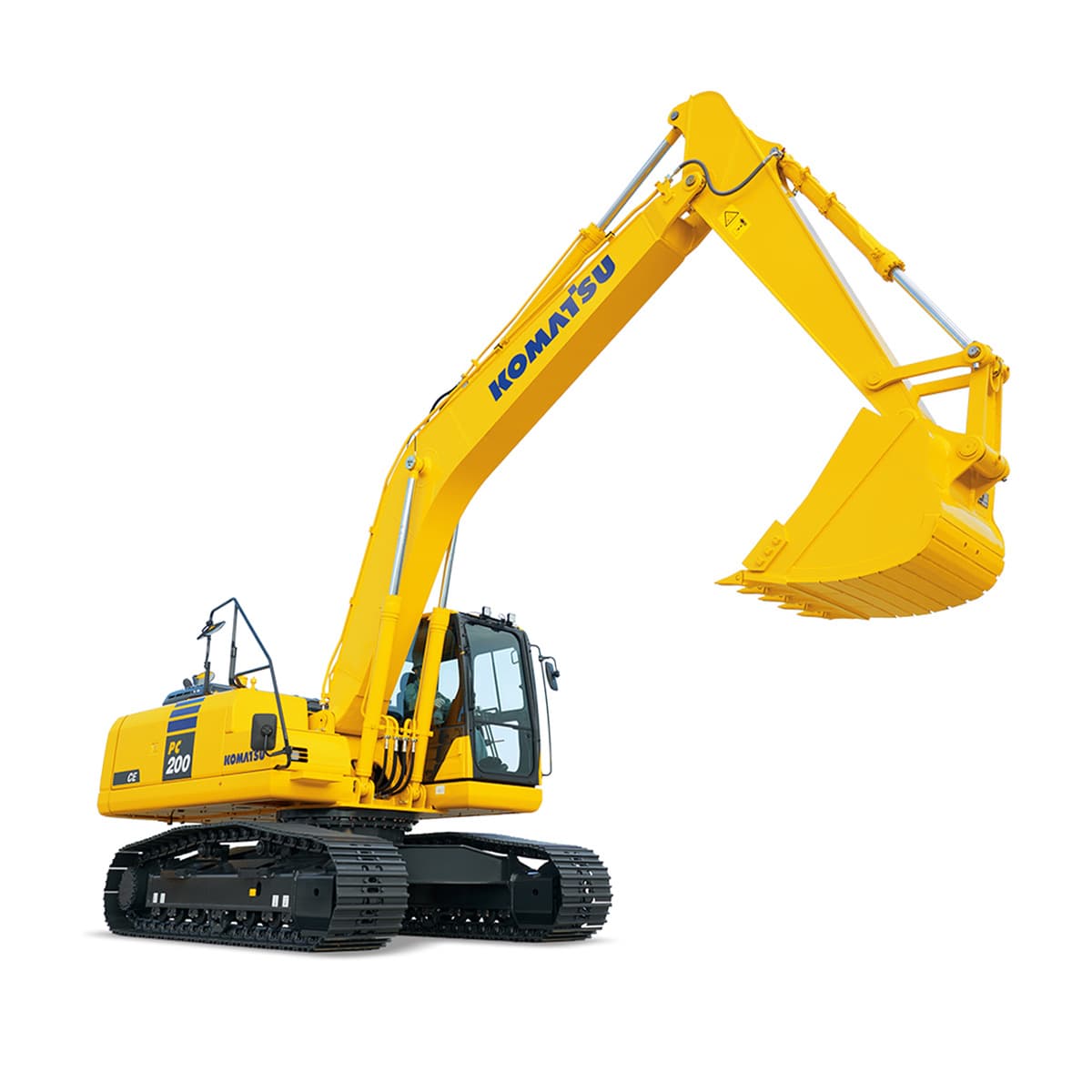
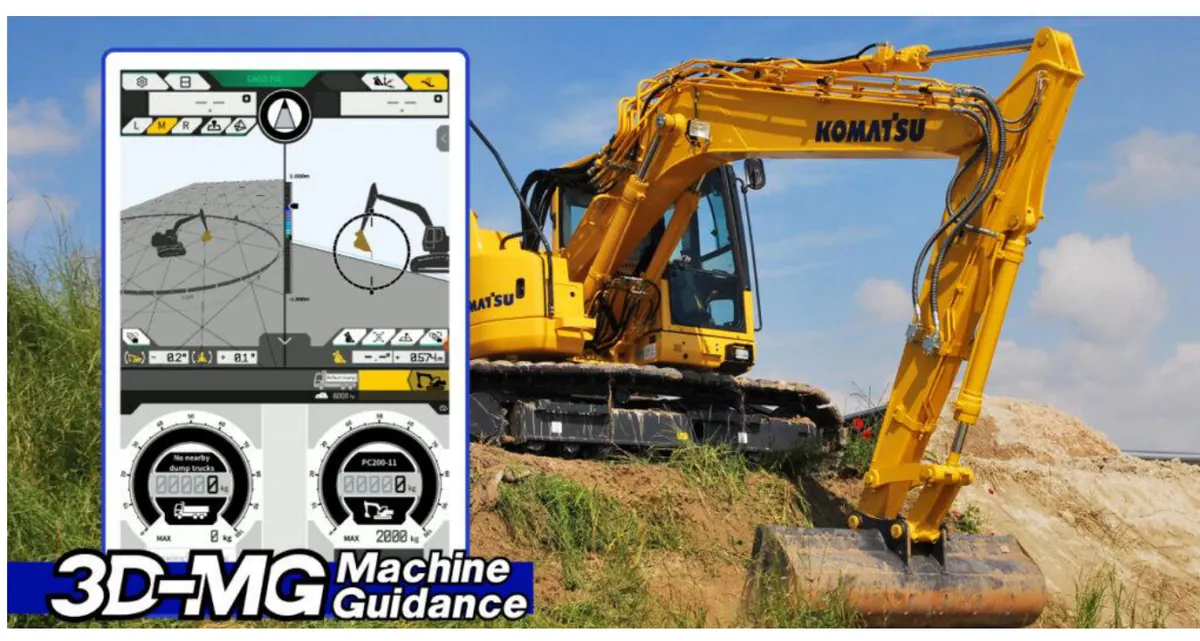
3D guidance changes the reference: instead of stakes, the operator sees on a screen where the bucket is relative to the project design and how much is left to cut or fill, with an audible alert as grade approaches. Komatsu's 3DMG carries sensors on boom, arm, bucket and body, a GNSS antenna and a tablet; it covers the PC30 to the PC1250 and works at 1 to 5 cm accuracy, according to Komatsu. Up to the PC490 it adds a meter that weighs each bucket.
Komatsu reports up to 40% more excavator output from operational continuity: the machine doesn't stop to wait for grades. There's also a safety effect that figure doesn't show: grade checkers get out of the trench and nobody works around the bucket.

5. Grade with a motor grader and dozer: automatic control
Subgrade and base are where errors cost the most: a few centimeters high is extra material and compaction along the whole stretch; a few low is a stretch that gets rejected. That's where guidance falls short and automatic control comes in: the system moves the blade and takes it to design grade.
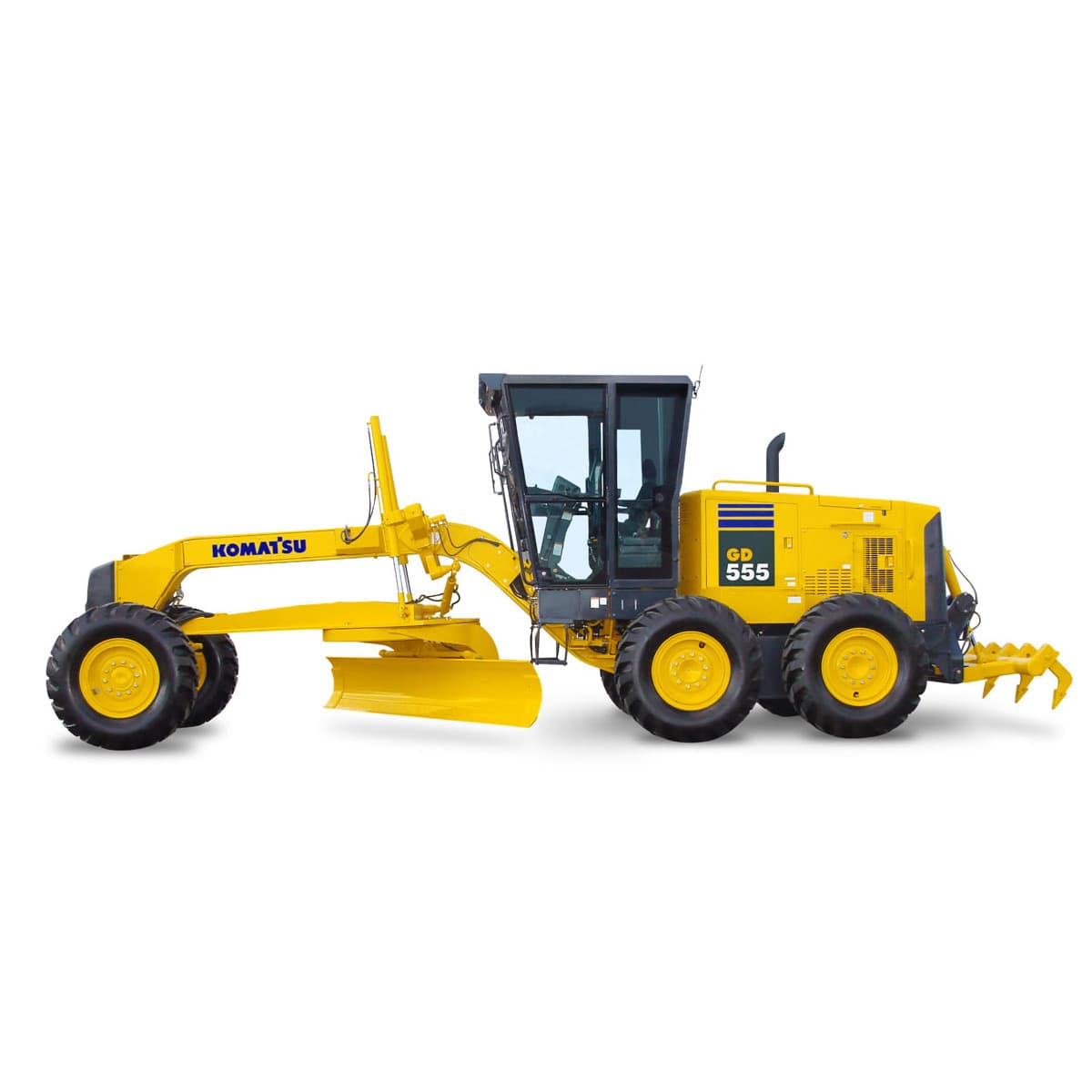
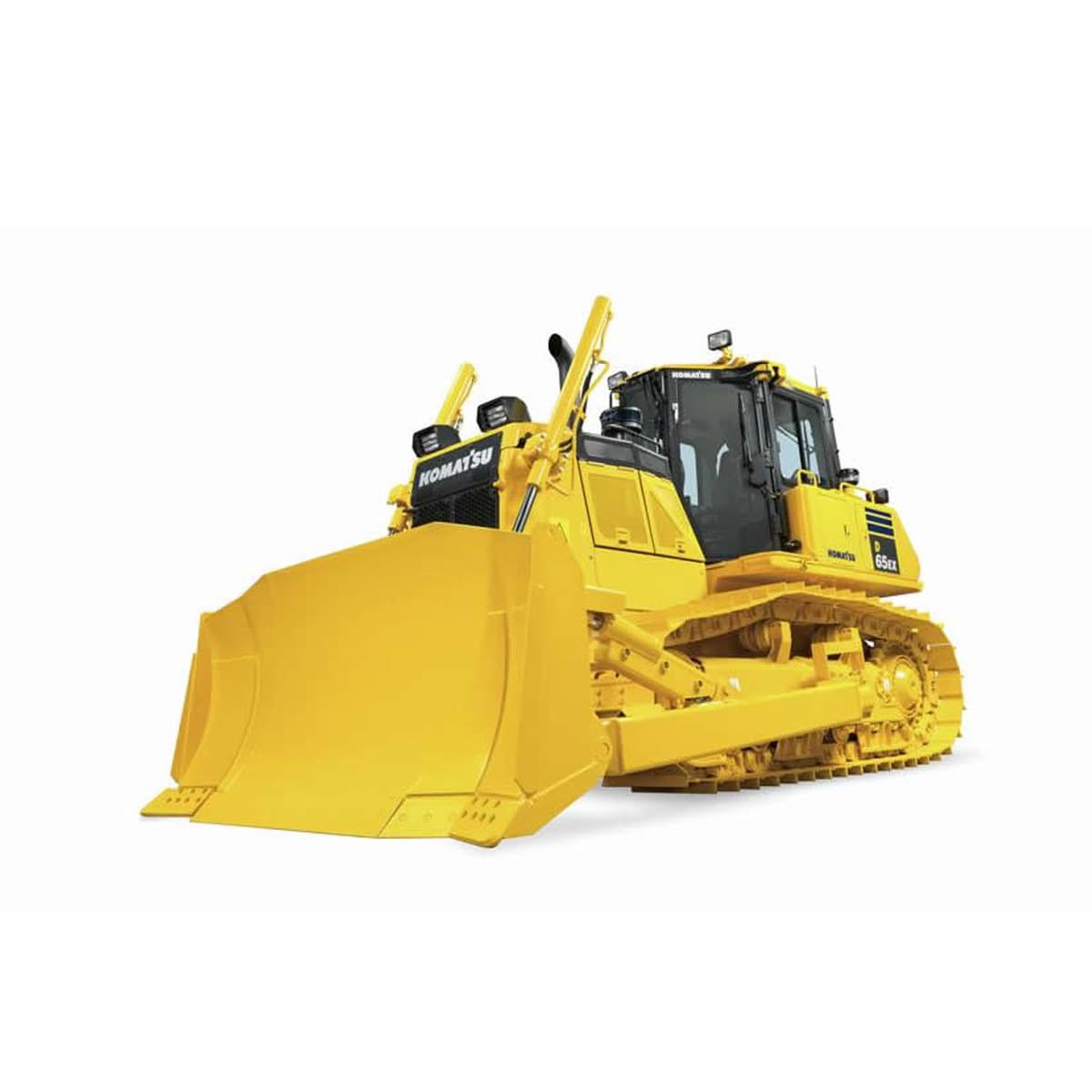
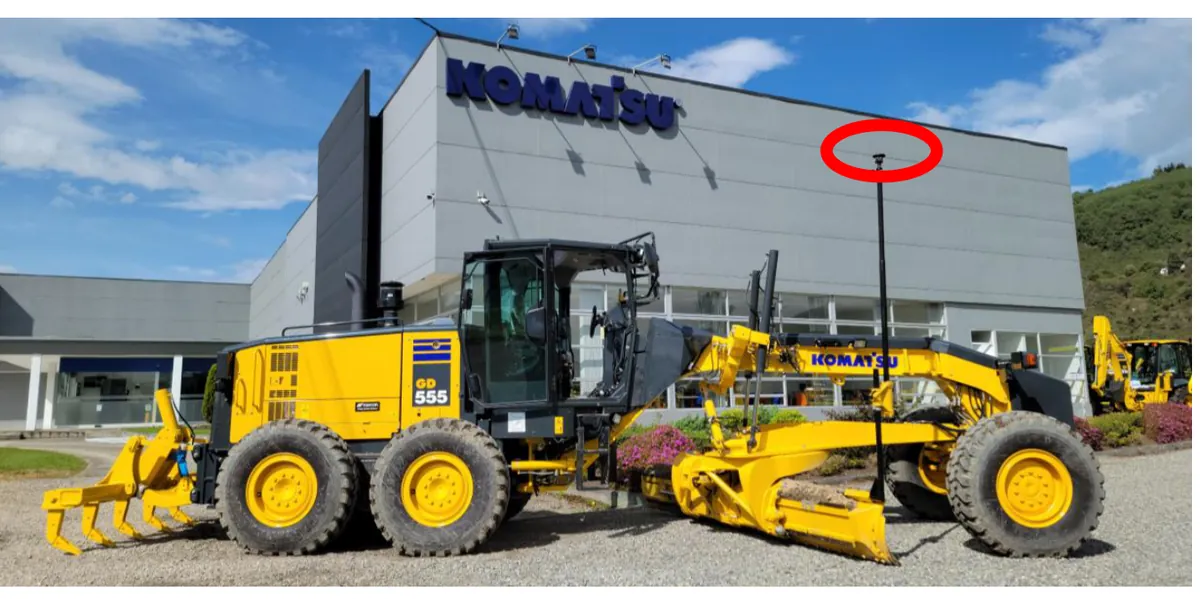
On the motor grader, Komatsu describes two references: 3D GPS, at around 3 cm with a base station on site, and LPS, with a robotic total station tracking a prism over the blade that goes from 20 mm down to 5 mm without needing open sky. On the dozer, 3D GPS updates the blade position 100 times per second, and automatic mode can be kept for the finishing pass only. Komatsu reports up to 50% less working time on both machines.
| Criterion | Excavator | Dozer | Motor grader |
|---|---|---|---|
| System | Komatsu 3DMG | 3D GPS or 2D laser | 3D GPS or LPS |
| Mode | Operator guidance | Automatic blade | Automatic blade |
| Accuracy | 1 to 5 cm | Design grade | ~3 cm GPS · 20–5 mm LPS |
| Use it on | Trenches, pads | Mass cuts, banks | Subgrade and base |
6. Is it right for you? Run the numbers with your own figures
Komatsu's figures show where to look for savings; the math that matters is your job's. Before asking for a quote, gather four numbers from a normal month: surveying and staking hours per week, machine hours spent on rework passes, over-excavated cubic meters you later had to backfill, and days of machines idle waiting for grades. If the project has those in quantity, guidance competes well; if it's a short job, with no 3D design and loose tolerances, it probably doesn't.
Where does your rework come from?
- Knocked-over or misread stakes, short job → Fix staking first
- Overdug trenches and pads → 3D guidance on the excavator
- Subgrade and base with extra passes → Automatic blade control
- Tunnel or between buildings → LPS with a total station
7. How to start without buying a new machine
Smart Construction Retrofit kits are fitted onto conventional machines already in your fleet and, when the project ends, come off and go onto another unit. You need a GNSS base station on site—one serves several machines, and if you already own one it's used—, the project's 3D design prepared for the machine, and digital surveying for commissioning.
Grupo ConstruMarket is Komatsu's authorized distributor in El Salvador, Guatemala, Nicaragua and Panama. The first step is a technical visit to the project to see where your rework comes from, which machines come in and with which position reference.
Summary: what to choose
| If… | Then… |
|---|---|
| Stakes fall over or get misread | Offset stakes with cut/fill written on them |
| You overdig trenches or pads | 3D guidance on the excavator |
| The machine waits for the surveyor | Design in the cab + base station |
| The base needs extra passes | Automatic control on the motor grader |
| There's no open sky | LPS with a total station |
Get a quote without leaving
Want to work it out with an advisor?
Topic: Technical visit · Smart Construction
Which country is your project in?
Common mistakes
Blaming the operator
If they work against knocked-over stakes or by eye, the error is in the reference, not the person driving.
Checking after compacting
An error found late costs ripping, filling and compacting again.
Cutting right to grade with an excavator
Without a precise reference, leave it slightly high and trim: filling costs more than removing.
Buying the kit with no 3D design
The machine follows a model; without it, the screen has nothing to compare against.
Banking on brochure figures
Komatsu's results are a reference; measure yours from day one.
Take it to the job site
Print the checklist to go over it on site, or send the guide to your crew.
Frequently asked questions
What is rework in earthworks?
Everything the machine does twice: redoing a pass that's high, filling and compacting what was overdug, or ripping a layer compacted off grade. It costs machine hours and material.
How do you cut staking time?
Without technology, with offset stakes out of the machine's path and cut or fill written on them. With 3D guidance, the design is in the cab: in a Komatsu test, staking went from 1.0 to 0.1 hours.
Can I put GPS on an excavator I already own?
Yes. According to Komatsu, the retrofit kit is fitted onto conventional machines and, when the project ends, moved to another unit. 3DMG goes on Komatsu excavators from the PC30 to the PC1250.
How accurate is a motor grader with GPS?
According to Komatsu, 3D GPS works at around 3 cm with a base station on site. With LPS and a robotic total station it goes from 20 mm down to 5 mm and works without open sky.
Does GPS replace the surveyor?
No. It takes away staking the whole face, but you still need digital surveying to commission the system, calibrate it and check the work.
Ready for the next step?
See how Smart Construction solves itGrupo ConstruMarket · Job site checklist
How do you avoid earthworks rework and get grade right on the first pass?
Earthworks rework almost always comes from the same place: the machine cuts against stakes that get moved, lost or read by eye, and the error shows up late, when you already have to fill, compact or make another pass. Better-planned staking and checking before compacting reduce it; it's cut at the root when the design is in the cab and the machine knows where it is, with 3D guidance on the excavator or automatic control on the dozer and motor grader.
1. Where it comes from: five usual causes
- Stakes get moved or disappear: the machine itself, trucks or rain knock them down, and nobody notices until the grade doesn't add up.
- Grade is read by eye: from the cab you can't see the stake at the foot of the bucket, and the operator cuts «by feel» between one and the next.
- The surveyor isn't there when needed: the machine keeps working with no reference or sits idle waiting for grades.
- The design changed and the stakes are from the previous version.
- Checking happens too late: the error shows up once the layer is compacted or the trench is already overdug.
3. What you can fix today, without technology
- Offset stakes: place them to one side of the cut, out of the machine's path, with the distance and grade written down, so the first pass doesn't knock them over.
- Write on the stake how much to cut or fill, not just the grade: the operator doesn't have to do the math.
- Leave the cut slightly high and trim at the end: removing the excess is cheaper than filling and compacting what's missing.
- Check with a level before compacting each layer, not after.
- When the design changes, pull the old stakes the same day.
Avoid
- Blaming the operator. If they work against knocked-over stakes or by eye, the error is in the reference, not the person driving.
- Checking after compacting. An error found late costs ripping, filling and compacting again.
- Cutting right to grade with an excavator. Without a precise reference, leave it slightly high and trim: filling costs more than removing.
- Buying the kit with no 3D design. The machine follows a model; without it, the screen has nothing to compare against.
- Banking on brochure figures. Komatsu's results are a reference; measure yours from day one.
Job site:
Date:
Supervisor:
Scan it for the full guide, with video and FAQ
https://grupoconstrumarket.com/en/guias/retrabajo-en-terraceria-como-dejar-la-rasante-a-la-primera