Short answer
An electric forklift drives its wheels and hydraulics with electric motors powered by a lead-acid or lithium battery, instead of a diesel or LPG engine. Running it costs electricity, battery wear and replacement, and maintenance with no engine oil; a combustion truck costs fuel, engine servicing and almost no recharge time. Which one is cheaper per hour depends on your hours, shifts and rates: you calculate it with your own data, you don't guess it.
What an electric forklift is and what changes in the cost
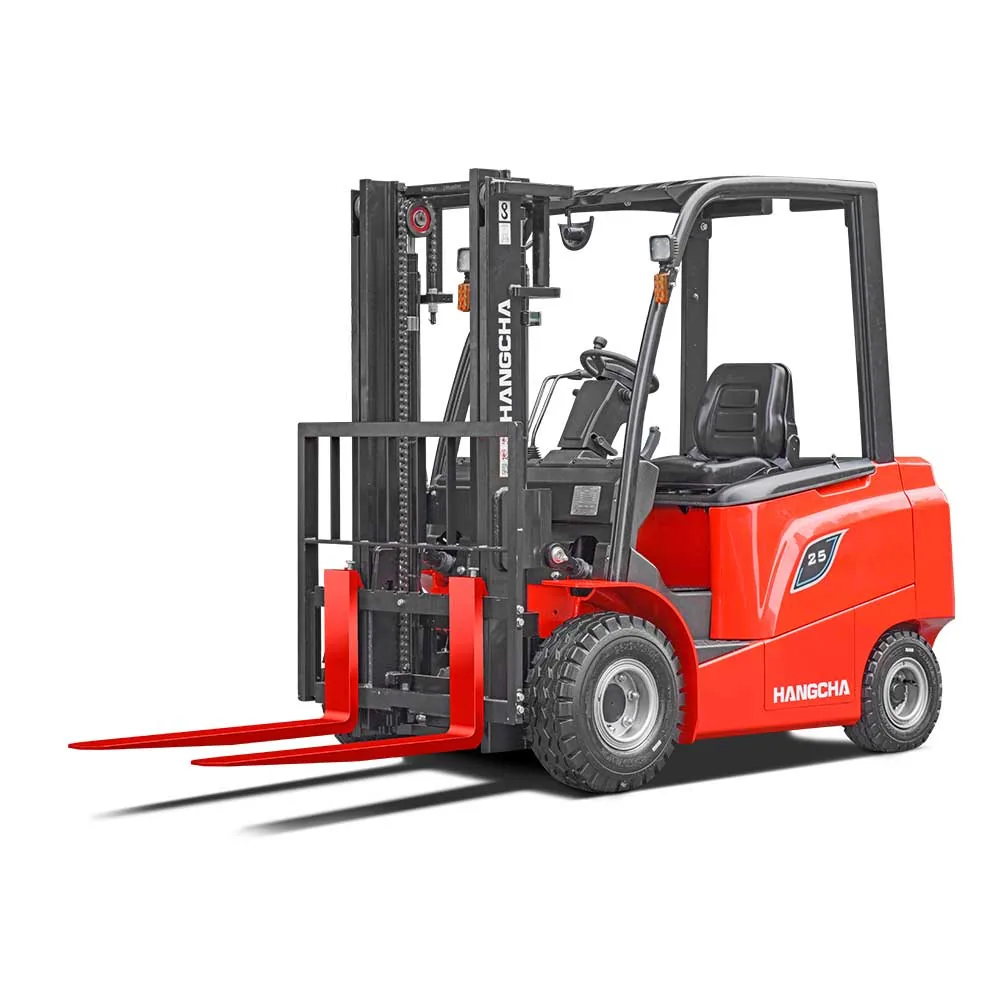
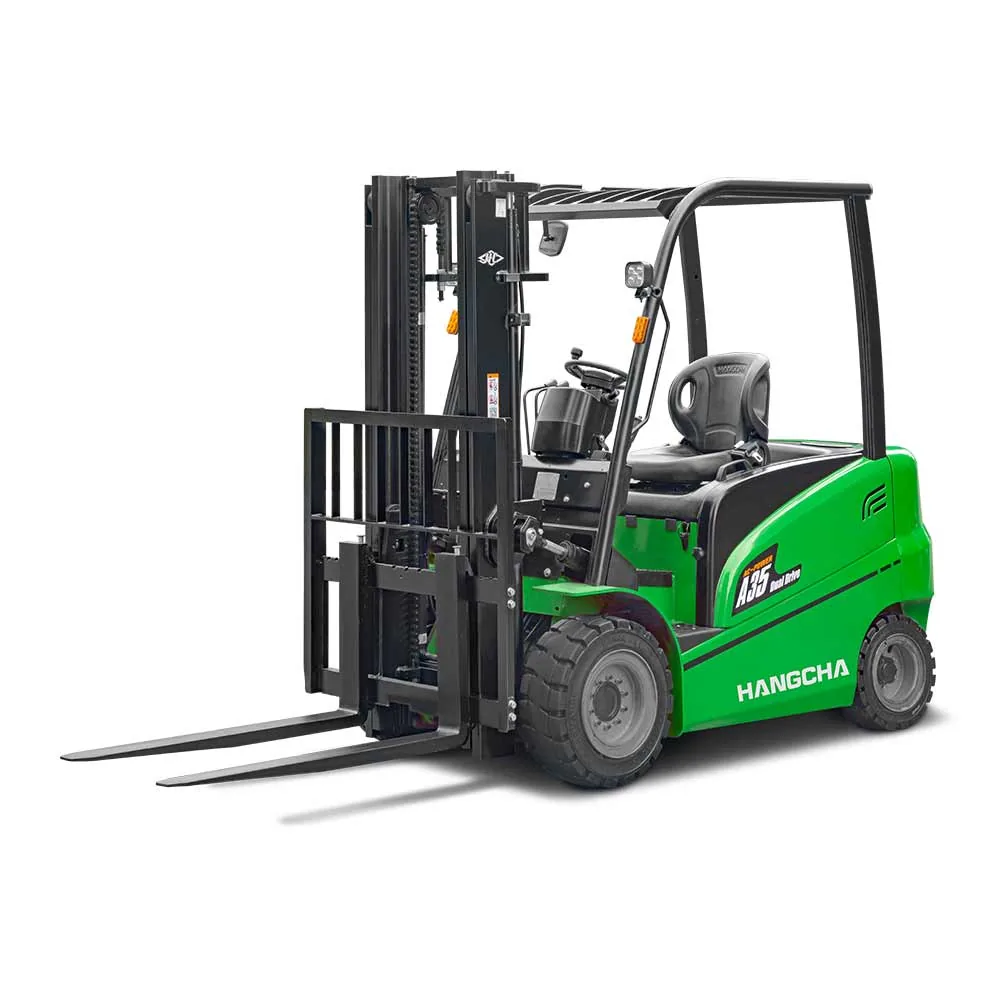
The electric truck has a battery, a charger, a controller and drive and lift motors. It has no combustion engine, engine radiator, exhaust or tank. Many recover energy when braking: according to Hangcha, its four-wheel electric A series has regenerative braking that saves energy when slowing down.
The combustion truck has a diesel or LPG engine, transmission, cooling system and exhaust. That mechanical difference explains almost all of the cost difference: the electric trades oil, filters and fuel for battery and electricity; the combustion truck trades charging time for refueling stops of minutes.
The six items of operating cost
Keep the operating cost separate from the cost of owning the truck (price, resale, interest), which the cost-per-hour guide already explains. What runs only while the forklift works splits into six items, and each is calculated per hour.
- Energy: kWh or liters/cylinders × rate
- Battery or engine: Replacement spread per hour
- Maintenance: Services by interval
- Tires: Set ÷ hours of life
- Operator: Cost per hour worked
- Downtime: Charging, refueling, breakdowns
Energy: kilowatts against liters
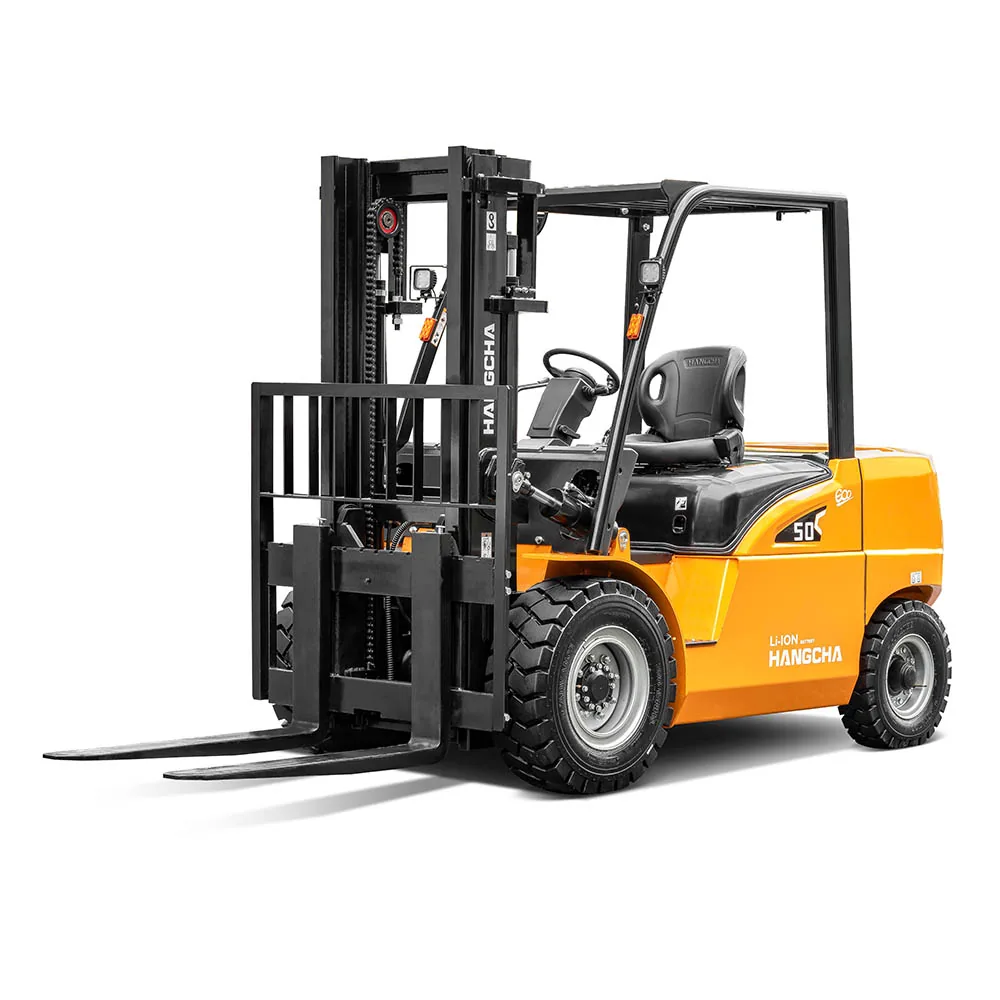
On the electric, measure the kWh the charger puts back per shift—with a meter on the charger circuit or the charger's own log—and multiply by your electricity rate. If your rate changes by time of day, charging in the cheapest window lowers the cost without touching the truck. For sizing: according to Hangcha, the 4–5 t XC lithium is offered with 46.69 to 70.04 kWh batteries, and its 4–5 t XE uses permanent-magnet motors with 15–20% lower consumption.
On the combustion truck, fill the tank to the top at the start and end of the shift, or count the week's LPG cylinders, and divide by the hour-meter hours. Multiply by the local price. Measure for at least two weeks: consumption changes with load, ramps and operator.
The battery: the cost that isn't on the power bill
The battery wears with charge cycles and at some point is replaced. Calculate it like this: replacement price ÷ (life cycles × working hours per cycle) = battery cost per hour. Ask the manufacturer for cycles and residual capacity in the quote. According to Hangcha, its A-series lithium keeps more than 75% capacity after 4,000 cycles (more than 80% on the dual-drive version).
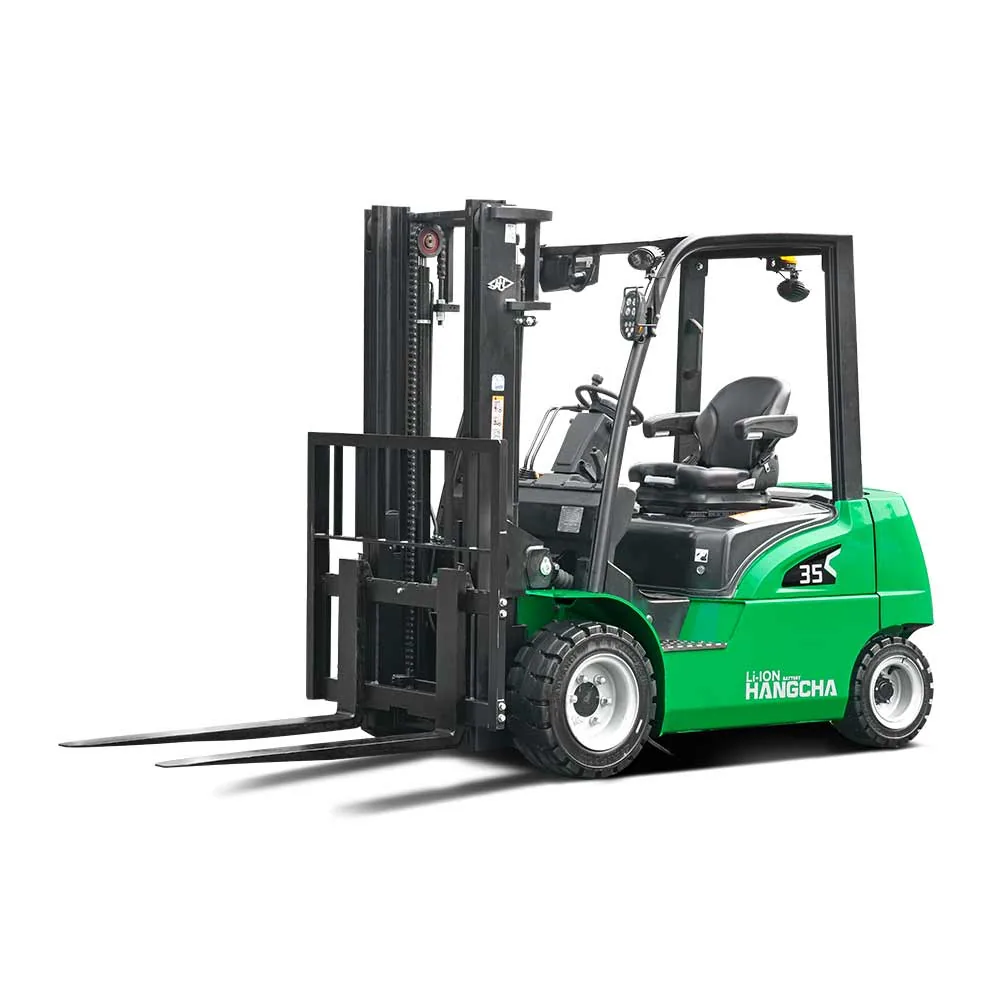
Lead-acid adds costs lithium doesn't have: a ventilated charging room, because it gives off gases while charging; watering if it isn't sealed; cool-down time, and a second battery plus swaps if you run more than one shift. Partial charges shorten its life. Lithium accepts opportunity charging on breaks and charges fast: according to Hangcha, 2 hours on the A series and 1 hour on the heavy-duty XH, which also has automatic fire suppression in the battery.
- XH heavy-duty 6–10 t: 1 h
- HV lithium rough-terrain: 1.5 h
- A series 1.3–2 t: 2 h
- A series dual drive: 2 h
- Source: Hangcha datasheets in the catalog (with fast or super-fast charging).
Maintenance and tires
The combustion truck follows any engine's plan: oil and filters (air, oil, fuel), coolant, belts and exhaust, plus transmission, brakes and hydraulics. In a dusty yard air filters wear out sooner; that's why Hangcha puts the air intake up on the overhead guard of its combustion A series.
The electric has no engine oil or fuel filters. According to Hangcha, the AC motors on several of its series need no maintenance and the 2.5–3.5 t A series has maintenance-free wet disc brakes; you still check the battery, connectors, hydraulics and brakes. Tires, on both, depend on the floor: calculate them as set price ÷ hours of life. Hangcha also supplies compatible consumables in bulk, such as forks, seats and tires.
Downtime: the cost nobody writes down
A forklift that's charging when you need it forces you to have another. That's why availability counts: hours it can work ÷ hours your operation needs it. With lead-acid and three shifts, charging and cool-down eat hours, and you need a second battery or a second truck. With lithium, charging on breaks wins those hours back. With combustion, refueling is short, but it adds the engine service stops the electric doesn't have.
| Criterion | Lead-acid electric | Lithium electric | Combustion |
|---|---|---|---|
| Energy | Electricity | Electricity | Diesel or LPG |
| Recharge | Long, with cool-down | Fast, on breaks | Short refuel |
| Battery | Water, charging room | No watering | N/A |
| Engine | No engine oil | No engine oil | Oil, filters, coolant |
| Several shifts | Second battery | Opportunity charging | No waiting |
Calculate your cost per hour in six steps
Run the calculation for each option with the same shifts and the same load, and compare. The cost-per-hour calculator asks for purchase price, service life, hours per month, fuel per hour and maintenance per hour, in money: on an electric, put what electricity costs you per hour in «fuel per hour». To add resale, interest and operator, follow the cost-per-hour guide.
If your fleet is large, measure instead of estimating: according to Hangcha, its Fleet Management System logs use per truck and per operator and operating cost; ask the advisor whether it applies to your models.
- Measure real hours: Hour meter, per shift and week
- Energy per hour: kWh or liters × your rate
- Battery or engine: Replacement ÷ hours of life
- Maintenance and tires: Price ÷ interval
- Operator and downtime: Include the second battery or truck
- Compare: Same shifts, same load
Where to quote both options
Grupo ConstruMarket distributes Hangcha lead-acid and lithium electric and diesel or LPG combustion forklifts in El Salvador, Guatemala (CMARKET), Nicaragua and Panama. To compare operating cost, ask for both versions in the same quote with your load, height and shifts, and ask about the battery (chemistry, capacity and cycles), the charger, the maintenance plan and parts. According to Hangcha, its service contracts can include extended warranty and labor; the standard warranty term is confirmed by the group in the quote. An advisor will contact you during business hours.
- El Salvador: Zaragoza, Antiguo Cuscatlán and San Miguel.
- Guatemala (CMARKET): Mixco, Río Hondo and Xela.
- Nicaragua: Managua. Panama: Panama City.
Summary: what to choose
| If… | Then… |
|---|---|
| You run one shift and charge overnight | Lead-acid electric; add a charging room |
| You run two or three shifts | Lithium with opportunity charging, or combustion |
| Your power rate changes by time of day | Charge in the cheapest window |
| You don't know your real consumption | Measure kWh or liters for two weeks |
| Dusty yard with combustion | Budget more air filters |
| Large forklift fleet | Use and cost telematics per truck |
Get a quote without leaving
Want to work it out with an advisor?
Topic: Electric or combustion forklift
Which country is your project in?
Common mistakes
Comparing only power against fuel
Without battery, maintenance and downtime, the comparison is skewed.
Forgetting battery replacement
It's the electric's biggest item that doesn't show on the power bill.
Lead-acid without a charging room
It gives off gases while charging; it needs a ventilated, organized area.
Partial charges on lead-acid
They shorten its life; if you charge in bursts, consider lithium.
Using brochure consumption
Your load, ramps and operator change consumption: measure it.
Frequently asked questions
What is an electric forklift?
It's a forklift that travels and lifts with electric motors powered by a lead-acid or lithium battery, instead of a diesel or LPG engine. It emits no exhaust, which is why it's the right choice for indoor work.
Which is cheaper to run, an electric or a combustion forklift?
It depends on your hours, shifts and electricity and fuel rates. Calculate energy, battery or engine, maintenance, tires, operator and downtime per hour for each, with the same shifts, and compare.
How long does an electric forklift battery last?
It's measured in charge cycles. According to Hangcha, its A-series lithium battery keeps more than 75% capacity after 4,000 cycles. Lead-acid depends heavily on how it's charged and maintained: ask the manufacturer for the figure in the quote.
How long does an electric forklift take to charge?
On lithium, according to Hangcha, 2 hours on the A series and 1 hour on the heavy-duty XH with super-fast charging. Lead-acid needs a full charge plus cool-down, which is why it's usually charged outside the shift.
Do I need a charging room for an electric forklift?
With lead-acid, yes: a ventilated area, because the battery gives off gases while charging, with room for watering if it isn't sealed. Lithium needs no watering. Also check your country's safety regulations.
How much does an electric forklift cost in Guatemala or El Salvador?
It depends on capacity, height, battery (lead-acid or lithium) and charger. Grupo ConstruMarket quotes it individually in Guatemala through CMARKET and in El Salvador from Zaragoza, Antiguo Cuscatlán and San Miguel.
Ready for the next step?
Calculate the cost per hour