
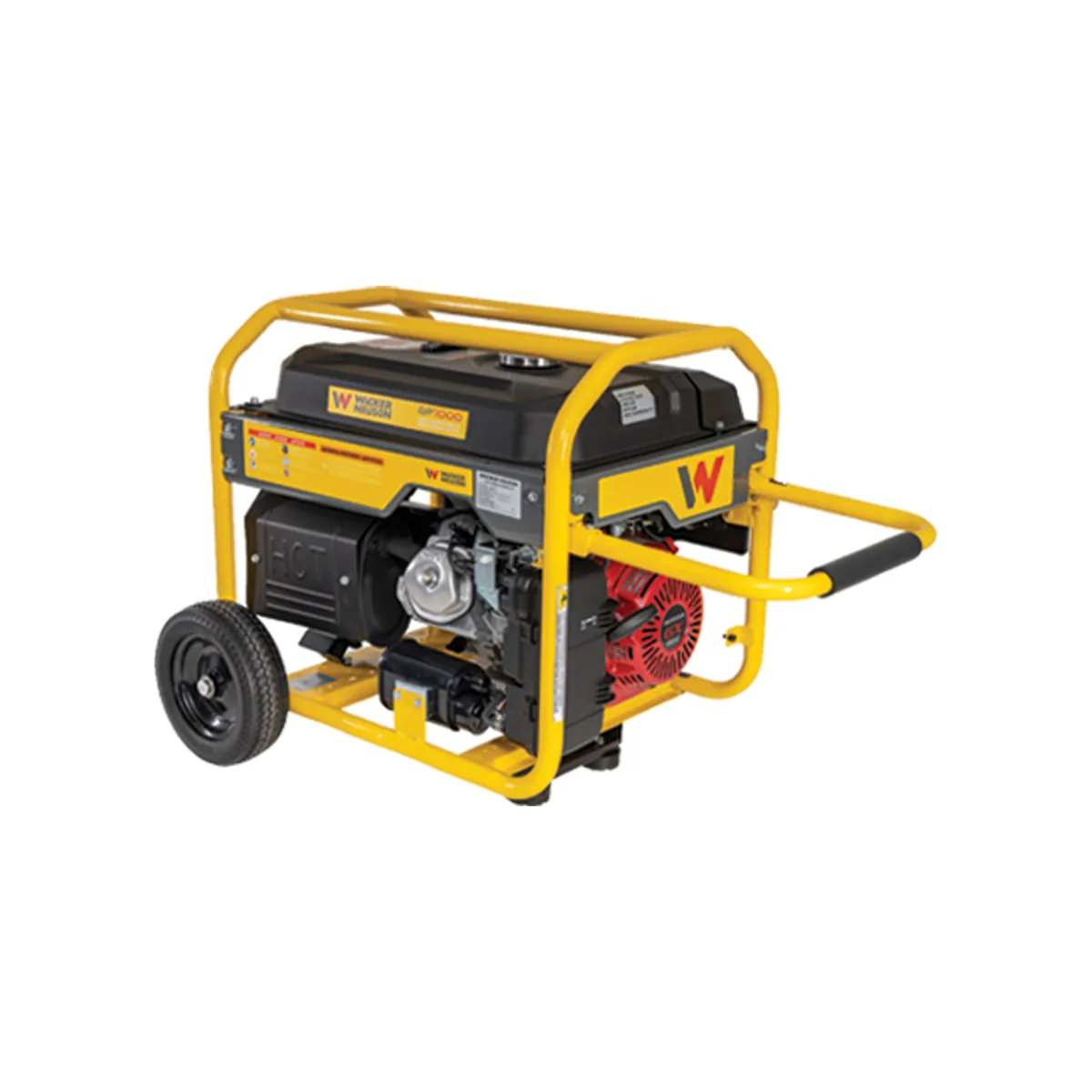
A poorly chosen generator shows on day one: it trips when the mixer starts, overheats the tool or runs out of fuel mid-shift. The decision isn't «the biggest one the budget allows», but the one that delivers the power your equipment needs, at the right voltage and frequency, for the hours the site works. These are the six criteria that define it.
1. Add up your equipment's power… and the start-up
List what you'll connect at the same time and add up its power in watts (it's on each unit's plate). Then look at the ones with a motor —mixers, pumps, compressors, saws—: at start-up they draw several times their normal power for a few seconds. The generator has to handle that peak from the largest motor with everything else running. If you start motors one at a time, the peak drops and the generator can be smaller.
2. Continuous power, not peak
Datasheets show two numbers: peak (or «standby») power, which the unit delivers briefly, and continuous power, which it sustains for hours. Size on continuous power and leave headroom: running around 70–80% of continuous extends engine life and avoids tripping on a peak. Catalog example: the Wacker Neuson GP 7000A gives 7,000 W peak and 6,800 W continuous; for a steady 6,500 W load it's too tight, and the next size up is the better choice.
3. Voltage, phases and 60 Hz
In Central America the grid runs at 60 Hz. Tools and light site equipment usually take 120 V or 120/240 V single-phase; large motors and site panels may need three-phase. Check three datasheet values before buying: output voltage, number of phases and frequency. A 50 Hz generator is designed for other markets: motors run slower, heat up and some equipment won't work properly. If the datasheet says 50 Hz, ask for the 60 Hz version.
4. Gasoline or diesel, and how many hours
Gasoline generators are light, portable and cheap to buy; they work well at low power and intermittent use. Diesel units cost more up front but burn less per kWh, handle long shifts and run more hours between overhauls: they're the choice for daily use of several hours or as camp backup. Work out runtime from tank capacity and fuel use at your real load, not full load: it defines how many times a day someone has to refuel.
5. Altitude and heat reduce power
A combustion engine breathes less air at altitude and in heat, and delivers less power than the plate rating. On the coast it's barely noticeable; in Guatemala City or Quetzaltenango it is. Every manufacturer publishes a derating table for altitude and temperature: apply it to your site before choosing the size, especially if you'll run close to the limit.
6. Safe connection
Three non-negotiable rules. Ground the generator as its manual instructs. Never connect it to a building's wiring without a transfer switch: current can back-feed into the grid and electrocute line workers. And never run it indoors: carbon monoxide can't be seen or smelled. Place it outdoors, away from doors and windows.
Get a quote without leaving
Want to work it out with an advisor?
Topic: Electric generator
Which country is your project in?
Frequently asked questions
How do I convert kVA to kW?
Multiply kVA by the power factor. For site generators 0.8 is normally used: a 10 kVA generator delivers about 8 kW. If the datasheet already gives continuous kW, use that number.
Can I use a 50 Hz generator in Central America?
It's not recommended. Equipment in the region is built for 60 Hz; at 50 Hz motors run slower and overheat. Ask for the model's 60 Hz version.
What size do I need for a mixer and power tools?
Add the power of the tools you'll use at once, add the mixer motor's start-up peak, and pick a generator whose continuous power sits above that with 20–30% headroom. An advisor can run the numbers with you from your equipment plates.
How often does it need maintenance?
By operating hours, per the manual: oil change, air and fuel filters, and spark plugs or injectors. On dusty sites, check the air filter more often.
Ready for the next step?
See generatorsMore guides
- How to choose an excavator for your project
- Rent or buy machinery: how to decide
- Preventive maintenance: protect your investment
- How to choose machinery for mining
- Machinery financing and leasing: how to choose
- How to choose a skid-steer loader (radial vs. vertical)
- What to check before buying used machinery
- How to calculate your machine's cost per hour
- How to choose your excavator bucket
- How to choose a wheel loader
- How to choose a motor grader
- Filters and wear parts: warning signs and when to replace them
- Forklift or skid-steer loader: differences and which one you need