
Short answer
In a lease you choose the machine and the dealer, a leasing company or bank buys it and leases it to you: you run it from day one and pay a periodic rent over a term you can't cut short without a penalty. At the end, depending on the contract, you buy it for the agreed residual value, return it or renew. While it lasts, the lessor is the legal owner; insurance, use and almost always maintenance are on you. The terms are set by the lender based on your profile and country.
Work out fuel and maintenance per hourThree parties and one machine
A lease brings three parties together: you (the lessee), who choose the equipment and the supplier; the lessor (a bank or leasing company), who pays for the machine and becomes its owner; and the dealer, who sells it, delivers it and services it. Panama's law describes it this way: the lessor acquires the asset to the lessee's specifications, the lessee selects the equipment and the supplier, and the rent is calculated to amortize all or most of its cost.
That's why a lease looks like a loan in what you pay, but not legally: the machine isn't in your name until you exercise the purchase option.
- You choose machine and dealer: With a formal quote
- The lender reviews and approves: Based on your profile
- It buys the machine and you sign: Fixed term
- You run it and pay the rent: Insurance and maintenance
- At the end you decide: Buy, return or renew
Finance and operating leases: what changes day to day
Both get you the machine without paying cash, but they split the risk differently. In a finance lease the term covers most of the useful life, the rent amortizes almost all of the value and the purchase option at the end is usually a small amount: it's built for you to keep the machine. In an operating lease the term is shorter, the lessor keeps the risk of what the machine is worth at the end and the usual move is to return it or swap it for a new one.
If you already know you'll use it for many years, the finance lease is closer to buying. If you want to renew the fleet every few years or don't want to carry the resale, the operating lease. The comparison with loans and rental is in the financing guide.
- Finance: long term · amortizes almost everything · at the end, purchase option for the residual · maintenance is usually yours.
- Operating: shorter term · the lessor carries the resale value · at the end, you return or renew · what's included depends on the contract.
- In both: the lessor is the legal owner until the end, and the term is fixed.
What to check in the contract before signing
The rent is what everyone looks at; what weighs for years is in the clauses. Ask for the full contract before signing and review these points with your lawyer or accountant:
- Term and whether it's fixed: how much it costs to end early or swap machines mid-contract.
- Rent: amount, frequency, currency and whether it changes with the rate during the term.
- First rent or advance, and whether they accept your used equipment toward it.
- Purchase option: when it can be exercised and the exact residual value, in writing.
- Insurance: what it covers (damage, theft, liability), who the beneficiary is and whether it's inside the rent.
- Maintenance and repairs: who pays and whether they must be done by the dealer.
- Permitted use: hours, type of work and territory (whether you can take it to a job in another country).
- What happens if the machine is a total loss or stolen: whether you keep paying and how it's settled.
- Return conditions in an operating lease: expected condition, maximum hours and wear charges.
Leasing law in each country
Leasing isn't governed the same way in the four countries where Grupo ConstruMarket operates. This is what each framework says, in short; your lawyer confirms the details of your contract:
In El Salvador, the Financial Leasing Law (Legislative Decree 884 of 2002) governs the contract: the lessor grants the use of movable or real property for a fixed, binding term in exchange for a rent.
In Guatemala, the Leasing Law (Decree 2-2021, in force since 2021) gave its own regulation to a contract that used to be atypical; it covers finance and operating leases, and if the asset is movable, the contract is recorded in the Movable Collateral Registry.
In Panama, Law 7 of 1990 governs the financial leasing of movable property, regulated by Executive Decree 76 of 1996.
Nicaragua has no leasing law like its neighbors: the contract is governed by what the parties agree and by general rules. Since 2025, financial leasing entities have a licensing and supervision regulation (Resolution CDMF-XIX-3-25).
What the rent depends on (and why there's no universal simulator)
The rent comes from six numbers: the machine's price, what you pay up front, the term, the rate, the residual value and insurance. Each one moves the rent in one direction: a larger advance or a longer term lowers it; a higher residual lowers it too, but leaves you a bigger final payment if you want to keep the machine. That's why two offers with the same rent can cost very different amounts in total.
A simulator with made-up rates would give you a number no bank honors, because the rate, term and advance are set by your credit review and vary by country. What helps is doing the math backwards: divide the monthly payment you're offered by the hours the machine will work that month, add fuel and maintenance per hour (the cost-per-hour calculator estimates them) and compare the total with what you charge per hour on your job.
What do you change in the offer?
- You pay more up front → The rent goes down
- You lengthen the term → Rent down, total cost up
- You raise the residual value → Rent down, final payment up
- Your credit profile improves → Better rate, lower total cost
Leasing used machinery and sale-leaseback
Leasing isn't only for new machines. Many lenders lease used equipment if it has resale value and can be inspected; at Grupo ConstruMarket, inspected used equipment can also be financed, subject to approval. The term is usually shorter, because the machine has less useful life ahead.
There's also sale-leaseback: if you already own paid-off machines, a leasing company buys them from you and leases them back, and you free up capital without stopping their use. Not every lender offers it, nor for every machine; ask directly and compare its total cost against a loan with the machine as collateral.
Warranty, service and hours during the lease
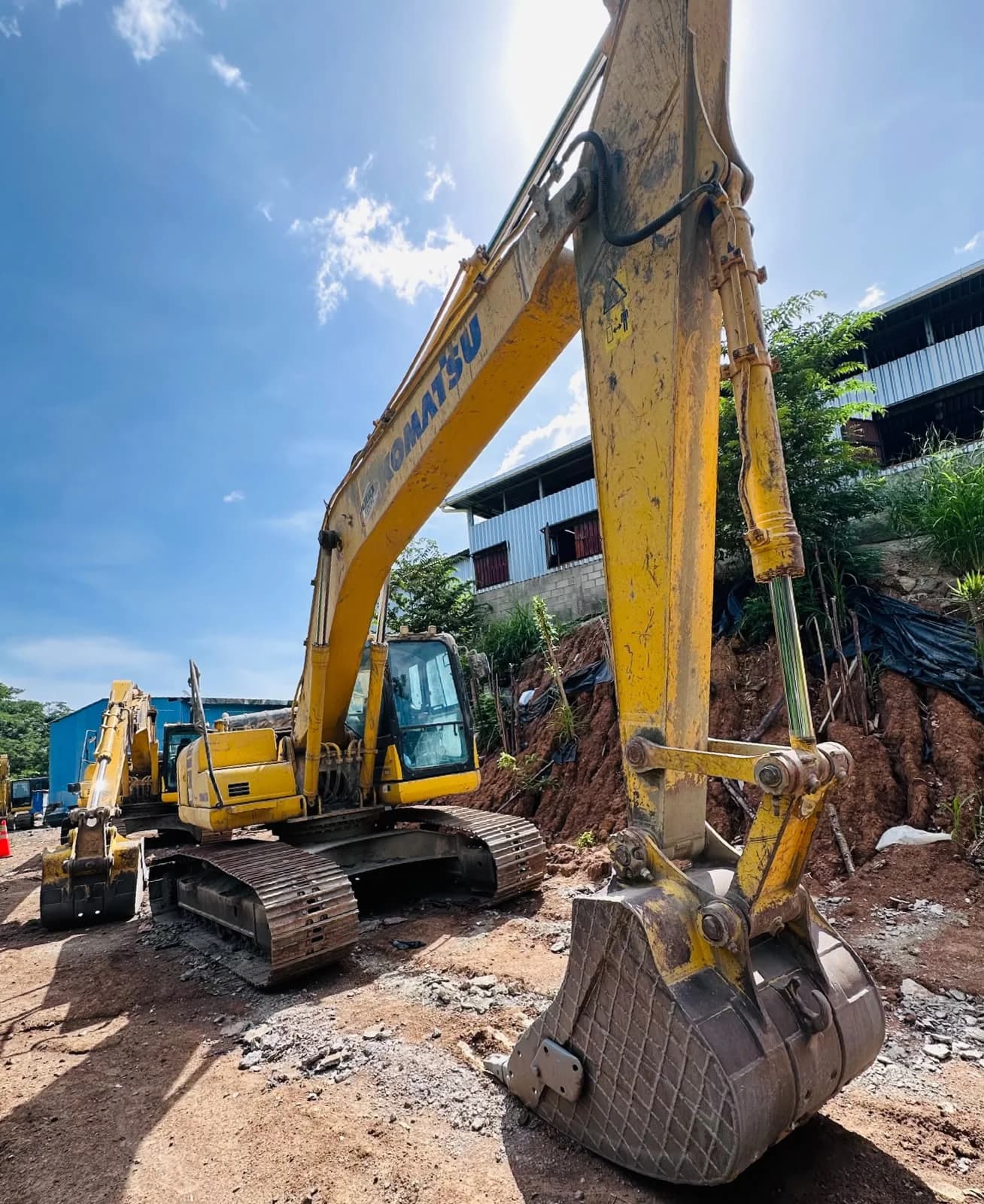
The machine belonging to the lessor doesn't change who backs it: you still claim the factory warranty through the authorized dealer, and service is booked just as if it were yours. Many contracts require maintenance at the official workshop; even when they don't, it pays, because at the end of the term the machine is worth what its history says.
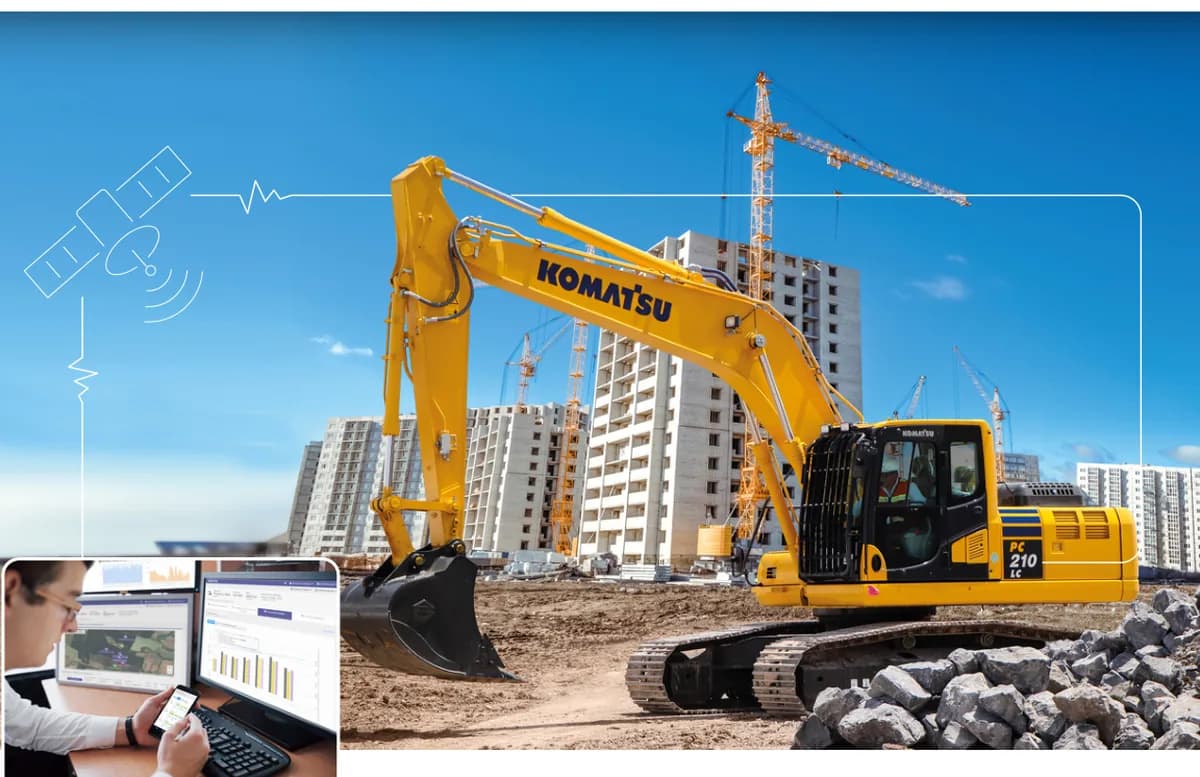
In an operating lease, hours and condition at return can trigger charges. On machines with telematics, like KOMTRAX on Komatsu, hours, location and alerts are logged without relying on handwritten notes: they help you care for the machine and prove how it was used.
- What is KOMTRAX and what does it tell you about your Komatsu machine?
- Preventive maintenance for heavy machinery: how often, and what does it include?
How to request a lease with Grupo ConstruMarket
Request it together with the machine: in the quote form choose “Financing” as the payment method, or fill out the application at /financiamiento. It applies to Komatsu machinery in El Salvador, Guatemala (as CMARKET), Nicaragua and Panama, and to Bobcat equipment in El Salvador and Panama. An advisor contacts you during business hours and the lender gives you the terms in writing so you can compare them with other offers.
Have the formal equipment quote, your company's financial and legal information and, if you have it, the job or contract the machine will work on: equipment with work lined up gets approved with more confidence.
Summary: what to choose
| If… | Then… |
|---|---|
| You want to own it at the end and use it for years | Finance lease |
| You want to renew the fleet every few years | Operating lease |
| You own paid-off machines and need capital | Ask about sale-leaseback |
| You're comparing two offers with the same rent | Look at residual, insurance and total cost |
| The job lasts a few weeks | Rental, not a lease |
Get a quote without leaving
Want to work it out with an advisor?
Topic: Machinery leasing
Which country is your project in?
Common mistakes
Signing by the rent alone
A low rent can hide a high residual or a long term. Ask for the total cost in writing.
Forgetting the term is fixed
Ending early costs money. If the job may finish early, negotiate it from the start.
Not reading the total-loss clause
If the machine is lost, you need to know whether you keep paying and what insurance covers.
Taking it to another country without permission
Many contracts limit the territory. Ask before crossing the border.
Neglecting the service history
At the end, the machine is worth what its history says; in an operating lease, wear gets charged.
Take it to the job site
Print the checklist to go over it on site, or send the guide to your crew.
Frequently asked questions
What is yellow-iron equipment leasing?
“Yellow iron” is what the region calls construction and earthmoving machinery: excavators, backhoes, loaders, dozers and motor graders. Yellow-iron leasing is the same contract: the lender buys the machine you choose and leases it to you with a purchase option at the end.
Who owns the machine during the lease?
The lessor, until you exercise the purchase option. You use it, insure it and usually maintain it. In Guatemala, if the asset is movable, the contract is recorded in the Movable Collateral Registry.
Can I end the lease early?
The term is binding: ending early usually carries a penalty or requires paying off the balance. The exact terms are in your contract; if the job may end early, negotiate it before signing.
Can I lease a backhoe loader?
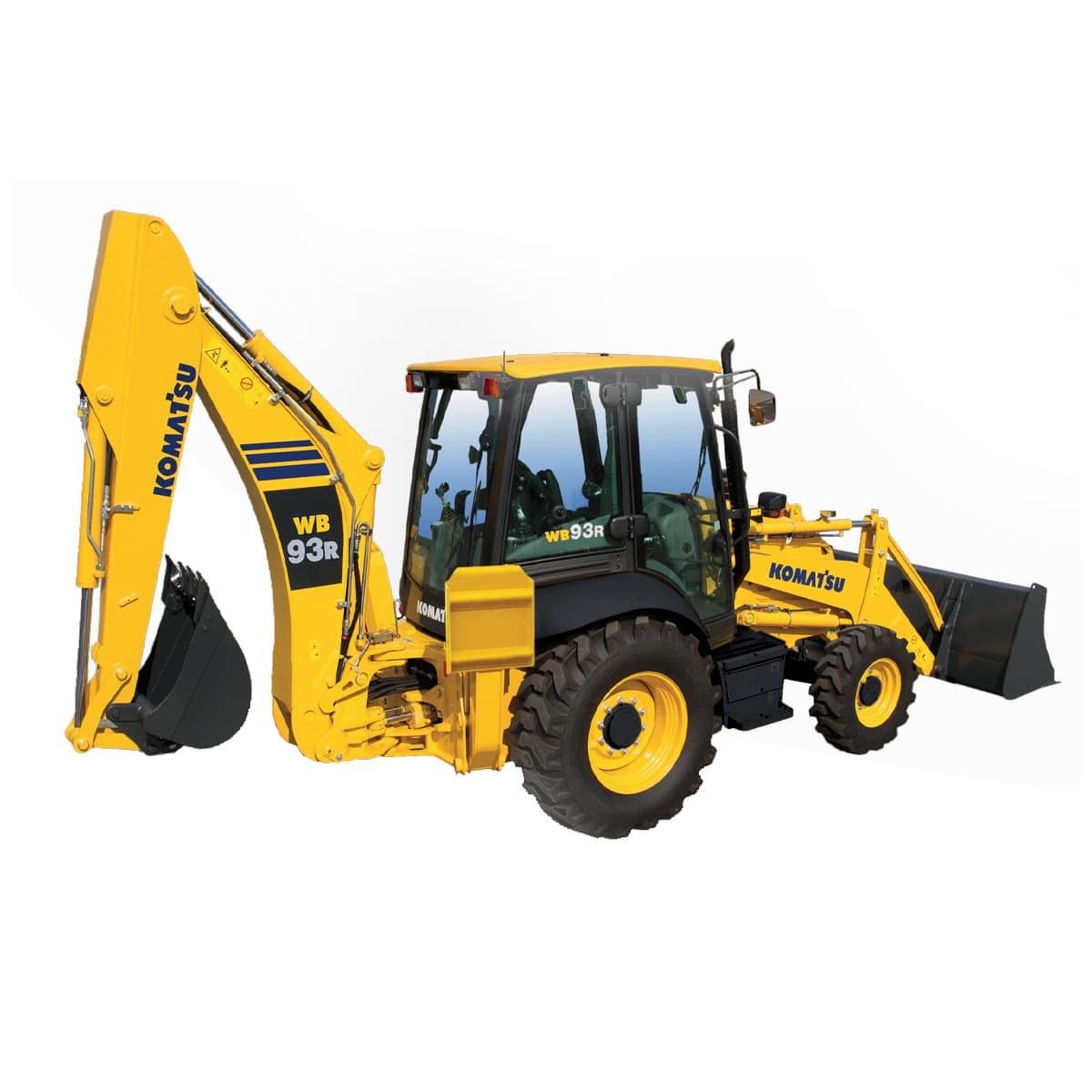
Yes. A brand-name backhoe with parts and a workshop in the country, like the Komatsu WB93R-5E0 and WB97R-5E0, resells well and is among the easiest machines to finance. Request it with “Financing” in your quote.
Is there a machinery leasing simulator?
We don't publish one with rates, because the lender sets them based on your profile and country, and a reference number would have you deciding on false data. Ask for the offer in writing, divide the payment by the month's working hours, add fuel and maintenance per hour (the cost-per-hour calculator estimates them) and compare it with what you charge per hour.
What happens when the lease ends?
It depends on the type and the contract. In a finance lease you usually exercise the purchase option by paying the agreed residual value and the machine goes into your name. In an operating lease you return it in the agreed condition, renew the contract or swap it for a new one.
Does leasing have tax advantages?
It can, but they depend on each country's law and your company's accounting standard; under IFRS 16, most leases go on the lessee's balance sheet. Ask your accountant to compare leasing and a loan with your numbers before deciding for tax reasons.
Ready for the next step?
Apply for financingGrupo ConstruMarket · Job site checklist
How does heavy machinery leasing work in Central America?
In a lease you choose the machine and the dealer, a leasing company or bank buys it and leases it to you: you run it from day one and pay a periodic rent over a term you can't cut short without a penalty. At the end, depending on the contract, you buy it for the agreed residual value, return it or renew. While it lasts, the lessor is the legal owner; insurance, use and almost always maintenance are on you. The terms are set by the lender based on your profile and country.
Finance and operating leases: what changes day to day
- Finance: long term · amortizes almost everything · at the end, purchase option for the residual · maintenance is usually yours.
- Operating: shorter term · the lessor carries the resale value · at the end, you return or renew · what's included depends on the contract.
- In both: the lessor is the legal owner until the end, and the term is fixed.
What to check in the contract before signing
- Term and whether it's fixed: how much it costs to end early or swap machines mid-contract.
- Rent: amount, frequency, currency and whether it changes with the rate during the term.
- First rent or advance, and whether they accept your used equipment toward it.
- Purchase option: when it can be exercised and the exact residual value, in writing.
- Insurance: what it covers (damage, theft, liability), who the beneficiary is and whether it's inside the rent.
- Maintenance and repairs: who pays and whether they must be done by the dealer.
- Permitted use: hours, type of work and territory (whether you can take it to a job in another country).
- What happens if the machine is a total loss or stolen: whether you keep paying and how it's settled.
- Return conditions in an operating lease: expected condition, maximum hours and wear charges.
Avoid
- Signing by the rent alone. A low rent can hide a high residual or a long term. Ask for the total cost in writing.
- Forgetting the term is fixed. Ending early costs money. If the job may finish early, negotiate it from the start.
- Not reading the total-loss clause. If the machine is lost, you need to know whether you keep paying and what insurance covers.
- Taking it to another country without permission. Many contracts limit the territory. Ask before crossing the border.
- Neglecting the service history. At the end, the machine is worth what its history says; in an operating lease, wear gets charged.
Job site:
Date:
Supervisor:
Scan it for the full guide, with video and FAQ
https://grupoconstrumarket.com/en/guias/como-funciona-el-leasing-de-maquinaria-pesada