Short answer
Conventional concrete is vibrated because, when it's poured, it doesn't fill every space in the form on its own: air stays trapped between the aggregates, around the steel and in the corners. Vibration briefly lowers the friction between particles, the mix settles, the air escapes and the concrete fills the form. The technique: insert the poker vertically without forcing it, work in order with overlapping insertions, reach into the previous layer while it's still fresh, withdraw slowly once bubbles have almost stopped, and never use the vibrator to push concrete around.
Watch it in 15 s
Without and with vibration
Two identical columns: on the left, concrete with no mechanical vibration; on the right, the vibrator releases the air and compacts it.
Why pouring and levelling isn't compacting
When conventional concrete is poured, the mix doesn't automatically fill every space in the form. Air can stay trapped between its materials, around the reinforcing steel and in the corners, exactly where the element needs it most.
Vibration temporarily reduces the friction between particles: for a few seconds the mix behaves almost like a liquid, it settles, the trapped air rises and escapes, and the concrete fills the spaces better and wraps the rebar. That's why pouring and levelling it isn't the same as compacting it properly: the surface can look smooth and still hide voids inside.
This part's video is aboveWhat happens when compaction falls short
Voids can appear, along with honeycombing (areas where the gravel was left without mortar to bind it) and stretches where the concrete doesn't properly surround the reinforcement. A poorly wrapped bar is less protected and works less well together with the concrete.
Some defects show when the form comes off; others stay hidden inside the element—a column, a beam, a wall—and may need assessment and repair. Repairing always costs more than vibrating properly on pour day.
- Voids and large bubbles on the element's face.
- Honeycombing: loose gravel with no paste, especially in corners and at the foot of columns.
- Exposed or poorly covered steel.
- Internal defects that only an assessment can detect.
The right technique, step by step
Technique makes more difference than the machine. With an immersion vibrator (a poker or head at the end of a hose):
- Insert the poker vertically and without forcing it: let it sink under its own weight to the bottom of the layer.
- Work in order, making sure the zones of action of each insertion overlap; if they're spaced apart, the concrete in between never gets vibrated.
- If you place concrete in layers, reach into the previous layer while it's still fresh so they bond into one piece.
- Watch the mix: the stream of bubbles should drop off considerably before you withdraw the poker.
- Withdraw it slowly so the concrete closes the space it leaves; pulling it out fast leaves a hole.
- Don't use the vibrator to push concrete from one side to the other: concrete is placed and spread with a shovel; the vibrator only compacts.
- Go in vertically: Without forcing the poker
- Reach the previous layer: If it's still fresh
- Watch the mix: Until bubbles have almost stopped
- Withdraw slowly: The concrete closes the gap
- Next point: With overlapping zones
How long do you vibrate at each point?
There's no single vibration time for every case. How long depends on the mix—its consistency, the aggregate size—and on the equipment. What you're after is uniform compaction, and the mix tells you: the concrete stops settling around the poker, the stream of bubbles drops off sharply and a thin film of paste appears on the surface.
Avoid vibrating longer than needed, especially with mixes prone to segregation: over-vibrate and the gravel sinks, water and paste rise, and the element is left weak right at the top. Too little vibration leaves voids; too much separates the mix. The right point is in between, and you learn it by watching.
| Criterion | Too little | Just right | Too much |
|---|---|---|---|
| What you see | Bubbles keep coming | Bubbles almost stop; thin film of paste | Milky surface, water on top |
| Result | Voids and honeycombing | Dense, uniform concrete | Segregated mix, weak layer |
How to choose the vibrator and the poker
Choose the equipment and poker diameter by the mix, the size of the element and the rebar spacing: the poker has to pass freely between the bars, and a bigger one compacts more volume per insertion. Then pick the power source by what's available on site.
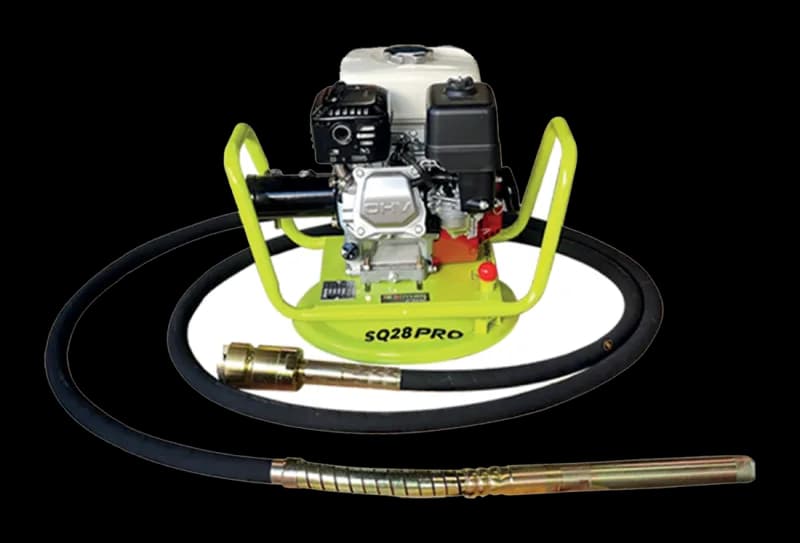
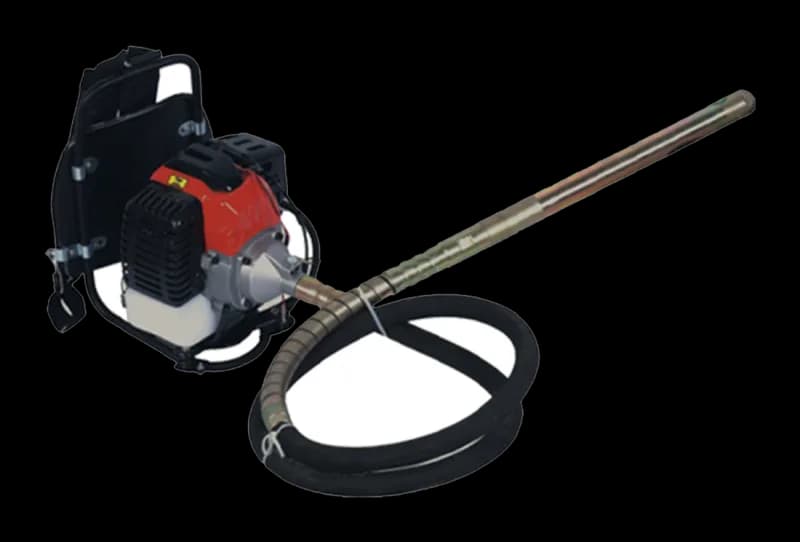
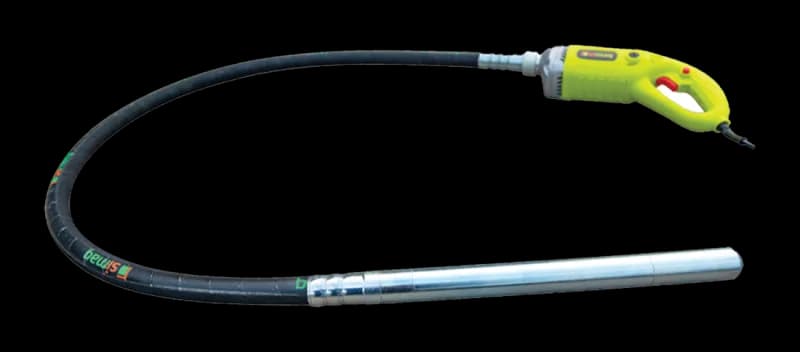
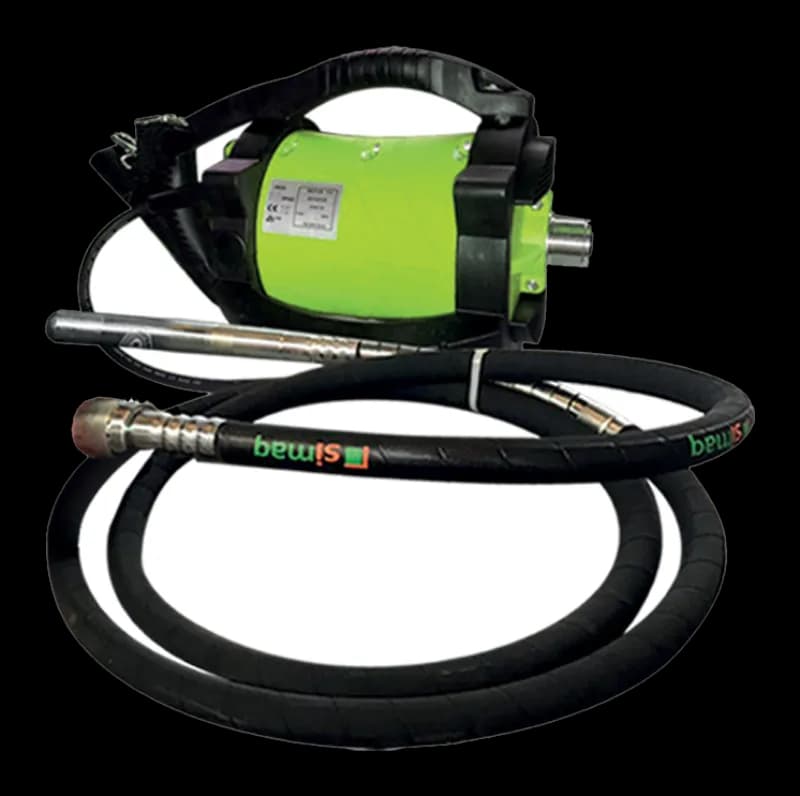
ConstruMarket's SIMAQ line covers the four most common cases. The SQVEH40 portable electric vibrator—the one in the video—is single-phase, weighs 5.8 kg and delivers 3 HP maximum power according to its datasheet. The SQ28 PRO has a Honda GX160 engine for sites with no power. The SQMG28 PRO backpack unit has a Honda GX35 engine, a 38 mm shaft at 8,000–9,000 rpm and a 3 m hose, and is carried on the back to move around the site. And the electric mini vibrator is for columns and small pours.
What's your job like?
- Steady power available → SQVEH40 electric
- No power → SQ28 PRO gasoline
- You move around a lot → SQMG28 PRO backpack
- Columns and small pours → Electric mini vibrator
Recommendations for your job
Train the operator and follow the procedure set by the site's technical lead: they define the mix, the layer thickness and how each element is placed and compacted.
Watch out for self-compacting concrete: it's designed to fill the form under its own weight and needs a different procedure. It shouldn't automatically be treated as conventional concrete or vibrated out of habit; follow what the mix supplier and the technical lead specify.
- Before the pour: vibrator tested, hose with no cuts and a backup unit if the pour is large.
- During: someone dedicated only to vibrating, not distracted by spreading concrete.
- After: clean the poker and hose before the stuck-on concrete sets.
Where to buy concrete vibrators in Central America
SIMAQ vibrators—the group's own light-equipment brand—are available in El Salvador, Guatemala, Nicaragua and Panama, together with the rest of the concrete line: mixers, vibrating screeds, power trowels and joint cutters. Request your quote with the type of job and whether you have power on site, and an advisor will contact you during business hours.
Summary: what to choose
| If… | Then… |
|---|---|
| You're pouring conventional concrete | Vibrate: pouring and levelling isn't compacting |
| You place in layers | Reach into the previous layer while it's still fresh |
| Bubbles have almost stopped | Withdraw the poker, slowly |
| The mix looks milky on top | You're over-vibrating |
| It's self-compacting concrete | Different procedure: the technical lead sets it |
| There's steady power on site | SQVEH40 electric vibrator |
| There's no power | SQ28 PRO gasoline or SQMG28 PRO backpack |
Get a quote without leaving
Want to work it out with an advisor?
Topic: Concrete vibrator
Which country is your project in?
Common mistakes
Using the vibrator to move concrete
Dragging it separates gravel from mortar; spread concrete with a shovel.
Insertions too far apart
Concrete between them never gets vibrated: that's where honeycombing starts.
Pulling the poker out fast
It leaves a hole the concrete can't close.
Over-vibrating
The mix segregates: gravel to the bottom, water and paste on top.
Vibrating self-compacting concrete out of habit
It has its own procedure; it isn't conventional concrete.
Take it to the job site
Print the checklist to go over it on site, or send the guide to your crew.
Frequently asked questions
Why does concrete have to be vibrated?
Because air gets trapped between the aggregates, around the steel and in the corners when it's poured. Vibration briefly lowers the friction between particles so the mix settles, the air escapes and the concrete fills the whole form and wraps the reinforcement.
What happens if concrete isn't vibrated?
Voids, honeycombing and areas where the concrete doesn't properly surround the bar can remain. Some defects show when the form comes off; others stay hidden inside the element and may need assessment and repair.
How many seconds do you vibrate concrete?
There's no single time: it depends on the mix and the equipment. Withdraw the poker when the bubbles have dropped off sharply and a thin film of paste appears, and don't keep vibrating, especially with mixes that tend to segregate.
Can concrete be over-vibrated?
Yes. Over-vibrated, the mix segregates: the gravel sinks, water and paste rise and the top is left weak. You can tell because the surface looks milky.
Is self-compacting concrete vibrated?
It needs a different procedure: it's designed to fill the form under its own weight. It isn't treated like conventional concrete; follow what the mix supplier and the technical lead specify.
Which concrete vibrator should I buy?
With steady power, the SIMAQ SQVEH40 electric; with no power, the SQ28 PRO with a Honda GX160 engine; to move around the site, the SQMG28 PRO backpack; for columns and small pours, the electric mini vibrator. Poker diameter is chosen by the mix, the element and the rebar spacing.
Ready for the next step?
See SIMAQ concrete vibratorsGrupo ConstruMarket · Job site checklist
How do you vibrate concrete properly? Why it matters and the step-by-step technique
Conventional concrete is vibrated because, when it's poured, it doesn't fill every space in the form on its own: air stays trapped between the aggregates, around the steel and in the corners. Vibration briefly lowers the friction between particles, the mix settles, the air escapes and the concrete fills the form. The technique: insert the poker vertically without forcing it, work in order with overlapping insertions, reach into the previous layer while it's still fresh, withdraw slowly once bubbles have almost stopped, and never use the vibrator to push concrete around.
What happens when compaction falls short
- Voids and large bubbles on the element's face.
- Honeycombing: loose gravel with no paste, especially in corners and at the foot of columns.
- Exposed or poorly covered steel.
- Internal defects that only an assessment can detect.
The right technique, step by step
- Insert the poker vertically and without forcing it: let it sink under its own weight to the bottom of the layer.
- Work in order, making sure the zones of action of each insertion overlap; if they're spaced apart, the concrete in between never gets vibrated.
- If you place concrete in layers, reach into the previous layer while it's still fresh so they bond into one piece.
- Watch the mix: the stream of bubbles should drop off considerably before you withdraw the poker.
- Withdraw it slowly so the concrete closes the space it leaves; pulling it out fast leaves a hole.
- Don't use the vibrator to push concrete from one side to the other: concrete is placed and spread with a shovel; the vibrator only compacts.
Recommendations for your job
- Before the pour: vibrator tested, hose with no cuts and a backup unit if the pour is large.
- During: someone dedicated only to vibrating, not distracted by spreading concrete.
- After: clean the poker and hose before the stuck-on concrete sets.
Avoid
- Using the vibrator to move concrete. Dragging it separates gravel from mortar; spread concrete with a shovel.
- Insertions too far apart. Concrete between them never gets vibrated: that's where honeycombing starts.
- Pulling the poker out fast. It leaves a hole the concrete can't close.
- Over-vibrating. The mix segregates: gravel to the bottom, water and paste on top.
- Vibrating self-compacting concrete out of habit. It has its own procedure; it isn't conventional concrete.
Job site:
Date:
Supervisor:
Scan it for the full guide, with video and FAQ
https://grupoconstrumarket.com/en/guias/como-vibrar-el-concreto-correctamente