Short answer
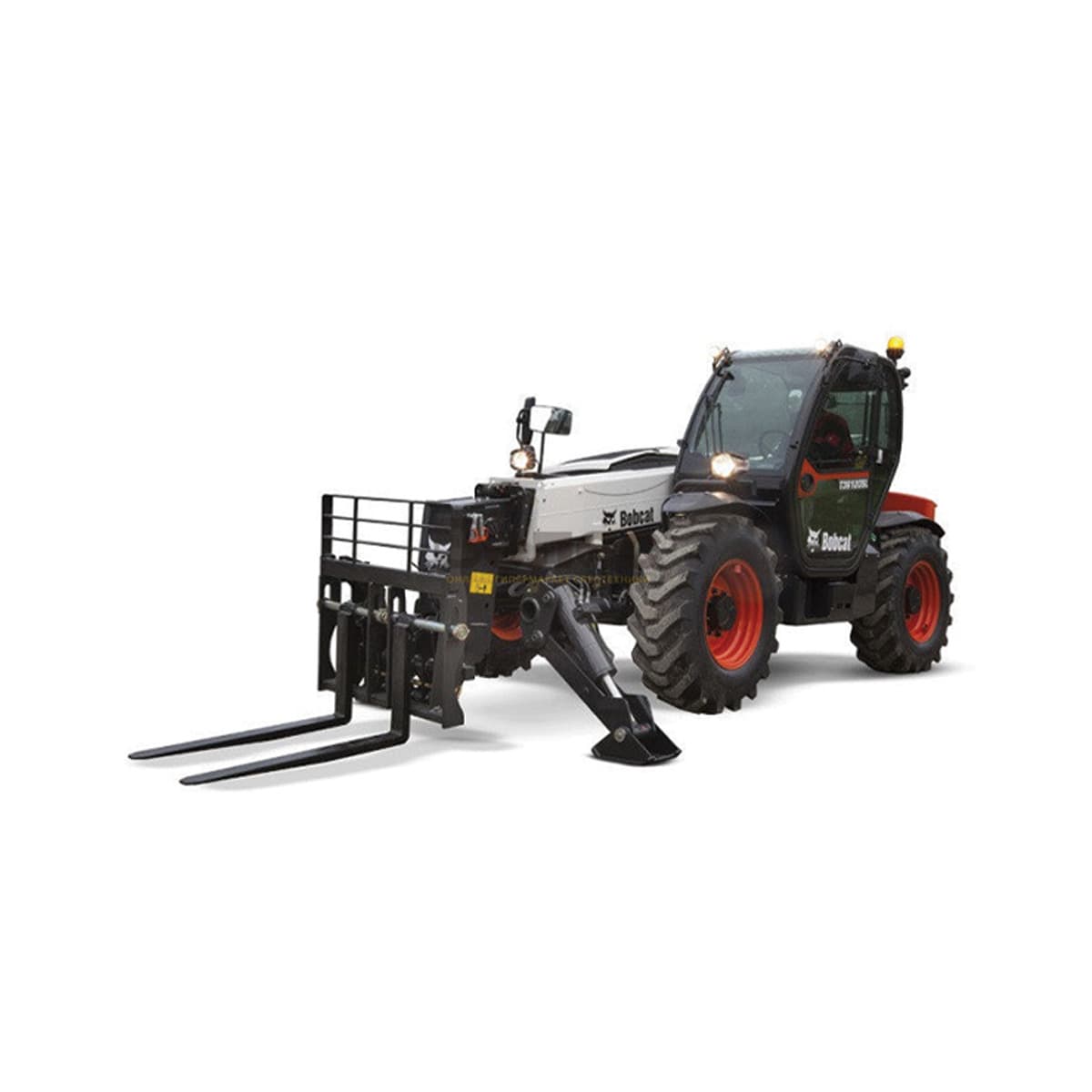
A telehandler is an all-terrain machine with a telescopic boom that lifts loads up and forward: pallets of block, rebar or roofing material to a second, third or fourth level. It makes sense when you need to lift loads on unpaved sites and over obstacles, where a forklift can't reach and setting up a crane isn't justified. Choose it by the height and reach at which you'll really place the load, reading the load chart, not just the maximum capacity.
What a telehandler is
It's also called a telescopic handler or «telescópico». It has the cab on one side, a boom that rises and extends, and a carriage at the front where you mount forks, a bucket or other attachments. Its edge over a forklift is that the boom reaches forward: it can set a pallet on a slab or inside an opening without the wheels getting to the edge.
On construction sites it moves material from the truck to the level where it's used; on farms and in agribusiness it moves bales, feed and sacks; in material yards it replaces a loader when you need to stack high.
Height and capacity: how the range is organized
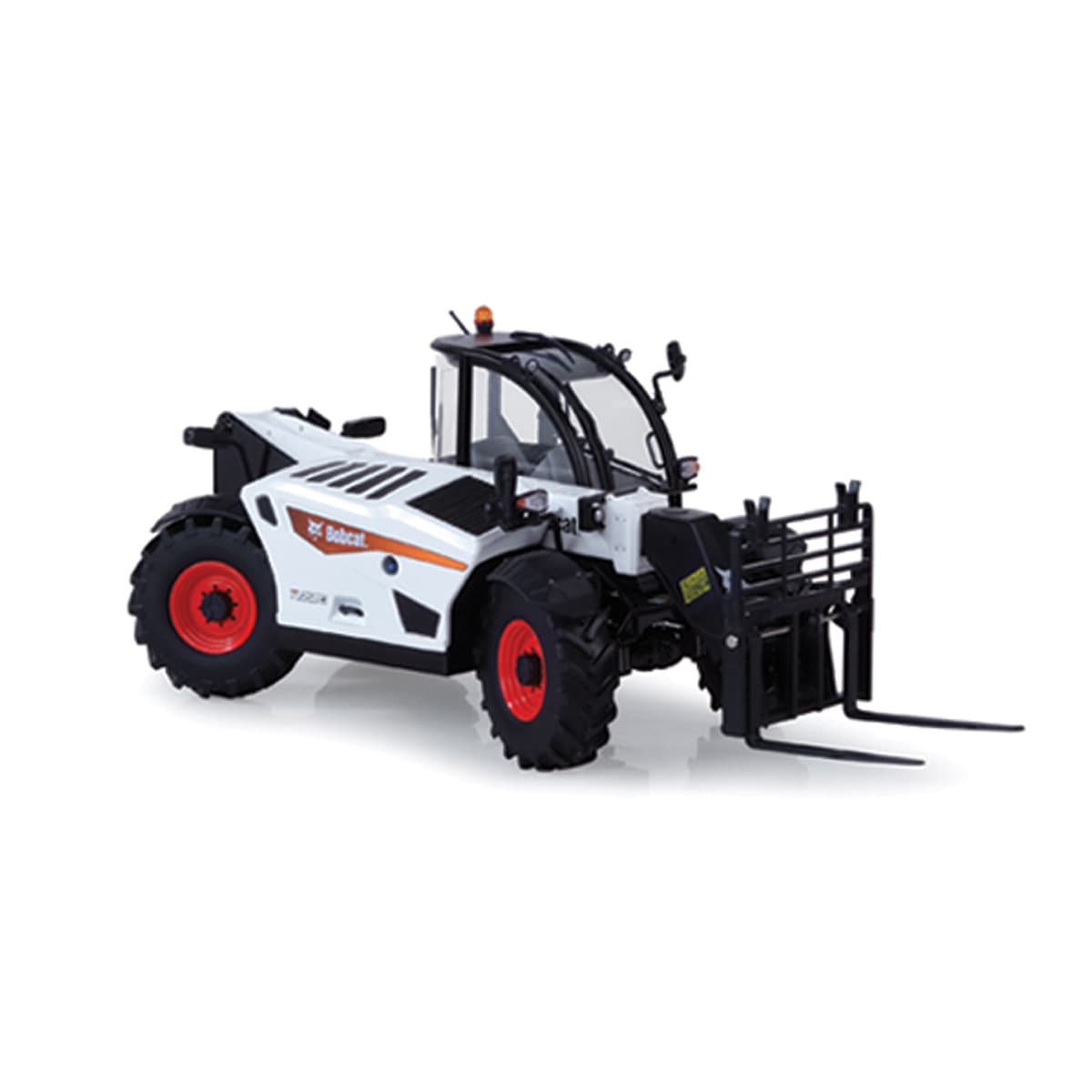
There are two families. Compact models (TL series) lift between 2,600 and 4,300 kg up to about 6–7.5 m: the TL26.60 carries 2,600 kg to 5.9 m, the TL35.70 carries 3,500 kg to 7.0 m and the TL43.80HF carries 4,300 kg to 7.51 m, according to Bobcat's datasheets. They unload trucks, stack and lift material to a second level.
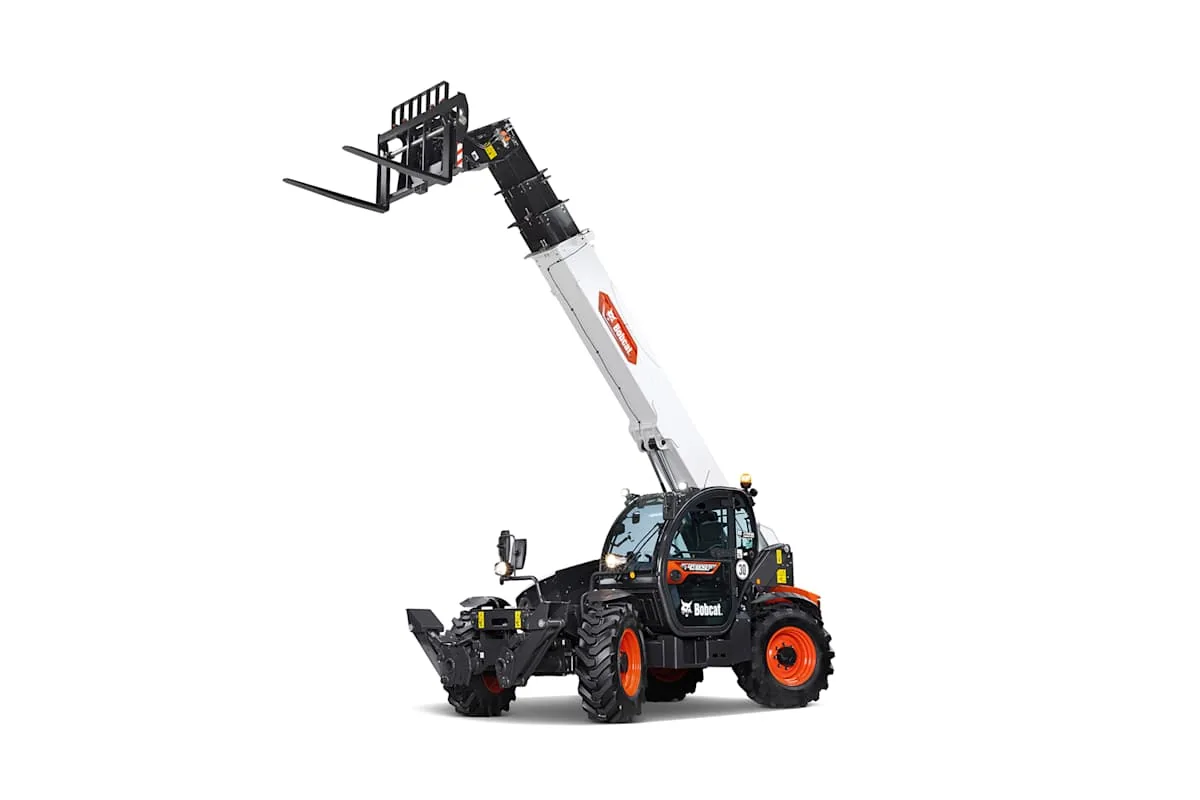
High-lift models (T series) work on buildings: the T36.120SL reaches 11.9 m with 3,600 kg, the T41.140SLP 13.7 m with 4,100 kg and the T40.180SLP 17.5 m with 4,000 kg. Measure the highest level where you'll place loads and add the pallet's height: that's your number.
- TL26.60: 5.9 m
- TL30.70: 7 m
- TL35.70: 7 m
- TL43.80HF: 7.51 m
- T36.120SL: 11.9 m
- T41.140SLP: 13.7 m
- T40.180SLP: 17.5 m
- Source: Bobcat datasheets.
The load chart: maximum capacity isn't at maximum height
This is the most misunderstood point. The datasheet's maximum capacity is with the boom retracted and close to the machine. As the boom extends forward, the weight moves away from the axle and capacity drops; at full extension it can be a fraction of the datasheet figure.
That's why every telehandler comes with its load chart: a diagram that tells you how many kilos you can carry at each combination of height and reach. The TL43.80HF, for example, lifts up to 4,300 kg, rises to 7.51 m and reaches 4.02 m forward, according to Bobcat, but not all three at once. Before buying, ask for the model's chart and place your real load on it: pallet weight, level height and distance from where the machine can stand.
Telehandler, forklift, crane or loader
A forklift lifts vertically and needs firm, level floor: it's a warehouse machine. A wheel loader moves volume—soil, aggregate—fast, but doesn't reach a second level. A crane goes higher and farther, but it has to be brought in, set up and paid by the day. The telehandler covers the space between the three: it lifts palletized loads several levels on jobsite ground and drives itself between work fronts.
If your work is only moving pallets on a concrete floor, a forklift is cheaper to run. If you need to place heavy pieces at 20 m or more, it's still crane work.
| Criterion | Telehandler | Forklift | Crane |
|---|---|---|---|
| Ground | Unpaved site | Firm, level floor | Prepared base |
| Lift | Up and forward | Vertical | Up and far |
| Travel | Drives itself | Within the yard | Set up on site |
| Typical job | Pallets to 2–4 levels | Warehouse and loading | Heavy pieces up high |
High flow and attachments
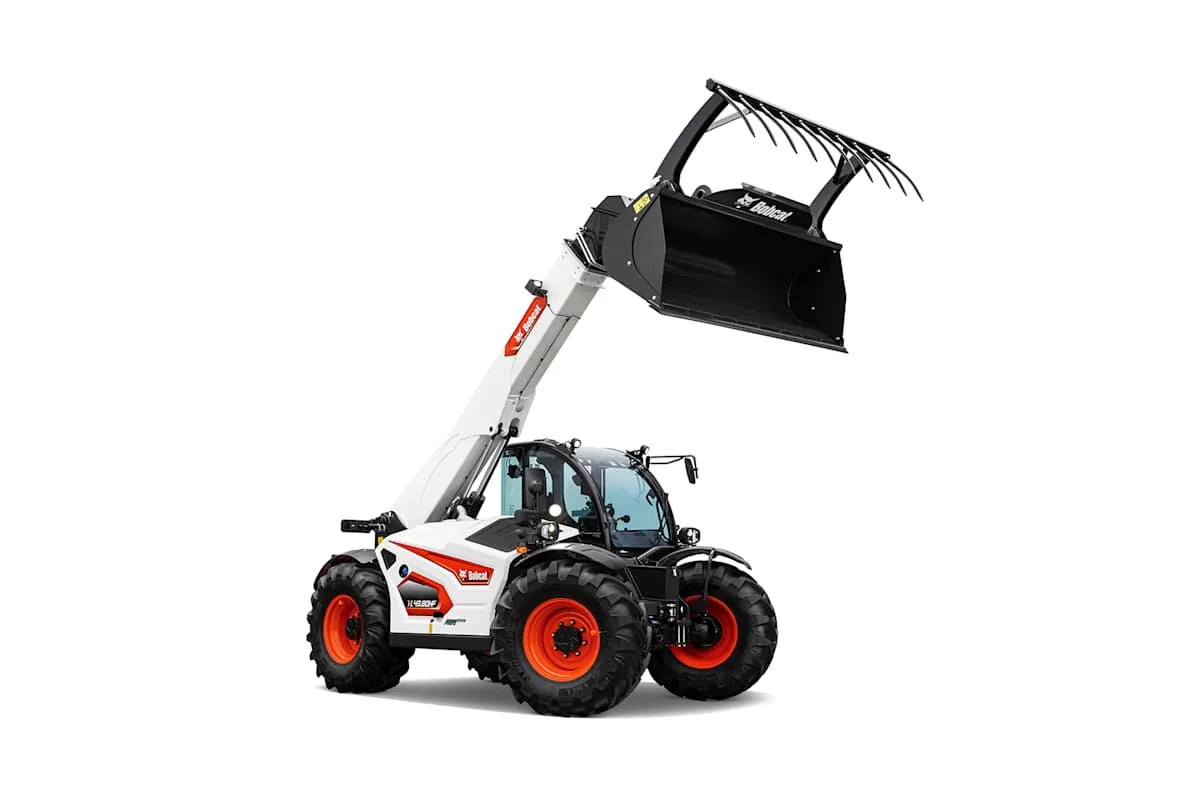
If besides forks you'll run hydraulic attachments—sweeper, mixing bucket—look at the HF (high-flow) models. The TL38.70HF and TL43.80HF have 130 HP and 190 L/min of hydraulic flow, with 150 L/min auxiliary, according to Bobcat. If you'll only lift pallets, a TL35.70 does the job with less machine.
In El Salvador and Panama there are forks and a telehandler bucket for Bobcat. Quote the machine with the attachments you'll use during the year, not just forks.
Safety: what isn't negotiable
A telehandler tips sideways or forward when the load chart is exceeded or it works on a slope. These general rules prevent most accidents; the manufacturer's manual and your country's regulations have the final word.
- An operator trained on that machine who can read the load chart.
- Firm, level ground before lifting; no trench edges.
- Outriggers down on models that have them, such as the T41.140SLP per its datasheet.
- Travel with the boom retracted and the load low.
- Never lift people on the forks: only in a basket approved by the manufacturer.
- Stop working at height in strong wind.
See it at work
This video from Bobcat Australia's official channel shows the R-Series TL35.70: the cab, the boom and work with forks.
Where to buy a telehandler in Central America
Grupo ConstruMarket offers the Doosan Bobcat telehandler line in El Salvador and Panama, from the TL26.60 to the T40.180SLP. According to Bobcat, its telehandlers leave the factory with a warranty of up to 36 months or 3,000 hours, and Protection Plus extends it up to 5 years or 6,000 hours. Bobcat equipment qualifies for machinery financing (credit or leasing, subject to approval).
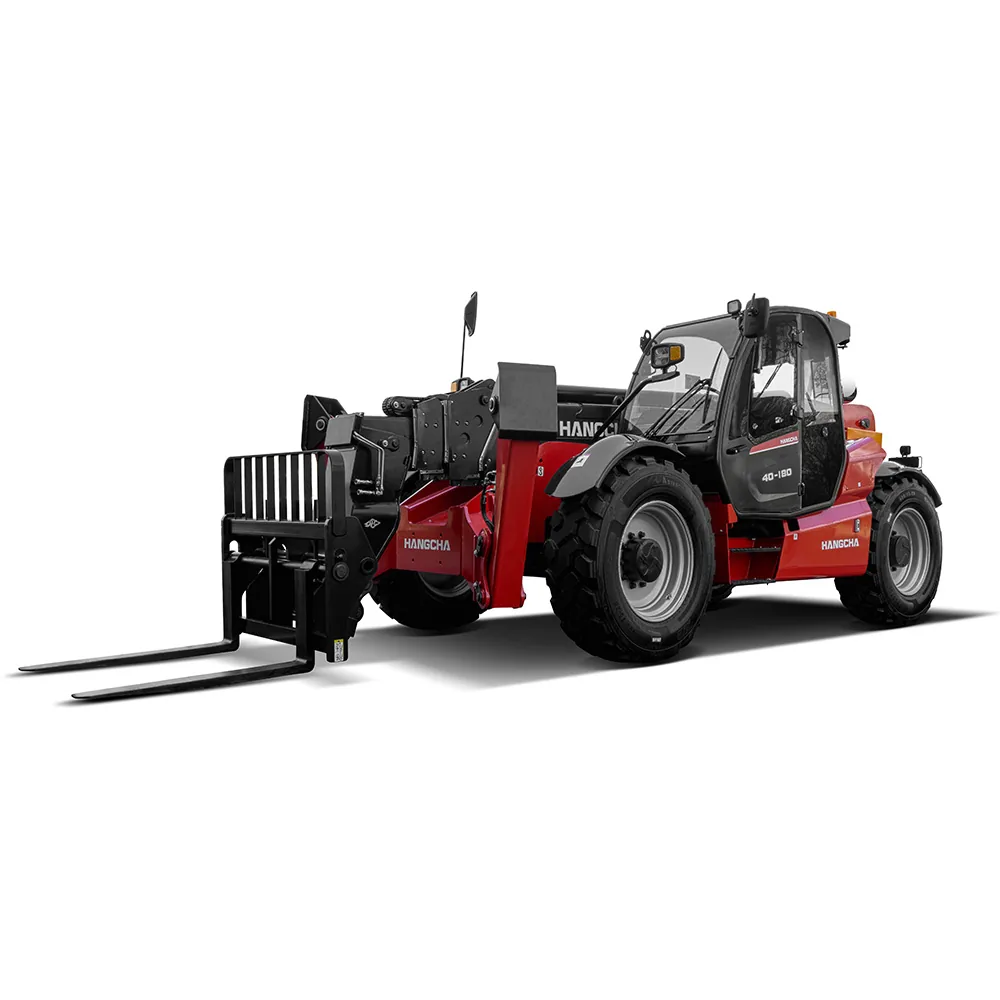
In Guatemala and Nicaragua, as well as El Salvador and Panama, there are Hangcha telehandlers: the lithium-battery XH series, 2.5–3.5 t and up to 9,800 mm, and the diesel X series, 4 t and up to 17,700 mm, according to Hangcha. Price depends on model, attachments and payment method: request your quote with the load, height and reach you need, and an advisor will contact you during business hours.
- El Salvador: Zaragoza (headquarters with workshop), Antiguo Cuscatlán and San Miguel.
- Panama: Panama City.
- Hangcha also in Guatemala (CMARKET: Mixco, Río Hondo and Xela) and Nicaragua (Managua).
Summary: what to choose
| If… | Then… |
|---|---|
| You lift pallets to a second level or stack in a yard | Compact telehandler, TL35.70 type |
| You place loads on a third or fourth level | High-lift series: T36.120SL or T41.140SLP |
| You need to reach far over an obstacle | Check reach and the load chart, not just height |
| You'll run hydraulic attachments | High-flow HF model |
| You only move pallets on a concrete floor | Forklift, not a telehandler |
| You're in Guatemala or Nicaragua | Hangcha XH or X series telehandlers |
Get a quote without leaving
Want to work it out with an advisor?
Topic: Telehandler
Which country is your project in?
Common mistakes
Buying by maximum capacity
At full extension the machine lifts much less; the load chart rules.
Not measuring the real level height
Add the pallet height and some margin to maneuver.
Lifting on a slope or next to a trench
It's the typical cause of a sideways tip-over.
Using it as a personnel platform
Forks aren't a basket; use the manufacturer-approved one or an aerial work platform.
Paying for high flow you won't use
If you only lift pallets, a standard model is enough.
Frequently asked questions
What is a telehandler?
An all-terrain machine with a telescopic boom that lifts loads up and forward. It's used in construction, agriculture and industry to lift pallets and material several levels.
What's the difference between a telehandler and a forklift?
A forklift lifts vertically on firm floor; a telehandler has a boom that reaches forward and traction for jobsite ground. For a warehouse, a forklift; for construction and height with reach, a telehandler.
How much does a telehandler lift?
In the Bobcat line, from 2,600 kg (TL26.60) to 4,300 kg (TL43.80HF), and from 5.9 m to 17.5 m of height depending on the model. Capacity at each height and reach comes from the load chart.
Where can I buy a telehandler in Guatemala?
In Guatemala, CMARKET offers Hangcha XH and X series telehandlers from Mixco, Río Hondo and Xela. The Bobcat line is available in El Salvador and Panama.
How much does a telehandler cost?
It depends on height, capacity, hydraulic flow, attachments and payment method. Request a quote with your real load; Bobcat equipment can be financed through credit or leasing, subject to approval.
Ready for the next step?
See Bobcat telehandlers