
Short answer
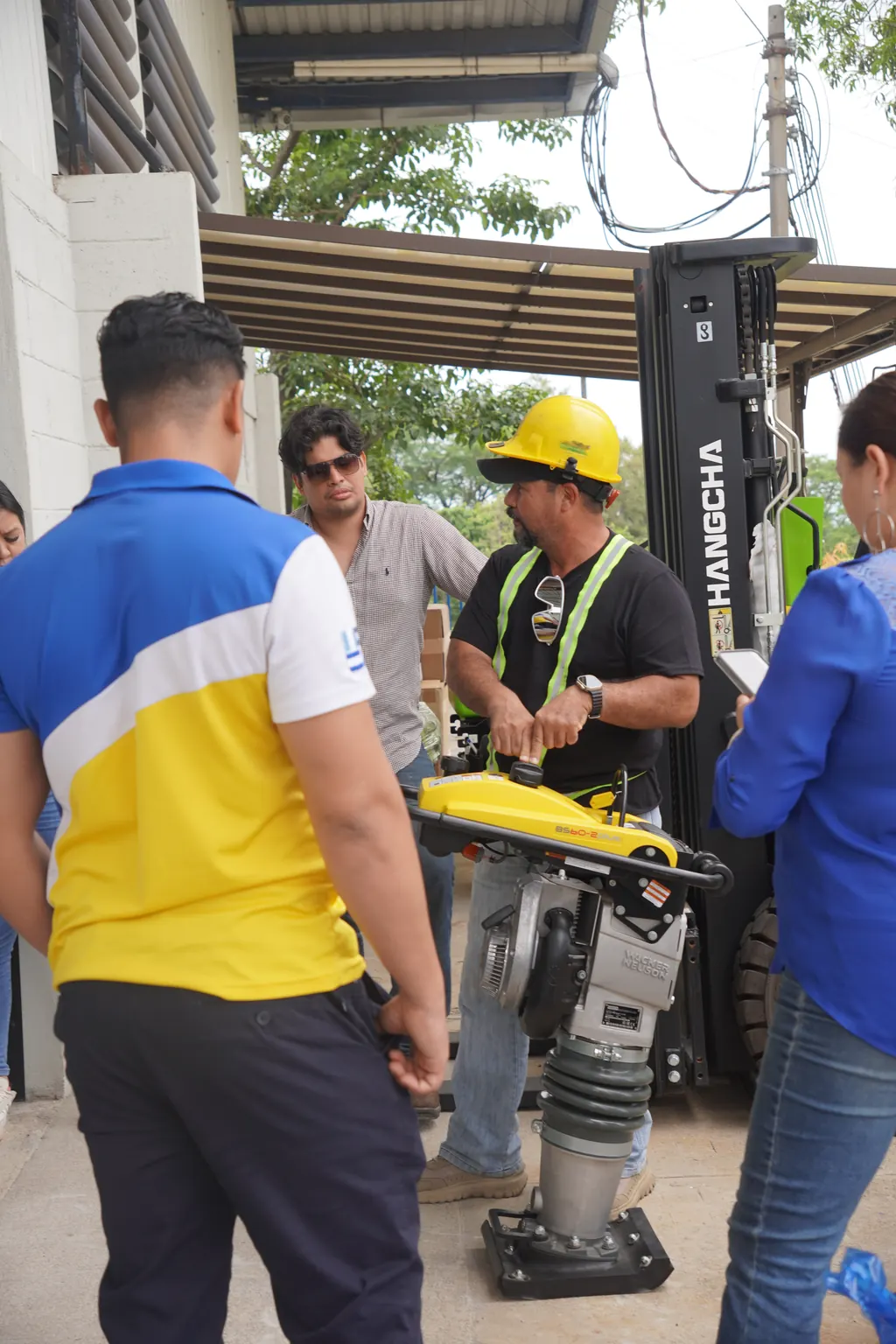
To operate heavy equipment inside a job site, the law in El Salvador, Guatemala and Nicaragua does not expressly require a license or an official certification: what it requires is that the operator be trained before using the machine, and that training is the employer's job. Panama is the nuance: its construction safety regulation asks for checking that the heavy equipment operator holds a “license to operate, granted by the Competent Authority”, but it doesn't say which authority grants it. To move the machine on public roads you do need the driver's license your country's traffic law requires. This is information about the laws, not legal advice.
What the four countries have in common
We read the workplace-safety law, its regulation, the labor code and the traffic rules of each country. The pattern repeats: the law doesn't create an “operator card” for working inside the site, but it does require the employer to train first, to let only trained people operate and to look after the worker's health. On the street, traffic law rules, with its own license.
Two things before going on. One: the law not requiring a card doesn't mean anyone can operate; training is mandatory and, if there's an accident, liability falls mainly on the employer. Two: your project contract, the client or the insurer may ask for more than the law, such as a course certificate or a hands-on test.
Where will you operate?
- Only inside the site → Prior training, provided by the employer
- On the street or highway → The driver's license class traffic law requires
- With a crane or lifting equipment → Specific instruction and signal code
- On a site in Panama → Ask which license the safety officer checks
El Salvador
In El Salvador the rule is in the General Law on Risk Prevention in Workplaces and its regulation: training before using hazardous machinery and only trained people at the controls. We found no mandatory license or official certification for operating inside the site. On the street, the General Traffic Regulation has no license class for machinery: classes go by vehicle weight.
| Topic | What the law says | Source |
|---|---|---|
| License to operate on site | The law does not expressly require it: we found no rule asking for a license, card or official certification. It does require machinery to be “operated only by personnel trained for it”. | General Law on Risk Prevention (Leg. Decree 254/2010), art. 40(opens in a new tab) |
| Training | If the machinery involves risk, the worker is trained before using it (art. 39). Not training on the job's risks is a serious violation (art. 79, item 20). | Leg. Decree 254/2010, arts. 39 and 79(opens in a new tab) |
| Training on the machine | Operators of machines and special equipment must be trained in their handling and in the risks of each one. | General Risk Prevention Regulation (Exec. Decree 89/2012), art. 76(opens in a new tab) |
| Medical exams | When the General Directorate of Social Welfare considers the activity risky, the employer orders medical and lab exams and covers the cost if they aren't done at ISSS. | Leg. Decree 254/2010, art. 63(opens in a new tab) |
| Driving on public roads | There's no license class for machinery: the Heavy class covers vehicles over five tonnes, and the license requires being of legal age. Toothed rollers, tractors and machinery that can damage pavement only travel with protected wheels, with prior permission from the General Traffic Directorate, at night and on low-traffic streets. | General Traffic Regulation (Exec. Decree 61/1996), arts. 133, 155 and 155-A(opens in a new tab) |
| Minimum age | Work by minors under 18 in hazardous jobs is prohibited; these include mechanical equipment whose handling requires special knowledge, and construction of all kinds. From 16 it can be authorized if they received adequate, specific training. | Labor Code, arts. 105 and 106(opens in a new tab) |
| Who is liable | Occupational hazards make the employer liable, except for force majeure unrelated to work, harm the victim caused on purpose, or the victim being drunk or drugged. | Labor Code, art. 321(opens in a new tab) |
| Officially backed certificate | INSAFORP can grant occupational certification to people trained within its system. We found no rule making it mandatory to operate. | Vocational Training Law, art. 6 e) (University of El Salvador copy)(opens in a new tab) |
Official sources checked on . Laws change: always check the version in force.
Guatemala
In Guatemala the key sentence is in the Occupational Health and Safety Regulation: no machinery is used by anyone who hasn't been trained beforehand. We found no mandatory license or official certification for operating inside the site. For driving on roads there is a license of its own: Type E, “to drive agricultural and industrial machinery”.
| Topic | What the law says | Source |
|---|---|---|
| License to operate on site | The law does not expressly require it: we found no rule asking for a license, card or official certification. It does say machinery of any kind must not be used by personnel who haven't been trained beforehand for its use. | Occupational Health and Safety Regulation (Gov. Agreement 229-2014, amended by 33-2016), art. 420(opens in a new tab) |
| Cranes, tractors and vehicles on site | Lifting-equipment operators and whoever directs the maneuvers must be instructed and know the signal code (art. 477). Tractors and other motorized transport are only used by specialized drivers (art. 512). | Gov. Agreement 229-2014, arts. 477 and 512(opens in a new tab) |
| Training (employer) | The employer must ensure machinery has the highest degree of safety, warn the worker of the hazards and carry out ongoing health and safety training. | Labor Code, art. 197(opens in a new tab) |
| Medical exams | Every worker exposed to vibration must have an annual medical check-up (art. 200), and excavators, tractors and similar machines that vibrate carry a cushioned seat, seat belt and extinguisher (art. 197). The pre-employment exam is part of workplace health services (art. 303). | Gov. Agreement 229-2014, arts. 197, 200 and 303(opens in a new tab) |
| Driving on public roads | Type E license: to drive agricultural and industrial machinery; it doesn't authorize driving any other type of vehicle. A first license requires being of legal age, plus exams. | Traffic Regulation (Gov. Agreement 273-98), arts. 23 and 25(opens in a new tab) |
| Minimum age | Work by minors in unhealthy and hazardous places is prohibited, as the regulation determines, as is all work by children under 14. We couldn't read the official list of hazardous work for minors, so we can't confirm whether it names machinery. | Labor Code, art. 148(opens in a new tab) |
| Who is liable | If the employer negligently breaches prevention rules and that causes loss of a limb, permanent disability or death, it pays damages on top of what IGSS covers. | Labor Code, art. 197 bis(opens in a new tab) |
| Officially backed certificate | INTECAP can grant degrees, diplomas or certificates “with full legal validity”. We found no rule making a certification mandatory to operate. | INTECAP Organic Law, art. 5(opens in a new tab) |
Official sources checked on . Laws change: always check the version in force.
Nicaragua
In Nicaragua the Labor Code is the most direct of the four: no one works on a dangerous machine without being instructed, without enough training in handling it and without a medical exam. We found no mandatory license or official certification for operating inside the site. For driving on roads, Law 431 creates the Special license for people who drive agricultural and construction vehicles.
| Topic | What the law says | Source |
|---|---|---|
| License to operate on site | The law does not expressly require it: we found no rule asking for a license, card or official certification. It does say no worker serves on a dangerous machine unless instructed on the hazard and precautions, having acquired sufficient training in handling the machine, and having passed the medical check. | Labor Code (Law 185), art. 105 (La Gaceta 205, 1996)(opens in a new tab) |
| Training | The employer provides health and safety training at least once a year (art. 20), with trainers accredited by the Ministry of Labor (art. 22). | Law 618, General Occupational Health and Safety Law, arts. 20 and 22(opens in a new tab) |
| Medical exams | The employer guarantees pre-employment and periodic medical exams for workers exposed to risks or when the Ministries of Labor and Health require it. | Law 618, art. 25(opens in a new tab) |
| Driving on public roads | The Special license is for people who professionally drive motor vehicles used in agricultural and construction work. The ordinary license is granted on reaching legal age. | Law 431, Vehicle Circulation (consolidated text), art. 140(opens in a new tab) |
| Which machines it covers | The Police technical standard calls it category eight and includes front loaders, backhoes, compactors and crawler tractors. Confirm it's still in force with the National Police before applying. | National Police Technical Standard NTN 019-2004(opens in a new tab) |
| Minimum age | Hazardous work is prohibited for minors under 18; the list includes operating or handling heavy machinery such as trucks, tractors, power shovels, cranes and forklifts. | Ministerial Agreement JCHG-08-06-10 (La Gaceta 158, 2010), arts. 1 and 6(opens in a new tab) |
| Who is liable | Health and safety violations belong to the employer (art. 322). Penalties range from fines to closing the workplace, and repeated violations or contempt that cause a death can lead to criminal charges against the employer (art. 327). | Law 618, arts. 322 and 327(opens in a new tab) |
| Officially backed certificate | INATEC issues certificates and degrees, and certifies skills of experienced workers without formal titles. We found no rule making a certification mandatory to operate. | Law 1063, INATEC (La Gaceta 35, 2021), art. 6(opens in a new tab) |
Official sources checked on . Laws change: always check the version in force.
Panama
Panama is the only one of the four where the site regulation mentions a license: Executive Decree 2 of 2008 includes, among the safety officer's duties, checking that the heavy equipment operator holds the license to operate “granted by the Competent Authority”. But the decree doesn't say which authority that is or define “heavy equipment”, and we didn't find the rule that creates that license. In practice: ask your site's safety officer which document they'll check.
For public roads, the Traffic Regulation has a Type I “Heavy equipment” license, but the same regulation defines heavy equipment as a “truck of more than ten tonnes”; we didn't find which license covers off-road vehicles, which the regulation defines as those used in construction, mining or agriculture.
| Topic | What the law says | Source |
|---|---|---|
| License to operate on site | The safety officer must check that the heavy equipment operator holds the license to operate granted by the Competent Authority. The decree doesn't say which authority grants it and we didn't find the rule that creates it. | Executive Decree 2 of 2008 (MITRADEL), art. 30 k (copy of Gazette 25979)(opens in a new tab) |
| Operator records | The employer keeps a log of the personnel operating the equipment; if a special law sets up a certification, it is recorded there (art. 31 l). In materials and load handling, workers only operate machinery the employer has authorized them for (art. 105). | Exec. Decree 2 of 2008, arts. 31 and 105(opens in a new tab) |
| Training | The employer provides theoretical and practical training at the start of employment and whenever duties change or new technology arrives, including the handling of hazardous machinery and equipment. | Exec. Decree 2 of 2008, art. 18 f and g(opens in a new tab) |
| Driving on public roads | Type I license, “Heavy equipment”, which the regulation defines as a truck over ten tonnes. It's granted to people over 18; a first Type I requires two years with a Type C or D license, exams, a drug test and an ATTT course. | Traffic Regulation (Exec. Decree 640/2006, ATTT consolidated text), arts. 109, 112 and 113(opens in a new tab) |
| Minimum age | The official list of hazardous child labor includes work using equipment, machinery, vehicles and tools, prohibited for minors under 18. | Executive Decree 19 of 2006, arts. 2 and 4 (Gazette copy)(opens in a new tab) |
| Who is liable | The decree places training (art. 18) and site records (art. 31) on the employer, and on the worker taking part in training and operating only authorized machinery (art. 105). | Exec. Decree 2 of 2008, arts. 18, 31 and 105(opens in a new tab) |
| Officially backed certificate | INADEH is tasked with assessing and certifying job skills. We found no rule making that certification mandatory to operate. | Decree-Law 8 of 2006, INADEH (FAOLEX copy)(opens in a new tab) |
Official sources checked on . Laws change: always check the version in force.
Which certificate counts and how to verify it
Since we found no mandatory operator card in any of the countries, what backs you up is proof that you were trained: a course certificate, a skills certificate from your country's institute (INSAFORP, INTECAP, INATEC or INADEH) or the company's training record. Good proof states which machine, how many hours on the real machine, who assessed you and when.
If you hire an operator with a certificate, ask for the issuer's name, the certificate number or code and the date, and confirm it directly with that institution. And before handing over the machine, a short hands-on test on your own site tells you what the paper doesn't.
If you're going to train, Grupo ConstruMarket's APMT Academy runs the Basic Hydraulic Excavator Operation Course with theory, simulator and field practice, and issues a certificate. The guide on becoming an operator explains how to choose a course.
- How do you become a heavy equipment operator, and where can you train in Central America?
- How do excavator, backhoe and skid steer controls work? ISO and SAE patterns
If you're a company: what's on you
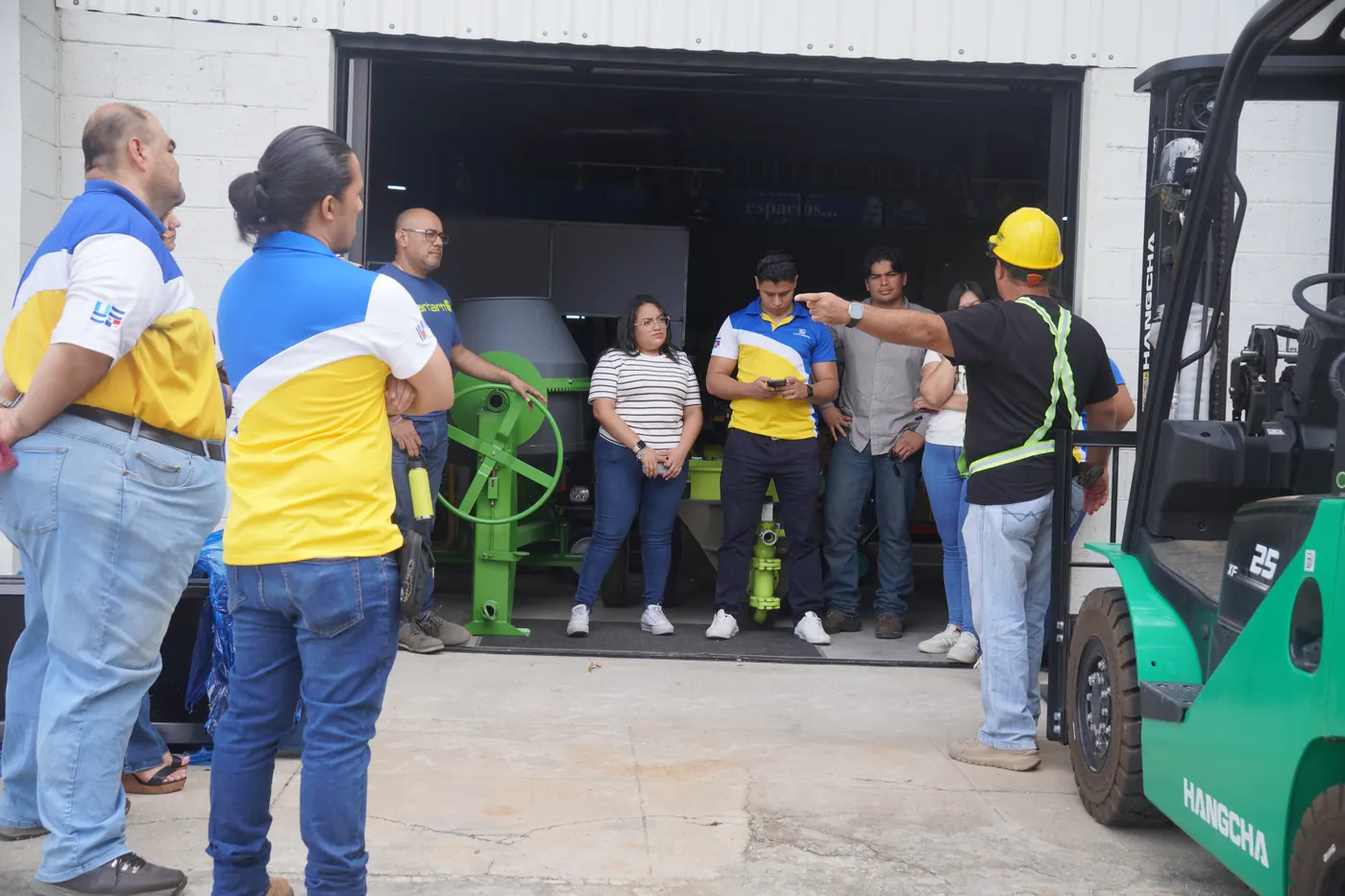
In all four countries the main burden is on the employer. What repeats across the laws we read:
- Train before anyone uses a hazardous machine, and retrain when their duties or the machine change.
- Let only personnel trained or authorized for that machine operate it.
- Keep the record: who was trained, on which machine and when (in Panama, the decree requires a log of the personnel operating the equipment).
- Run the medical exams your country requires, paid by the company.
- Keep minors under 18 out of hazardous work with machinery.
- If the machine goes out on the street, check that whoever drives it holds the right driver's license.
- Keep the machinery in good condition, with the daily inspection up to date.
Summary: what to choose
| If… | Then… |
|---|---|
| You'll operate only inside the site | Prior training from the employer; in Panama, ask which license they check |
| You'll move the machine on the street | The driver's license traffic law requires (Type E in Guatemala; Special in Nicaragua) |
| You're a company with operators | Train first, keep the record and run the medical exams |
| You want proof of what you know | A course with a hands-on assessment or a skills certificate |
| You're under 18 | Train first: the law restricts hazardous work for minors |
Get a quote without leaving
Want to work it out with an advisor?
Topic: Operator training (APMT Academy)
Which country is your project in?
Common mistakes
Thinking no card means nothing is required
The law requires prior training in all four countries, and it's the employer's job.
Confusing a driver's license with an operating license
The traffic license is for the street; on site the law asks for training.
Taking the machine onto the street without the right license
It's a traffic violation, and in Nicaragua the owner is liable for the damage.
Training without keeping a record
Without a record you can't prove you trained when you need it most.
Accepting a certificate without verifying it
Confirm it with the issuer and run a short hands-on test.
Take it to the job site
Print the checklist to go over it on site, or send the guide to your crew.
Book a workshop service for your Komatsu or Bobcat
250, 500 or 1,000-hour maintenance, a fault or an inspection. Suggest the day and the workshop confirms your appointment.
Frequently asked questions
Do I need a license to operate an excavator in El Salvador?
To operate it inside the site, the law doesn't expressly require it: we found no rule asking for a license or official certification. The General Law on Risk Prevention (arts. 39 and 40) requires prior training and that only trained personnel operate. On the street the General Traffic Regulation applies, which assigns the license by vehicle weight.
Which license do you need to drive heavy machinery in Guatemala?
To drive on public roads, the Type E license in the Traffic Regulation (art. 23), to drive agricultural and industrial machinery. Inside the site we found no rule requiring a license; the Occupational Health and Safety Regulation (art. 420) prohibits anyone not previously trained from using machinery.
Which license do you need to operate machinery in Nicaragua?
For public roads, the Special license under Law 431 (art. 140), for drivers of agricultural and construction vehicles. Inside the site we found no rule requiring a license, but the Labor Code (art. 105) requires instruction, sufficient training on the machine and a medical exam before operating it.
Which license does Panama require to operate heavy equipment?
Executive Decree 2 of 2008 (art. 30 k) requires checking that the heavy equipment operator holds a license to operate granted by the Competent Authority, without saying which authority grants it; we didn't find the rule that creates it. Ask your site's safety officer which document they check. For public roads, the Traffic Regulation has the Type I “Heavy equipment” license, defined as a truck over ten tonnes.
Does my driver's license let me operate on site?
They're not the same. The traffic license lets you drive on public roads; to operate inside the site, workplace-safety law requires prior training on the machine. You may need both.
Who is liable if an untrained operator has an accident?
In the laws we read, the main burden is on the employer: El Salvador's Labor Code (art. 321) makes it liable for occupational hazards; Guatemala's (art. 197 bis) obliges it to pay damages if it negligently breached the rules; Nicaragua's Law 618 (art. 322) assigns violations to it. For a specific case, consult a labor lawyer.
How do I train and certify my company's operators?
With a course that combines theory, controls practice and hours on the real machine with a hands-on assessment, and by keeping a record of who was trained, on which machine and when. If you want an official certificate, the training institutes (INSAFORP, INTECAP, INATEC, INADEH) certify skills. Grupo ConstruMarket's APMT Academy builds plans for company groups.
How do I verify whether an operator's certificate is real?
Ask for the issuer's name, the certificate number or code and the date, and confirm it directly with that institution or training center. Before handing over the machine, run a short hands-on test on your own site.
From what age can you operate heavy equipment?
In Nicaragua and Panama the official list of hazardous work bars minors under 18 from machinery. In El Salvador, minors under 18 don't work in hazardous jobs, except with authorization from 16 with specific training. In Guatemala, hazardous work as defined by regulation is prohibited for minors. For road driving, the license requires legal age.
Ready for the next step?
See the APMT AcademyGrupo ConstruMarket · Job site checklist
Do you need a license to operate heavy equipment? Country by country
To operate heavy equipment inside a job site, the law in El Salvador, Guatemala and Nicaragua does not expressly require a license or an official certification: what it requires is that the operator be trained before using the machine, and that training is the employer's job. Panama is the nuance: its construction safety regulation asks for checking that the heavy equipment operator holds a “license to operate, granted by the Competent Authority”, but it doesn't say which authority grants it. To move the machine on public roads you do need the driver's license your country's traffic law requires. This is information about the laws, not legal advice.
If you're a company: what's on you
- Train before anyone uses a hazardous machine, and retrain when their duties or the machine change.
- Let only personnel trained or authorized for that machine operate it.
- Keep the record: who was trained, on which machine and when (in Panama, the decree requires a log of the personnel operating the equipment).
- Run the medical exams your country requires, paid by the company.
- Keep minors under 18 out of hazardous work with machinery.
- If the machine goes out on the street, check that whoever drives it holds the right driver's license.
- Keep the machinery in good condition, with the daily inspection up to date.
Avoid
- Thinking no card means nothing is required. The law requires prior training in all four countries, and it's the employer's job.
- Confusing a driver's license with an operating license. The traffic license is for the street; on site the law asks for training.
- Taking the machine onto the street without the right license. It's a traffic violation, and in Nicaragua the owner is liable for the damage.
- Training without keeping a record. Without a record you can't prove you trained when you need it most.
- Accepting a certificate without verifying it. Confirm it with the issuer and run a short hands-on test.
Job site:
Date:
Supervisor:
Scan it for the full guide, with video and FAQ
https://grupoconstrumarket.com/en/guias/licencia-para-operar-maquinaria-pesada-pais-por-pais