
Short answer
A hydraulic excavator has three big sections. On top, the work equipment: boom, arm, bucket and the hydraulic cylinders that move them. In the middle, the upper structure, which swings 360°: cab, engine, hydraulic pump, counterweight and the swing circle. Below, the undercarriage: tracks with their shoes, sprocket, idler, rollers and the track adjuster. The parts changed most often are wear parts —teeth, cutting edges, pins, bushings and the undercarriage— and filters.
The three sections of an excavator
Thinking of the machine in three floors helps you name any part: what does the work, what swings and what moves it over the ground.
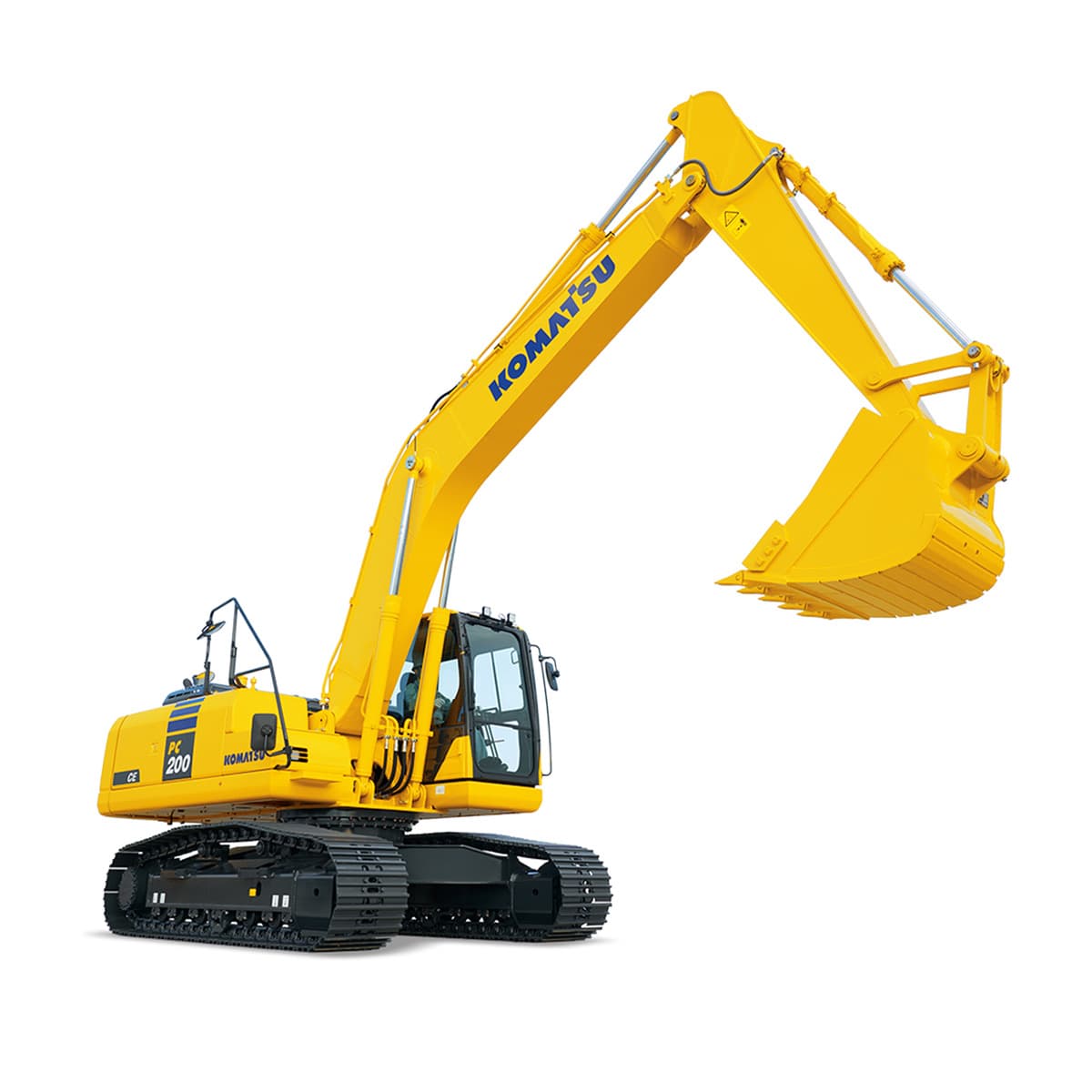
- Work equipment: Boom, arm, bucket, cylinders, pins and bushings
- Upper structure (swings 360°): Cab, engine, hydraulic pump, counterweight, swing circle
- Undercarriage: Tracks and shoes, sprocket, idler, rollers, track adjuster
Work equipment: boom, arm and bucket
The boom is the long arm coming out of the machine; the arm (or stick) attaches to its tip and gives reach and depth; the bucket cuts and loads the material. Each one moves with its hydraulic cylinder. The joints use pins and bushings, which are greased daily because that's where the equipment wears most.
On the bucket, the teeth, their adapters and the cutting edge wear out. Changing them on time is far cheaper than repairing the bucket.
- Boom: gives the main height and reach.
- Arm or stick: adds reach and digging depth.
- Bucket: cuts, loads and dumps; there are general-purpose, rock and cleanup buckets.
- Hydraulic cylinders: move the boom, arm and bucket.
- Pins and bushings: the joints; greased every day.
- Teeth, adapters and cutting edges: the bucket's wear parts.
Upper structure: what swings
Everything above the swing circle turns together: the cab with the controls and monitor, the diesel engine, the hydraulic pump that turns engine power into oil pressure, the hydraulic tank, the radiator and the counterweight at the back, which balances the bucket load. The swing circle is the large bearing that joins the top to the undercarriage, driven by the swing motor.
This is where the filters live (air, engine oil, fuel and hydraulic), changed by hours, and the data plate with the model and serial number.
Undercarriage: what moves it
On a tracked excavator, the undercarriage carries the chain with its shoes, the drive sprocket at the back that moves the chain, the idler at the front, the lower rollers that carry the weight and the upper rollers that guide the chain, and the track adjuster that sets the right tension. It's one of the costliest parts to maintain: wrong tension or always turning to the same side wear it out early.
Wheeled excavators swap all of this for axles and tires.
- Shoes: the plates that touch the ground.
- Chain, links, track pins and bushings.
- Drive sprocket: moves the chain.
- Idler: guides the chain at the front.
- Lower and upper rollers.
- Track adjuster: sets chain tension.
How to order the right part
With the right name for the part you're halfway there; the other half is identifying your machine. Send the full model and serial number from the plate, a photo of the old part and its part number if you can read it. For teeth and edges, also say which bucket you run.
Grupo ConstruMarket quotes genuine Komatsu parts and wear parts in all four countries, and Bobcat in El Salvador and Panama; at /repuestos you can search by part number.
Summary: what to choose
| If… | Then… |
|---|---|
| The part moves or loads material | Work equipment: boom, arm, bucket |
| The part swings with the cab | Upper structure |
| The part touches the ground or drives the chain | Undercarriage |
| It wears with use | Teeth, edges, pins, bushings, undercarriage and filters |
| You're ordering the part | Model + serial + photo of the part |
Get a quote without leaving
Want to work it out with an advisor?
Topic: Excavator parts
Which country is your project in?
Common mistakes
Asking for “the boom pin” with no other data
There are several pins per machine and they change between serials: send model, serial and a photo.
Letting the teeth wear down to the adapter
A tooth is cheap; a damaged adapter or bucket isn't.
Skipping joint greasing
Dry pins and bushings wear out in weeks what should last years.
Ignoring track tension
A track that's too tight or too loose speeds up wear on the whole undercarriage.
Take it to the job site
Print the checklist to go over it on site, or send the guide to your crew.
Book a workshop service for your Komatsu or Bobcat
250, 500 or 1,000-hour maintenance, a fault or an inspection. Suggest the day and the workshop confirms your appointment.
Frequently asked questions
What are the parts of an excavator?
Three big sections: the work equipment (boom, arm, bucket and cylinders), the swinging upper structure (cab, engine, hydraulic pump, counterweight and swing circle) and the undercarriage (tracks, shoes, sprocket, idler, rollers and track adjuster).
What is an excavator's arm called?
It has two parts: the boom, which comes out of the machine, and the arm or stick, attached to its tip, which carries the bucket.
What is an excavator's swing circle?
It's the large bearing that joins the upper structure to the undercarriage and lets it swing 360°. The swing motor drives it.
Which excavator parts wear most?
The bucket's teeth, adapters and cutting edges, the pins and bushings of the joints, the undercarriage (shoes, rollers, chain and sprocket) and the filters, which are changed by hours.
What is an excavator's counterweight for?
It balances the weight of the arm and the bucket load so the machine doesn't tip forward when lifting or digging far out.
Ready for the next step?
Find a part by part numberGrupo ConstruMarket · Job site checklist
What are the parts of an excavator and what does each one do?
A hydraulic excavator has three big sections. On top, the work equipment: boom, arm, bucket and the hydraulic cylinders that move them. In the middle, the upper structure, which swings 360°: cab, engine, hydraulic pump, counterweight and the swing circle. Below, the undercarriage: tracks with their shoes, sprocket, idler, rollers and the track adjuster. The parts changed most often are wear parts —teeth, cutting edges, pins, bushings and the undercarriage— and filters.
Work equipment: boom, arm and bucket
- Boom: gives the main height and reach.
- Arm or stick: adds reach and digging depth.
- Bucket: cuts, loads and dumps; there are general-purpose, rock and cleanup buckets.
- Hydraulic cylinders: move the boom, arm and bucket.
- Pins and bushings: the joints; greased every day.
- Teeth, adapters and cutting edges: the bucket's wear parts.
Undercarriage: what moves it
- Shoes: the plates that touch the ground.
- Chain, links, track pins and bushings.
- Drive sprocket: moves the chain.
- Idler: guides the chain at the front.
- Lower and upper rollers.
- Track adjuster: sets chain tension.
Avoid
- Asking for “the boom pin” with no other data. There are several pins per machine and they change between serials: send model, serial and a photo.
- Letting the teeth wear down to the adapter. A tooth is cheap; a damaged adapter or bucket isn't.
- Skipping joint greasing. Dry pins and bushings wear out in weeks what should last years.
- Ignoring track tension. A track that's too tight or too loose speeds up wear on the whole undercarriage.
Job site:
Date:
Supervisor:
Scan it for the full guide, with video and FAQ
https://grupoconstrumarket.com/en/guias/partes-de-una-excavadora-y-para-que-sirve-cada-una