Short answer
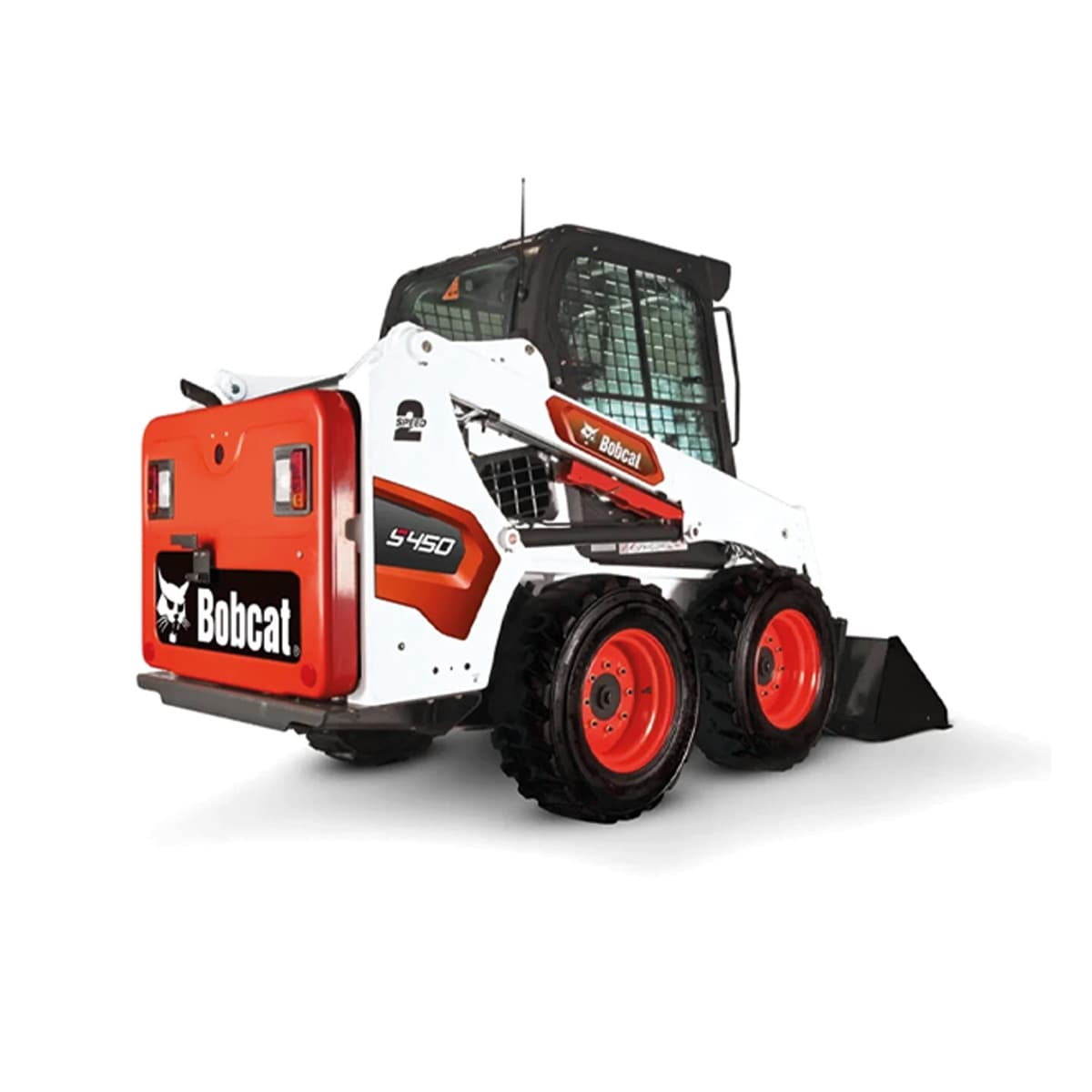
A skid steer is a compact frame with the engine at the back, the cab in the middle and two lift arms that rise on either side of the cab. At the tip of the arms sits the coupler, where the bucket or any attachment hooks on, plus the auxiliary hydraulic hoses that power them. It has no steering: each side of the machine has its own drive, and to turn, one side goes faster than the other and the tires skid. The parts changed most often are the tires or tracks, the bucket's edge and teeth, the lift-arm pins and bushings and the filters.
Which attachment fits your Bobcat?The parts of a skid steer, front to back
Thinking of it in layers helps you name any part: what works at the front, what lifts it, where the operator sits and what drives it.
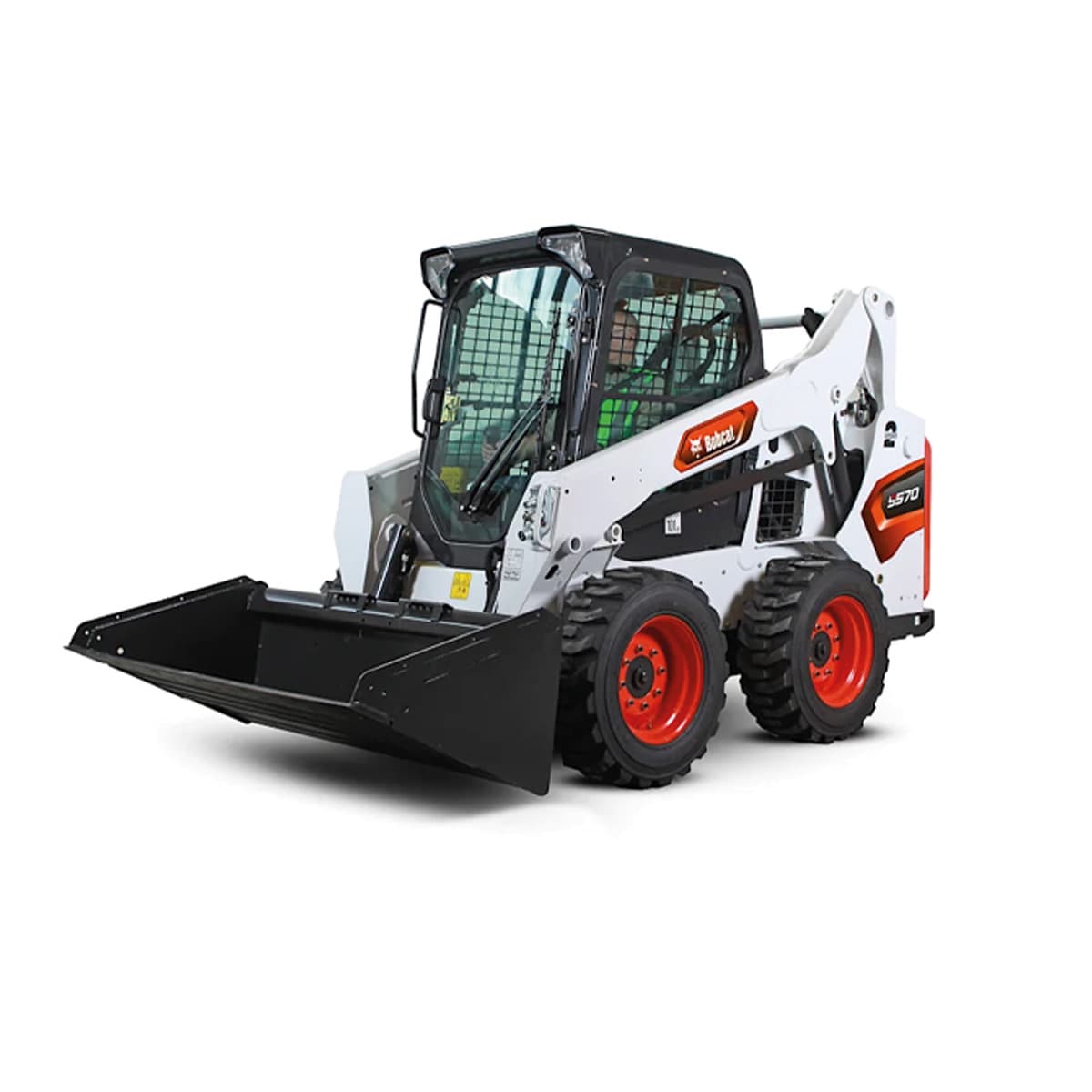
- Attachment and coupler: Bucket or other attachment, quick coupler, auxiliary hydraulics
- Lift arms: Radial or vertical, with their lift and tilt cylinders
- Cab: Protective structure, seat, seat belt, seat bar and controls
- Engine and drive: Rear engine, hydrostatic pumps and motors, chaincases, tires or tracks
Lift arms: radial or vertical
The two arms raise the attachment with the lift cylinders and tilt it with the tilt cylinders. There are two designs. On a radial machine, the arms rise in an arc: more force at mid-height, which is where you dig and grade. On a vertical machine, they rise almost straight up and deliver their capacity at full height: better for loading trucks and stacking. For example, in Bobcat the S450 is radial and the S570 is vertical, per their datasheets.
The arm joints use pins and bushings greased as the manual says, and the height to the coupler hinge pin (2,781 mm on the S450 and 3,023 mm on the S570, per bobcat.com) is the figure that tells you how high it reaches.
The coupler and auxiliary hydraulics
The quick coupler, at the tip of the arms, is what makes the skid steer a many-jobs machine: it hooks the bucket, forks, sweeper, auger or breaker without tools. On Bobcat it's called Bob-Tach, and on the Komatsu SK820-5E0 it's a universal quick coupler, per their datasheets.
Attachments with their own motor or cylinders take oil from the auxiliary hydraulics: the hoses and quick oil couplers at the front of the arms. How much oil they deliver is measured as flow: the Bobcat S570 gives 64.7 L/min standard flow and 101.1 L/min with optional high flow, per its datasheet. An attachment that needs more flow than the machine gives works slowly or not at all.
- Quick coupler: hooks the attachment.
- Auxiliary hydraulics: the oil that powers attachments with a motor or cylinders.
- Standard or high flow: what each attachment needs.
- Bucket: the edge and teeth are wear parts.
The cab and the seat bar
The cab is a structure that protects against rollover and falling objects. Inside are the seat, the seat belt, the controls and the seat bar, which comes down in front of the operator. On skid steers the arms and attachment pass very close to the operator: that's why you always operate seated, belted in with the bar down, and never leave the cab with the arms raised.
The bar isn't just a stop: it's tied to the controls. On the SK820-5E0, the work equipment is neutralized if the bars are raised or the operator isn't seated, per its datasheet, and the S570 comes standard with Bobcat's BICS interlock system. The SK820-5E0's cab also tilts: it lifts to expose the engine and hydraulics for maintenance.
Engine and drive: why it skids to turn
The engine sits at the back and drives the hydraulic pumps. In the hydrostatic drive, each side of the machine has its own travel circuit —Bobcat describes it as two independent hydrostatic transmissions, one per side—; on wheeled skid steers, that motor turns the wheels on its side through a chaincase. To turn, one side goes faster than the other, or in reverse, and the machine pivots in place. That's where the name skid steer comes from: steering by skidding.
That's why tires wear fast if you always turn on pavement or in the same spot. On soft ground or mud, compact track loaders are used.
- Engine: at the back; its weight balances the load.
- Hydrostatic pumps and motors: drive each side separately.
- Chaincases: carry power to the wheels on each side.
- Tires or tracks: the drive's wear parts.
How to order the right part
Send the full model and serial number from the plate, a photo of the old part and its part number if you can read it. For tires, the size written on the sidewall; for the bucket and attachments, which one you run.
Grupo ConstruMarket quotes genuine Bobcat parts in El Salvador and Panama, and Komatsu in Guatemala and Nicaragua for the SK820-5E0; at /repuestos you can search by part number.
Summary: what to choose
| If… | Then… |
|---|---|
| The part hooks or powers the attachment | Quick coupler and auxiliary hydraulics |
| The part raises or tilts the bucket | Lift arms and their cylinders |
| The part protects the operator | Cab, seat belt and seat bar |
| The part drives the machine | Hydrostatic motors, chaincases, tires or tracks |
| You're ordering the part | Model + serial + photo + size or attachment |
Get a quote without leaving
Want to work it out with an advisor?
Topic: Skid steer parts
Which country is your project in?
Common mistakes
Leaving the cab with the arms raised
The arms can come down. Lower them to the ground before unbuckling.
Always turning on pavement
A skid steer turns by skidding: on concrete, tires wear out in weeks.
Running a high-flow attachment on a standard-flow machine
It runs slowly and heats the oil. Check the flow on both datasheets.
Asking for “the skid steer chain” and nothing else
It changes by model and side: send model, serial and a photo.
Take it to the job site
Print the checklist to go over it on site, or send the guide to your crew.
Book a workshop service for your Komatsu or Bobcat
250, 500 or 1,000-hour maintenance, a fault or an inspection. Suggest the day and the workshop confirms your appointment.
Frequently asked questions
What are the parts of a skid steer?
At the front, the attachment with its quick coupler and auxiliary hydraulics; the lift arms with their cylinders; the cab with the seat, seat belt, seat bar and controls; and at the back the engine with the hydrostatic drive, chaincases and tires or tracks.
Why doesn't a skid steer have a steering wheel?
Because it turns by making one side go faster than the other: each side has its own drive and the tires skid as it turns. It's driven with levers or joysticks.
What's the difference between radial and vertical lift?
Radial rises in an arc and has more force at mid-height, for digging and grading. Vertical rises almost straight and delivers its capacity up high, for truck loading and stacking.
What are a skid steer's auxiliary hydraulics for?
They supply pressurized oil to attachments with their own motor or cylinders, such as a sweeper, auger or breaker. It can be standard flow or high flow.
Which skid steer parts wear most?
The tires or tracks, the bucket's edge and teeth, the lift-arm pins and bushings and the filters, which are changed by hours.
Ready for the next step?
Find a part by part numberGrupo ConstruMarket · Job site checklist
What are the parts of a skid steer loader and what does each one do?
A skid steer is a compact frame with the engine at the back, the cab in the middle and two lift arms that rise on either side of the cab. At the tip of the arms sits the coupler, where the bucket or any attachment hooks on, plus the auxiliary hydraulic hoses that power them. It has no steering: each side of the machine has its own drive, and to turn, one side goes faster than the other and the tires skid. The parts changed most often are the tires or tracks, the bucket's edge and teeth, the lift-arm pins and bushings and the filters.
The coupler and auxiliary hydraulics
- Quick coupler: hooks the attachment.
- Auxiliary hydraulics: the oil that powers attachments with a motor or cylinders.
- Standard or high flow: what each attachment needs.
- Bucket: the edge and teeth are wear parts.
Engine and drive: why it skids to turn
- Engine: at the back; its weight balances the load.
- Hydrostatic pumps and motors: drive each side separately.
- Chaincases: carry power to the wheels on each side.
- Tires or tracks: the drive's wear parts.
Avoid
- Leaving the cab with the arms raised. The arms can come down. Lower them to the ground before unbuckling.
- Always turning on pavement. A skid steer turns by skidding: on concrete, tires wear out in weeks.
- Running a high-flow attachment on a standard-flow machine. It runs slowly and heats the oil. Check the flow on both datasheets.
- Asking for “the skid steer chain” and nothing else. It changes by model and side: send model, serial and a photo.
Job site:
Date:
Supervisor:
Scan it for the full guide, with video and FAQ
https://grupoconstrumarket.com/en/guias/partes-de-un-minicargador-y-para-que-sirve-cada-una