Short answer
A datasheet is read by finding first the number that decides your job and then the fine print saying how it was measured. Power can be net (what reaches the work) or gross (the engine's without some loads): only compare like with like. Operating weight includes operator, fuel and standard equipment that the datasheet details. The bucket is measured heaped. On skid steers, rated operating capacity is half the tipping load. And digging force changes with the standard: on the same Komatsu PC200-10M0 CE, the datasheet gives 138 kN under one and 149 kN under another.
Simulator: fill the bucket by densityFirst, the number that decides your job
A datasheet has dozens of figures and they rarely all matter. Before comparing brands or models, decide which one rules on your site; the rest are tie-breakers.
What will you do with the machine?
- Dig → Maximum depth and digging force
- Load trucks → Heaped bucket, dump height and tipping load
- Lift and move loads → Rated operating capacity or lift chart
- Move it between sites → Operating weight and transport dimensions
- Run attachments → Hydraulic flow and pressure
Power: net or gross, and under which standard
Gross power is the engine's measured without some of the loads it carries on the machine; net is what's left with the fan, alternator and other equipment running. Net is always lower and is the one closer to what the machine does. Each datasheet says which standard it used.
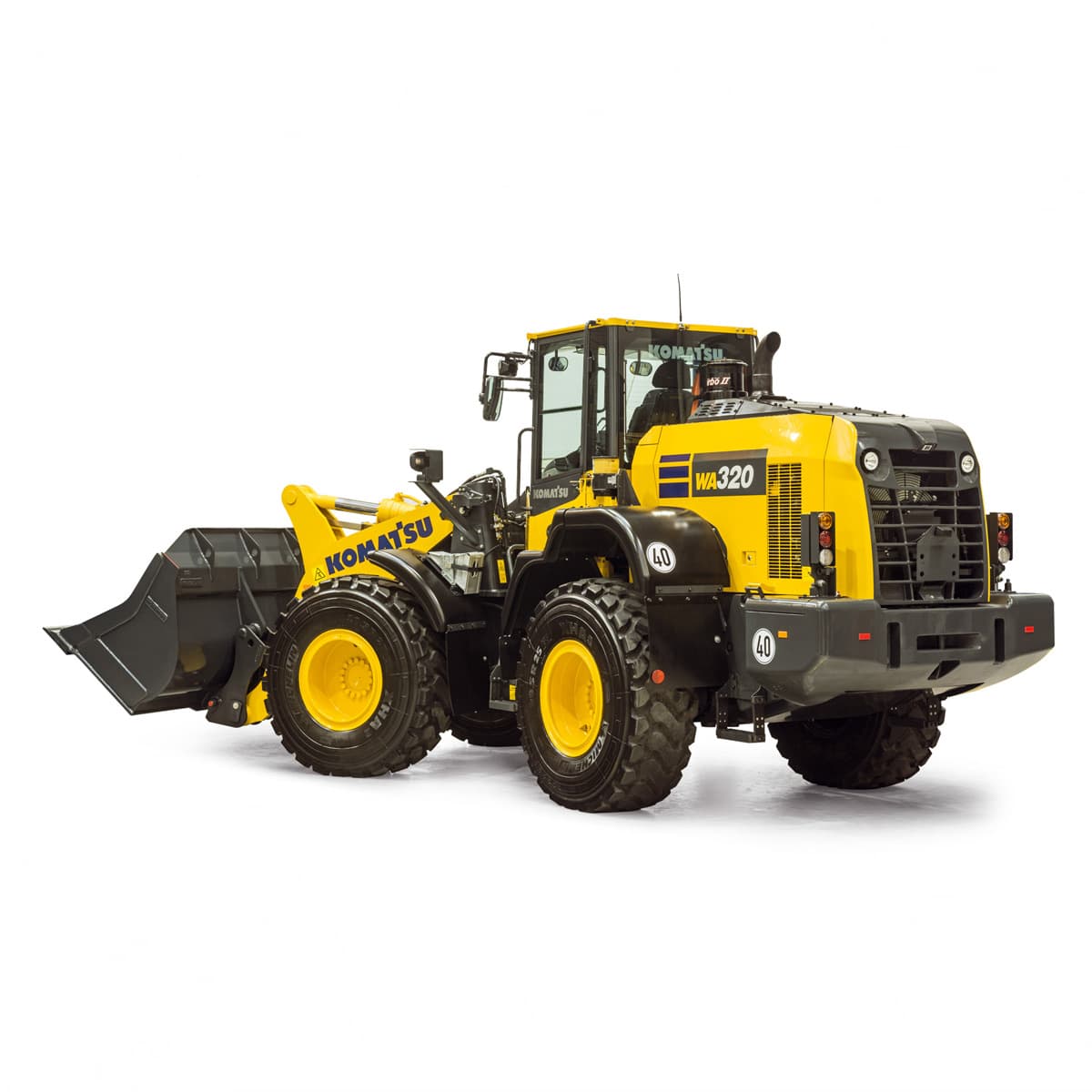
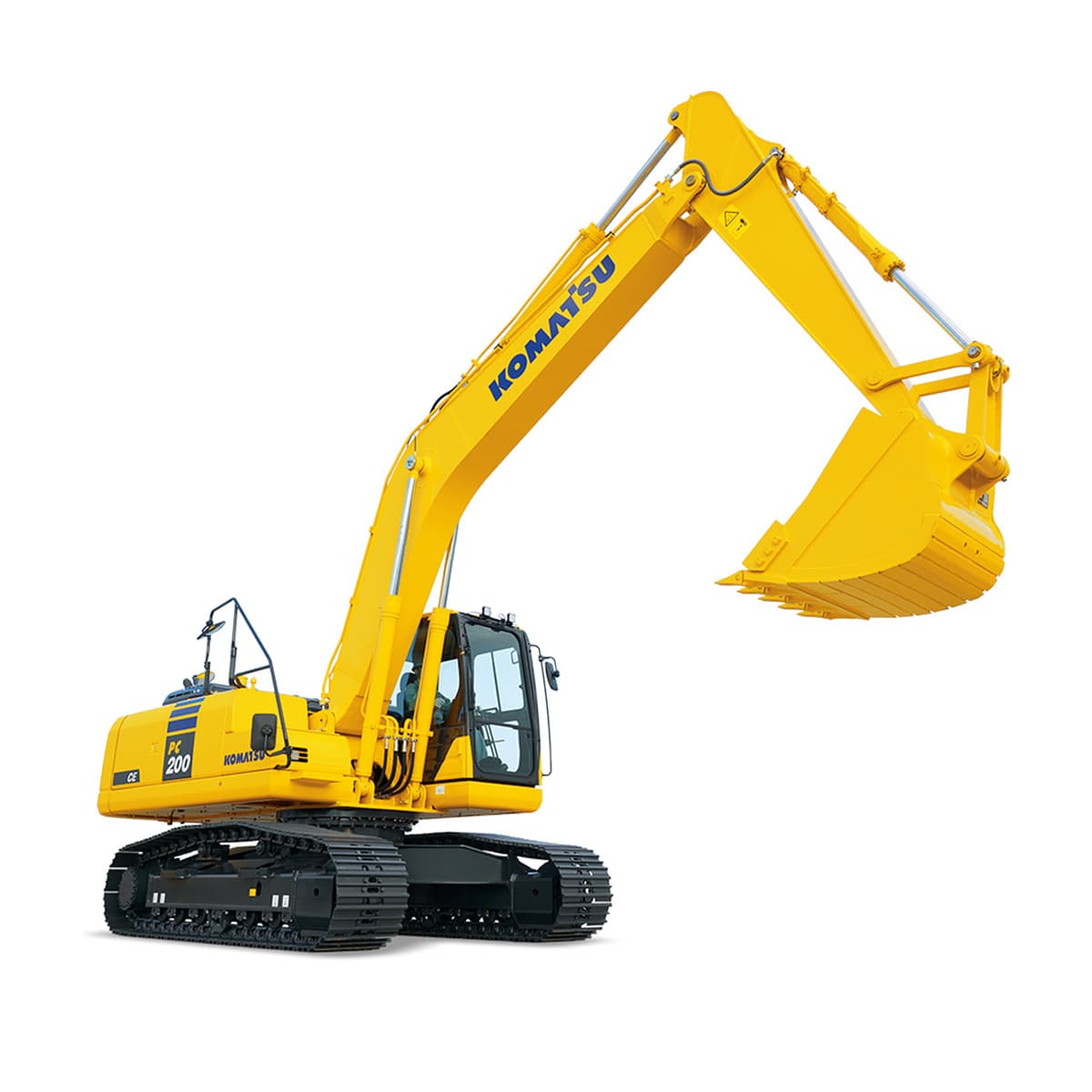
On the Komatsu PC200-10M0 CE excavator datasheet, gross is 110 kW (148 HP) per SAE J1995 and net is 103 kW (138 HP) per ISO 9249 / SAE J1349. On the WA200-6 wheel loader's, 95.2 kW gross and 94 kW net, with a note: at the radiator fan's maximum speed, net drops to 91 kW. Some datasheets only give gross: the WB93R-5E0 backhoe's gives 74 kW (99.2 HP) under SAE J1995 and ISO 14396, which are gross-power standards.
The rule: compare net with net or gross with gross, at the same rpm. If one datasheet gives kW and the other HP, 1 kW is 1.341 HP.
- Net: ISO 9249 or SAE J1349 (as Komatsu datasheets label it).
- Gross: SAE J1995 or ISO 14396.
- Check the rpm: “@ 2,000 rpm” is part of the figure.
Operating weight: what it includes
Operating weight is the machine ready to work, and the datasheet says what counts. On the PC200-10M0 CE it includes the 5,700 mm boom, the 2,925 mm arm, a 0.8 m³ bucket heaped per ISO 7451, lubricants, coolant, a full fuel tank, the operator and standard equipment. That's why the catalog gives it as a range, 19,900 to 20,500 kg: it changes with track shoe width. The Komatsu SK820-5E0 skid steer weighs 3,080 kg with a 75 kg operator per ISO 6016.
That number is for three things: knowing which truck or lowboy carries it, knowing whether the ground or a slab will hold it, and comparing machines in the same class. Careful: a heavy attachment, extra counterweight or a long arm changes it.
- How much does an excavator weigh? Heavy machinery weights, model by model
- How is heavy machinery transported?
Bucket capacity: heaped, and density
The bucket is measured heaped: filled with a crown, under the standard the datasheet cites. The WA200-6 loader runs a 2.0 m³ heaped stockpile bucket, and the PC200-10M0 CE buckets from 0.80 to 1.00 m³, per their datasheets.
Cubic metres don't tell you how much the load weighs. For that, multiply by the material's density: a bucket of loose soil is not a bucket of rock or wet sand. A big bucket with dense material can exceed what the machine carries safely.
How much it lifts: rated capacity and tipping load
Tipping load is the weight at which the machine starts lifting its rear wheels: it's a limit, not a working figure. What you work with is less.
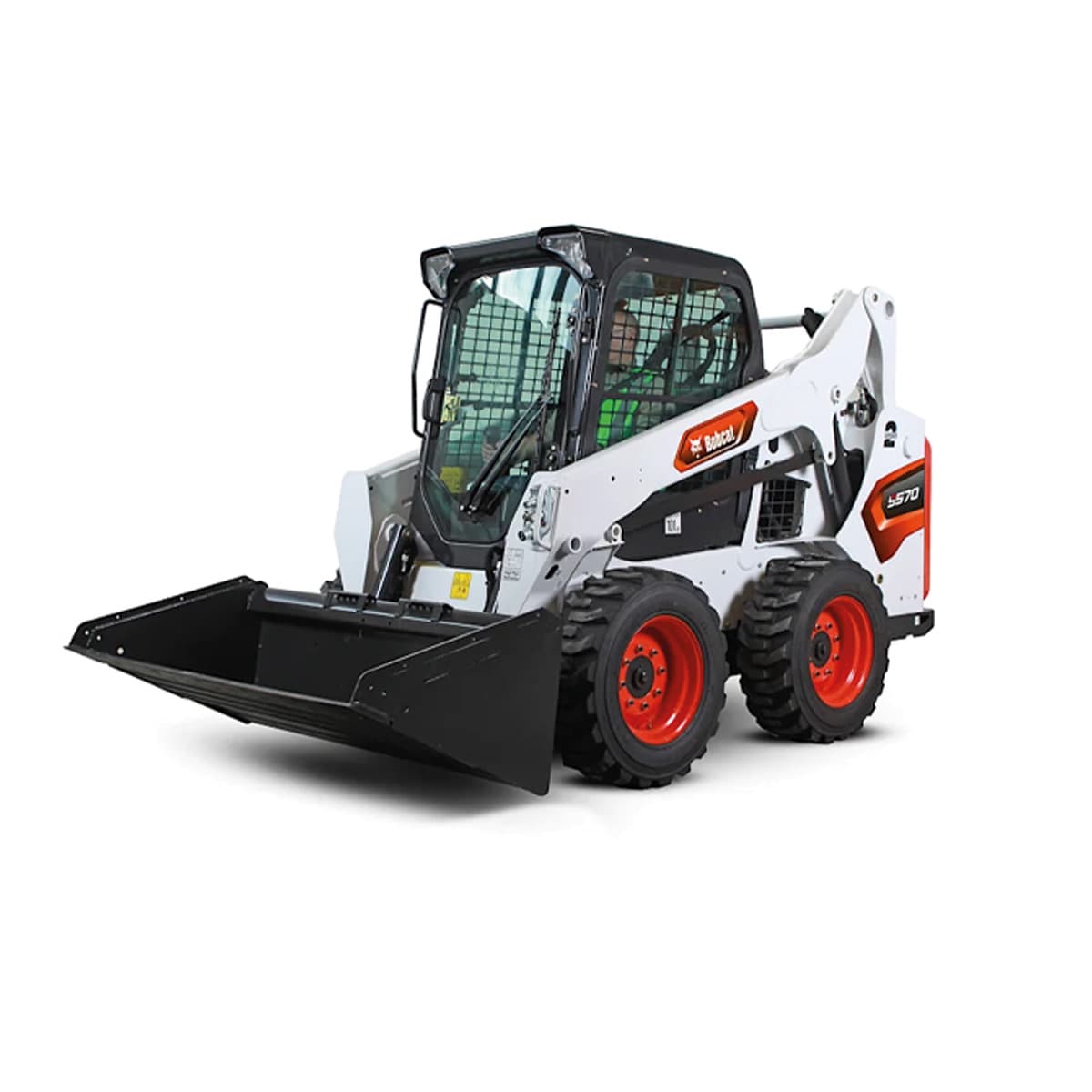
On skid steers, rated operating capacity is half the tipping load. The Bobcat S570 lists 944 kg rated capacity and 1,888 kg tipping load per ISO 14397-1, on bobcat.com; the Komatsu SK820-5E0, 900 kg and 1,800 kg per ISO 14397.
On wheel loaders, the datasheet gives static tipping load straight and with the machine articulated. On the WA200-6: 8,655 kg straight and 7,445 kg articulated 38°, with lubricant, coolant, full tank, cab and operator. Articulated, it tips sooner: that's why you load with the machine straight.
On excavators you check the lift chart. The PC210-10M0's states that its rated loads don't exceed 87% of hydraulic capacity or 75% of tipping load. A chart figure holds for that reach, that height and that equipment; outside them, it doesn't.
Digging force: same machine, two numbers
Digging force tells you how hard the bucket or the arm breaks material out. The number depends on the standard used, and the same datasheet shows it: on the PC200-10M0 CE, with the 2,925 mm arm at maximum power, bucket digging force is 138 kN per SAE J1179 and 149 kN per ISO 6015. It's the same machine.
So between two datasheets, compare the same standard and the same configuration: arm, bucket and power mode.
- SAE J1179: 138 kN
- ISO 6015: 149 kN
- Source: official Komatsu PC200-10M0 CE brochure.
Hydraulic flow: what attachments need
If the machine will run a breaker, sweeper or auger, the figure is hydraulic flow in L/min, plus pressure. The Bobcat S570 gives 64.7 L/min standard flow and 101.1 L/min with optional high flow, per bobcat.com. The attachment has its own datasheet with the flow it needs: the two numbers have to match.
Why two datasheets for the same model don't match
It happens often and is rarely a mistake: the configuration, country or year changes. The PC200-10M0 CE's 4-page sheet gives 20,300 kg operating weight, and its brochure a range of 19,900 to 20,500 kg depending on track shoes. The same machine can come with another bucket, arm, tires or engine depending on the market.
So, to decide, ask for the official datasheet of the configuration you're being quoted, with its serial number when it's used. On grupoconstrumarket.com product pages, when the manufacturer publishes it, there's a link to its official datasheet.
Summary: what to choose
| If… | Then… |
|---|---|
| You're comparing power | Net with net, gross with gross, same rpm |
| You're comparing operating weight | Read what's included: bucket, arm, shoes, operator |
| You're comparing buckets | Heaped, and multiply by density |
| You need to know how much it lifts | Rated capacity or lift chart, never the tipping load |
| You're comparing digging force | Same standard (ISO 6015 or SAE J1179) and same configuration |
| You'll run attachments | Machine flow ≥ what the attachment needs |
Get a quote without leaving
Want to work it out with an advisor?
Topic: Datasheet and quote for a machine
Which country is your project in?
Common mistakes
Comparing one's gross with another's net
Gross always comes out higher: it looks like more machine without being so.
Working at the tipping load
It's the point where the machine starts to tip. You work with rated capacity or the lift chart.
Mixing force standards
On the same PC200-10M0 CE, bucket force is 138 kN under SAE J1179 and 149 kN under ISO 6015.
Thinking operating weight is what goes on the truck
An attachment, extra counterweight or a bigger bucket change it.
Reading only the bucket's m³
Without the material's density you don't know what the load weighs.
Take it to the job site
Print the checklist to go over it on site, or send the guide to your crew.
Frequently asked questions
What's the difference between net and gross power?
Gross is the engine's without some of the machine's loads; net is what's left with the fan, alternator and the rest running. Net is lower. On the Komatsu PC200-10M0 CE: 110 kW gross and 103 kW net, per its datasheet.
What does a machine's operating weight include?
Each datasheet says. On the Komatsu PC200-10M0 CE it includes the standard boom, arm and bucket, lubricants, coolant, a full fuel tank, operator and standard equipment.
What is a skid steer's rated operating capacity?
The load it works with safely: half the tipping load. On the Bobcat S570, 944 kg rated capacity and 1,888 kg tipping load per ISO 14397-1.
What does a heaped bucket mean?
That capacity is measured with the bucket filled with a crown, under the standard the datasheet cites. It's the standard way to state bucket capacity.
Why does digging force change between datasheets?
Because it's measured under different standards and configurations. On the same PC200-10M0 CE, bucket force is 138 kN under SAE J1179 and 149 kN under ISO 6015.
Ready for the next step?
Compare machines side by sideGrupo ConstruMarket · Job site checklist
How do you read a machine's datasheet? Power, weight, capacity and force
A datasheet is read by finding first the number that decides your job and then the fine print saying how it was measured. Power can be net (what reaches the work) or gross (the engine's without some loads): only compare like with like. Operating weight includes operator, fuel and standard equipment that the datasheet details. The bucket is measured heaped. On skid steers, rated operating capacity is half the tipping load. And digging force changes with the standard: on the same Komatsu PC200-10M0 CE, the datasheet gives 138 kN under one and 149 kN under another.
Power: net or gross, and under which standard
- Net: ISO 9249 or SAE J1349 (as Komatsu datasheets label it).
- Gross: SAE J1995 or ISO 14396.
- Check the rpm: “@ 2,000 rpm” is part of the figure.
Avoid
- Comparing one's gross with another's net. Gross always comes out higher: it looks like more machine without being so.
- Working at the tipping load. It's the point where the machine starts to tip. You work with rated capacity or the lift chart.
- Mixing force standards. On the same PC200-10M0 CE, bucket force is 138 kN under SAE J1179 and 149 kN under ISO 6015.
- Thinking operating weight is what goes on the truck. An attachment, extra counterweight or a bigger bucket change it.
- Reading only the bucket's m³. Without the material's density you don't know what the load weighs.
Job site:
Date:
Supervisor:
Scan it for the full guide, with video and FAQ
https://grupoconstrumarket.com/en/guias/como-leer-una-ficha-tecnica-de-maquinaria